EN
EN  DE
DE  RU
RU  PT
PT  JA
JA  ES
ES  IT
IT Safety fencing machine guarding for scrap and collision risk
Safety fencing machine guarding for heavy scrap flyout and forklift collision control
When a recycling line, shredder bay, or dismantling cell throws heavy fragments, the barrier has to do two jobs at once: stop flyout and survive impact. Mdfence is built for that job with a high-strength steel frame and a micro-mesh barrier that keeps dangerous debris where it belongs.

Why this safety fencing machine guarding spec fits scrap and dismantling lines
In shredder areas and vehicle dismantling lines, the failure mode is predictable: loose metal can fly, and vehicles or transport equipment can clip the fence. A light barrier may bend, crack, or open a gap. Mdfence is designed to stay rigid under repeated abuse, so the perimeter still protects people after the first impact.
| Requirement | Mdfence support |
|---|---|
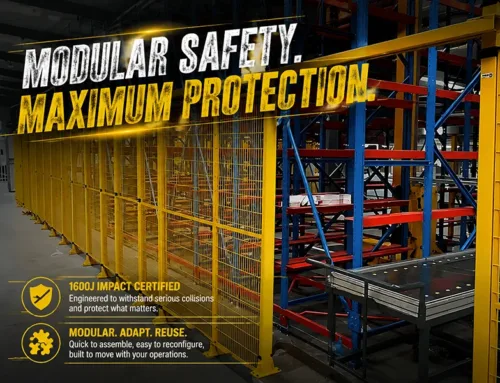
| Impact control | High-strength Q235 carbon structural steel with 60x60mm posts, tested to resist up to 1600 joules of impact energy. |
| Thrown debris containment | 20x100mm anti-entanglement micro-mesh helps block flying metal fragments from the shredder or cutting zone. |
| Collision resistance | Built for frequent bumps from forklifts and material handling equipment in metal recycling plants. |
| Safety proof | TUV safety certification supports the engineering claim with a recognized compliance baseline. |
| Operational fit | Suitable for scrap shredding, car dismantling, transfer corridors, and machine guarding around exposed hazards. |
Three reasons Mdfence works better than a light fence
Rigid frame that keeps the line enclosed after impact
Heavy scrap areas do not need a decorative boundary. They need a frame that stays square when equipment brushes past or when a heavy object strikes the perimeter. The 60x60mm post format and Q235 steel body give Mdfence the stiffness needed to keep the guarding line intact instead of folding inward.

Micro-mesh closes the small-gap problem
Many barriers can block a person, but still leave room for chips and fragments to escape. The 20x100mm micro-mesh changes that. It is tight enough to help contain flying debris while still keeping the guard visually open for supervision and inspection.
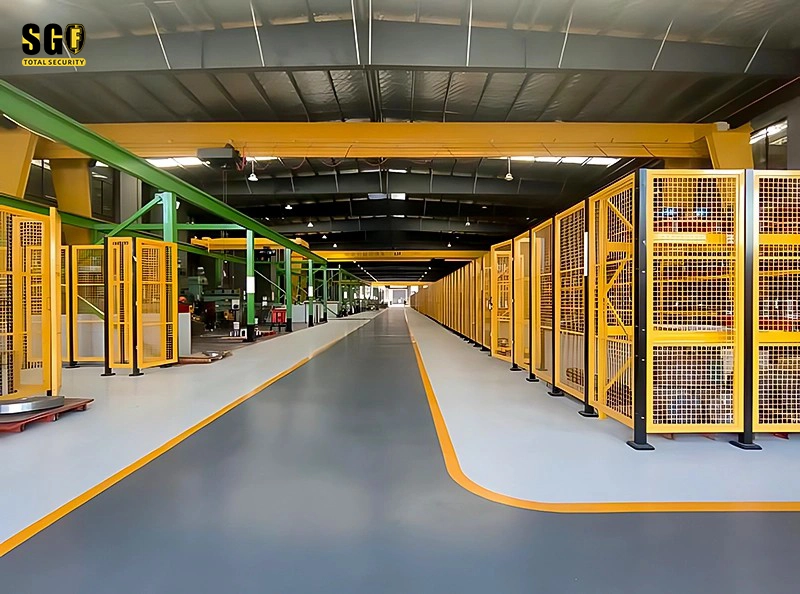
Layout flexibility for long aisles and mixed traffic
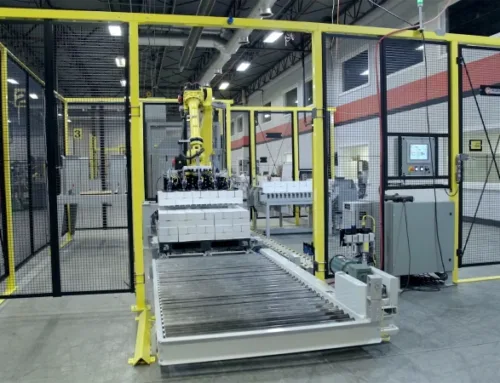
Scrap plants rarely have a clean, single-purpose cell. They have transfer zones, storage aisles, and machine edges that all need different protection lengths. Mdfence fits those spaces with a modular perimeter that can be extended around conveyors, racking, and access points without losing the machine-guarding function.

Where safety fencing machine guarding matters most
- Scrap shredding cells where heavy fragments can be projected outward during processing.
- Car dismantling lines where unexpected impacts from tools, parts, or handling equipment can damage weak fencing.
- Forklift and transfer corridors where repeated contact can deform ordinary barriers.
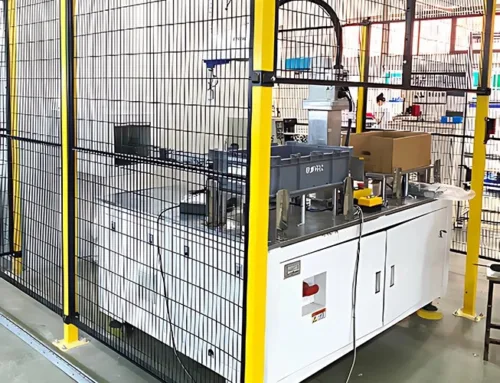
- Machine edges and maintenance access zones that need visible but secure perimeter guarding.
Mdfence is a strong fit for these environments because the same structure that keeps the fence standing also helps keep the hazard contained. That means fewer shutdowns after accidental hits, fewer repairs from bent panels, and a more reliable safety boundary for operators walking near the line.
What to specify before ordering machine guarding
If you are planning a recycling or dismantling layout, specify the impact risk, the type of flying debris, the vehicle traffic pattern, and the required access points. Then match those conditions to a fence built with Q235 steel, 60x60mm posts, 1600 joule impact resistance, and 20x100mm micro-mesh. That is the difference between a barrier that only marks the boundary and a barrier that actually protects it.
Build a safer perimeter before the next impact
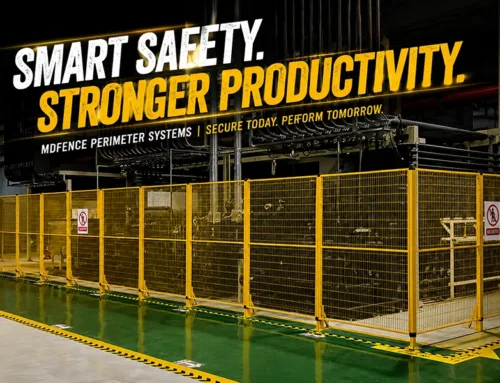
For heavy scrap flyout, collision exposure, and mixed-traffic factory zones, Mdfence gives you a practical machine-guarding answer instead of a thin visual divider. Use it where a light fence would fail early.