EN
EN  DE
DE  RU
RU  PT
PT  JA
JA  ES
ES  IT
IT Machine failure containment, not just access control
Industrial Safety Fencing for Fault Containment in Machine Failure Events
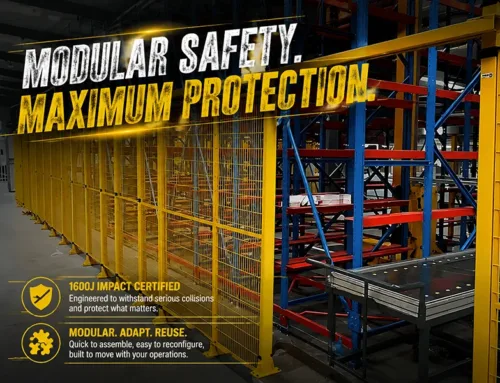
When a machining cell throws fragments, detached parts, or high-speed debris, Industrial Safety Fencing has to do more than mark a boundary. It must hold shape, absorb impact, and keep the outer walkway protected when the machine itself becomes the hazard.
Why the old machine guarding approach fails under real impact
Many plants still rely on light panels, thin posts, or low-rigidity mesh barriers that work fine in normal use but collapse when a fault sends a heavy component into the perimeter. That is the wrong failure mode. In a real machine incident, the fence must preserve the boundary, not only survive routine opening and closing.
| Problem pressure | Mdfence response |
|---|---|
| Flying parts and debris at failure speed | 1600 J impact rating with tested energy absorption for serious collision scenarios |
| Frame bending that opens a hazard gap | 20x30x1.5mm rectangular tube frame gives more than 4x the bending stiffness of an unframed mesh panel |
| Post deformation at the line edge | Standard 60x60mm thickened uprights keep the system stable when the boundary is hit |
| Brittle breakage after impact | Q235 cold-rolled carbon structural steel absorbs energy through plastic deformation instead of sudden fracture |
What makes Mdfence fit fault-prone machining cells
1) The structure is built to stay closed under force
Mdfence is designed for industrial safety fencing where the boundary may be struck from inside the cell. The system uses Q235 cold-rolled carbon structural steel and a heavy-duty post-and-frame layout so the guard line can take the hit, deform in a controlled way, and keep the surrounding aisle protected. That matters when the machine is not just running, but failing.
2) The panel frame turns the mesh into a load-bearing unit
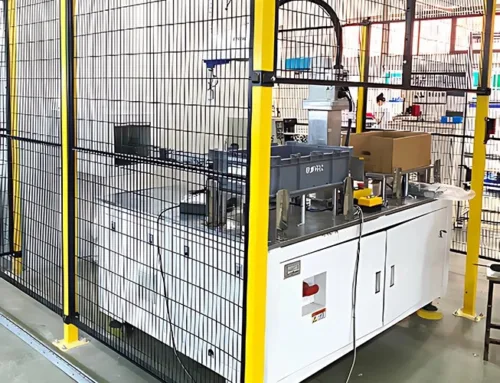
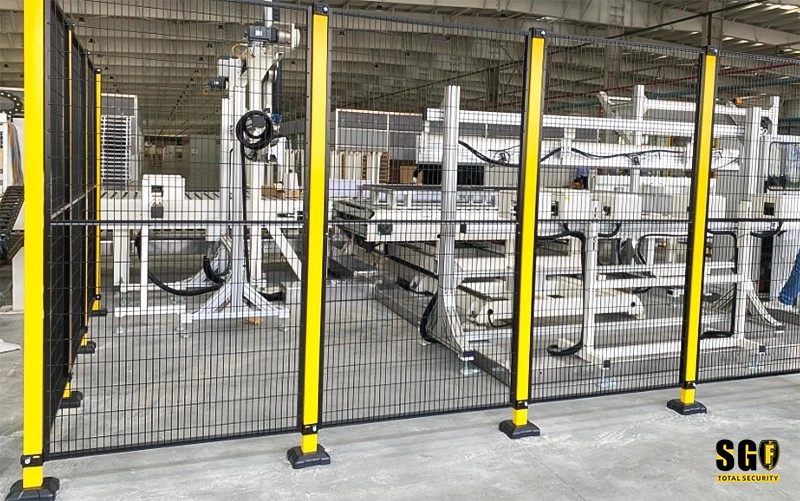
The 20x30x1.5mm rectangular tube border is not cosmetic. It converts the mesh panel into a structural unit with far higher bending stiffness than a frame-free mesh solution. In a fault event, that extra stiffness helps the barrier keep its geometry, which is exactly what a machine perimeter needs when the goal is physical interception, not visual separation.
3) The gate and base details support controlled access
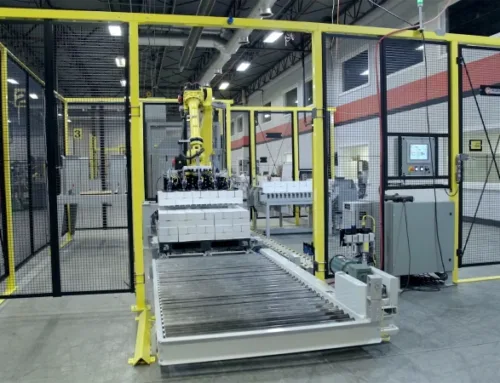
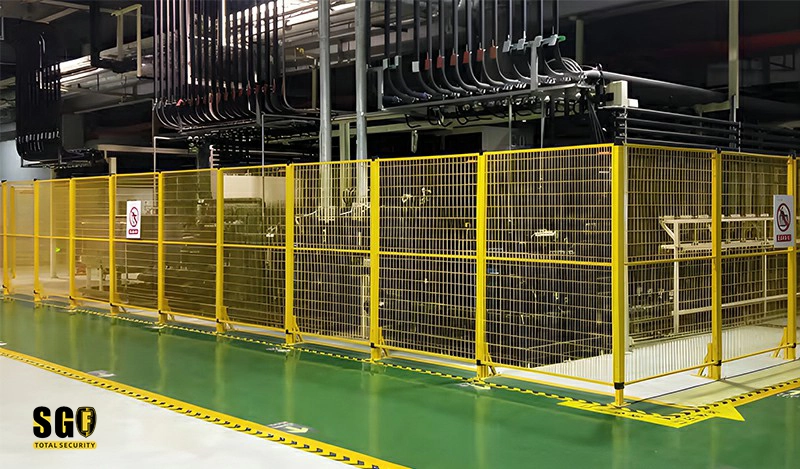
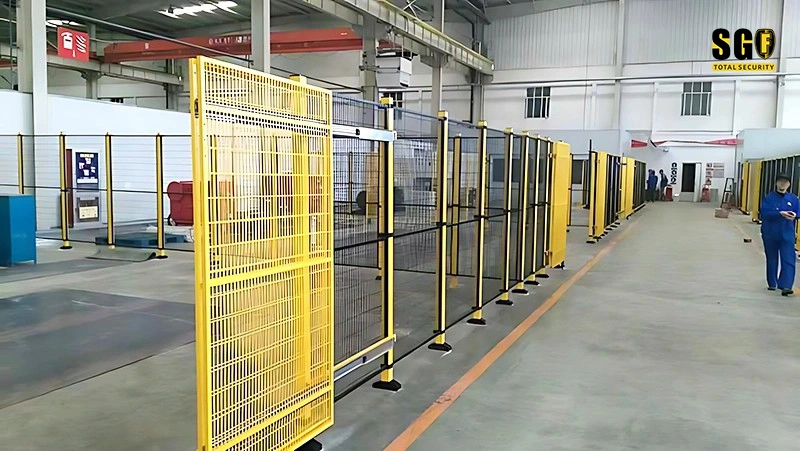
Machine cells still need access, but access cannot weaken the enclosure. The gate module and base plate details show how Mdfence keeps the opening controlled while preserving the perimeter. That is the practical balance buyers want: safe entry for maintenance, and a barrier that does not become the weak point during a collision.
Where Industrial Safety Fencing matters most
- Automated machining cells with a risk of part ejection or tool failure
- Production zones where operators walk close to the machine perimeter
- Retrofits that need stronger containment without rebuilding the whole cell
- Sites that want TÜV-tested confidence instead of a thin visual barrier
Mdfence is a better fit when the buyer needs the boundary to survive a real incident. The 1600 J testing level, the thickened 60x60mm uprights, and the framed mesh panel all work toward the same result: the fence line remains intact, the impact energy is absorbed, and people outside the cell stay protected.
Evidence before specification
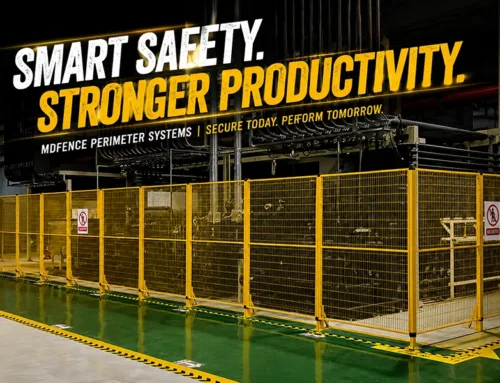
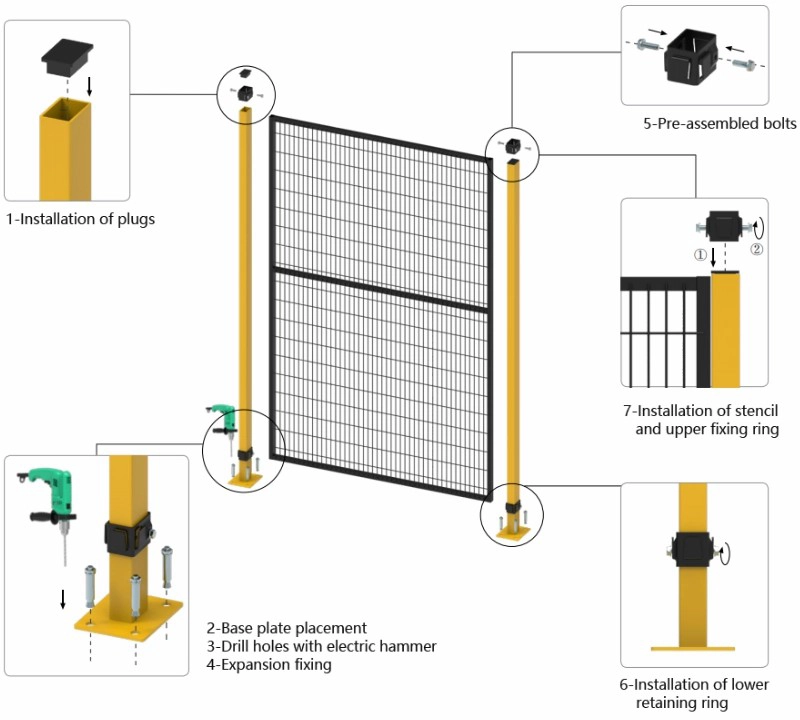
The images above do not just decorate the page. They show the welds, the coating, the base plate, the installation method, and the gate structure that support the product claim. For buyers comparing industrial safety fencing options, that visual proof is the shortest path to understanding why Mdfence is built for machine impact containment rather than light-duty guarding.
Need a boundary that holds when the machine does not?
If your cell can throw debris, lose parts, or hit the guard line during a fault, choose a fence system that is engineered for absorption and containment. Mdfence combines Q235 steel, a framed mesh panel, thickened uprights, and TÜV-tested impact performance to protect the walkway outside the machine cell.