EN
EN  DE
DE  RU
RU  PT
PT  JA
JA  ES
ES  IT
IT Robot Safety Fence | Mdfence
Robot Safety Fence for Dust-Free Cold-Work Retrofit in Precision Bearing Cells
For semiconductor and precision instrument suppliers, the retrofit rule is simple: protect the cell without creating dust, sparks, or shutdown time. Mdfence is a Robot Safety Fence built for cold-work assembly, so the line stays clean while the perimeter gets upgraded.
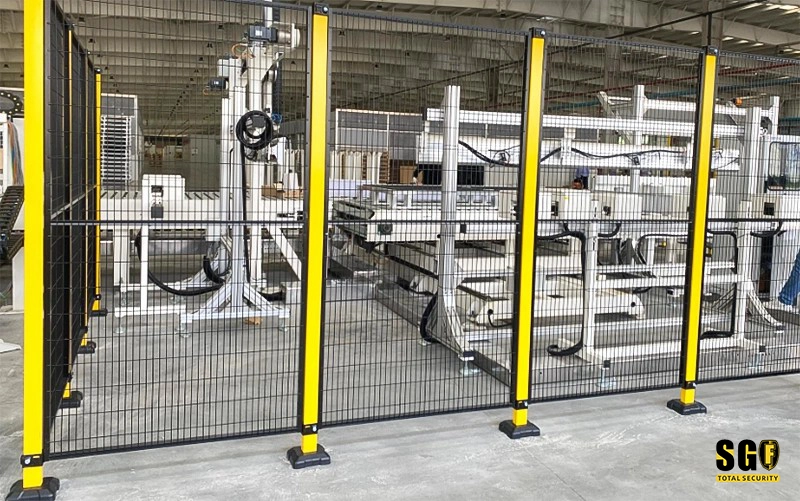
Why the old retrofit method fails in clean production areas
In precision bearing and guide rail production, the problem is not only safety compliance. It is contamination control. Traditional welded fencing brings hot work, airborne metal dust, splash, and a cleanup cycle that can interrupt nearby equipment for hours. When the floor already supports sensitive machining, metrology, or assembly, welding in place is the wrong tradeoff.
| Retrofit requirement | Mdfence answer |
|---|---|
| No sparks, no welding debris | 100% modular cold-work assembly with clamp rings and hex screws |
| Minimal shutdown time | Fast installation with no drilling or hot work inside the plant |
| Protect nearby precision equipment | Clean, dry assembly that avoids dust generation during installation |
| Faster safety upgrade | Installation speed improves by 40% to 70% versus现场焊接 retrofit |
Why Robot Safety Fence fits this clean-work scenario
Cold-work construction keeps the room clean
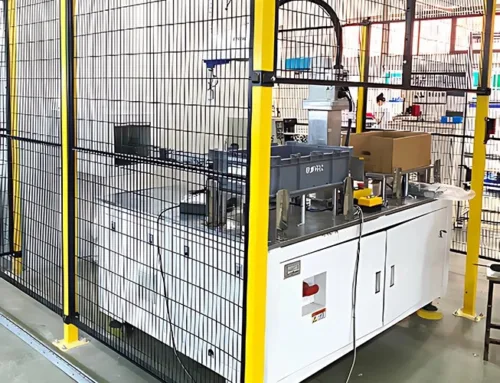
Mdfence is assembled entirely as a modular Robot Safety Fence. The system uses clamp-style retaining rings and hex-screw connections, so installers do not need to drill holes or perform welding on the factory floor. That matters in a clean production environment because the retrofit process itself can create the contamination the customer is trying to eliminate.
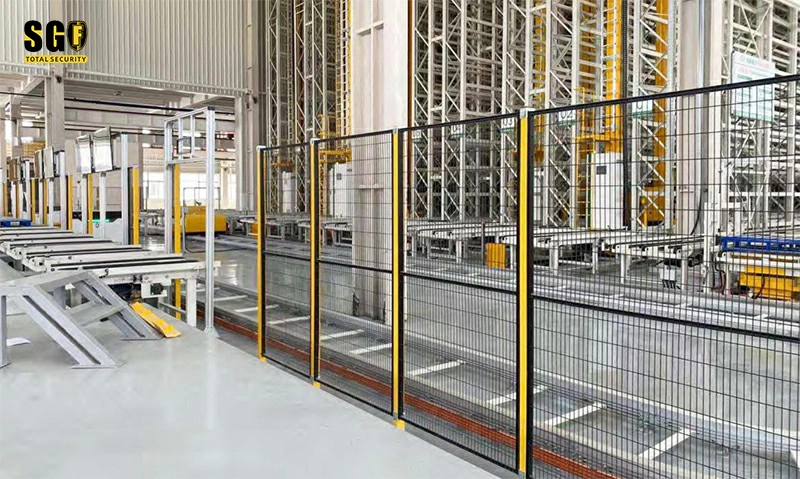
Structure is built for stable cell boundaries
The technical layout matters. The post, mesh panel, and fixing clamp relationship gives the fence a stable perimeter without relying on field welding. The result is a machine cell boundary that is repeatable, easy to align, and easier to service later. For factories producing needle roller bearings or guide rails, that repeatability reduces risk during future line changes.
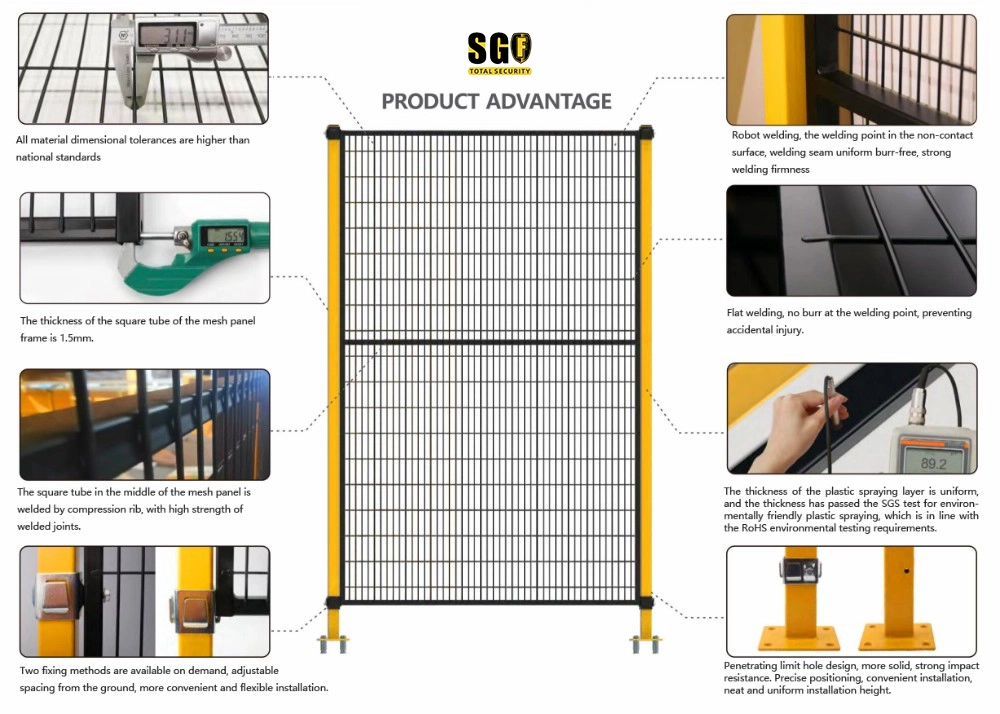
Evidence from the installed cell
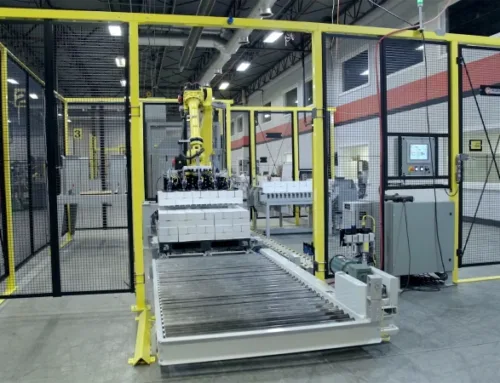
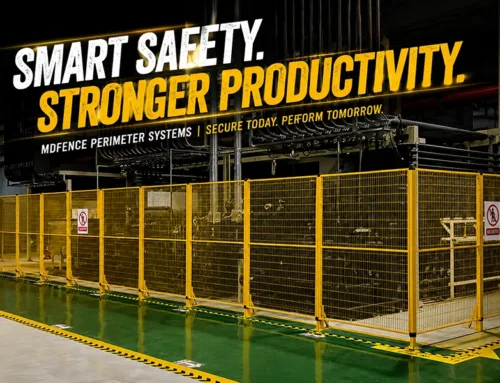
The installed view shows a full framed safety cell around automation equipment. This is the practical proof that the system is not just a fence panel; it is a controlled work-cell perimeter that can be introduced without disturbing the surrounding production area. The clean floor and orderly edge line show why the approach is suitable for precision manufacturing.
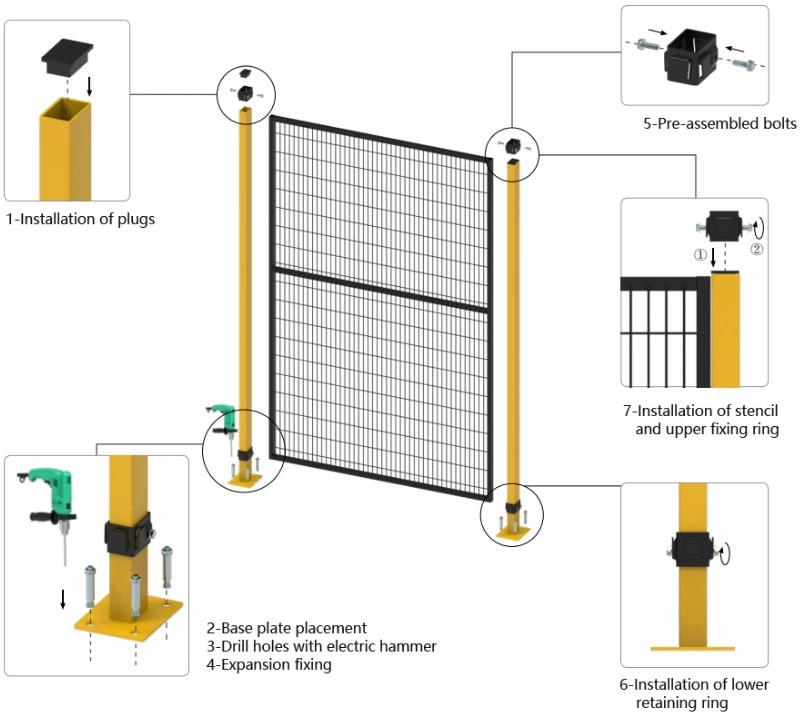
Where this solution is most useful
- Precision bearing production cells that cannot tolerate dust or metal splatter
- Guide rail and linear motion part lines that must keep adjacent machines running
- Retrofit projects that need a fast safety upgrade without plant-wide shutdown
- Automation perimeters where future expansion must stay modular
The value is not only speed. It is the combination of cleaner installation, less downtime, and a perimeter system that supports the way precision factories actually work. Instead of stopping a clean cell to create a fence, Mdfence lets the factory upgrade safety while the surrounding process remains under control.
What buyers usually want to verify
Before approving a retrofit, buyers in precision manufacturing usually ask two questions: can the fence be installed without contamination, and can the line keep running around it? Mdfence answers both with modular cold-work assembly, no drilling, no welding, and a reported 40% to 70% installation speed advantage over traditional on-site welding. For a clean plant, that combination is the real specification.
Upgrade the perimeter without dirty work
If your next safety project sits inside a precision or semiconductor-linked production area, the right Robot Safety Fence should solve the installation problem as well as the guarding problem. Mdfence is built for exactly that balance.