EN
EN  DE
DE  RU
RU  PT
PT  JA
JA  ES
ES  IT
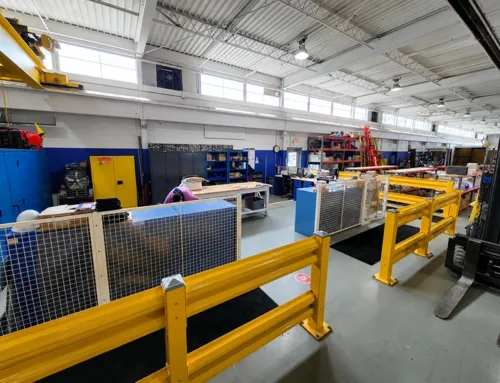
IT Machine Fencing for heavy forklift impact control
Machine Fencing for Heavy Forklift Impact in Steel Coil and Sheet Warehouses
When heavy forklifts move steel coils and sheet packs through narrow aisles, the fence line is not a light divider. This Machine Fencing is built to take repeated hits, absorb energy, and keep the protected zone closed when a loaded truck clips the barrier.
Why this Machine Fencing fits impact-heavy logistics lanes
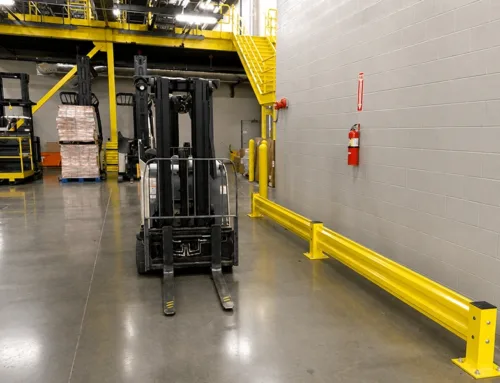
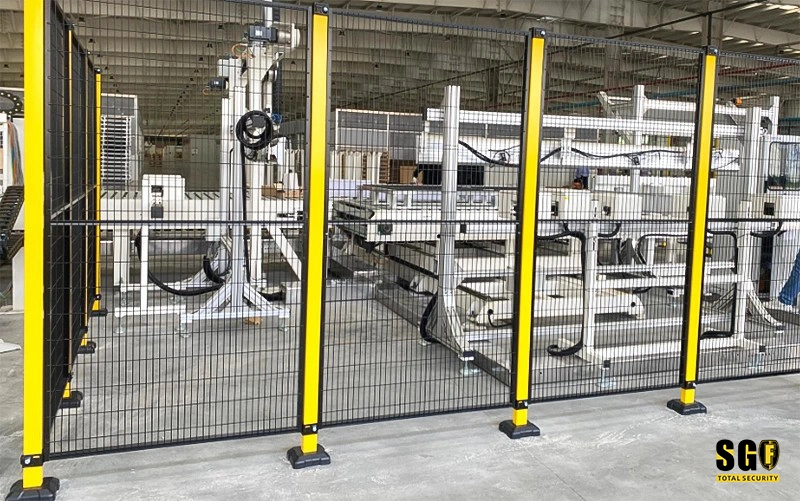
In coil and sheet handling zones, the problem is not a one-time bump. It is repeated side scrape, corner strike, and full-load impact from forklifts that share the same route as people, racks, and machine cells. Ordinary wire mesh or light-frame guardrails fail because they deform, tear loose, or collapse after a single hit. Machine Fencing is selected here because the structure is engineered as a crash-resisting barrier, not a cosmetic boundary.
| Key point | Machine Fencing specification |
|---|---|
| Impact risk in the aisle | Heavy forklift traffic around steel coil and sheet transfer routes |
| Main structural proof | 60x60mm Q235 carbon structural steel posts with TUV certification |
| Impact tolerance | Up to 1600 J extreme impact force, with plastic deformation to absorb energy instead of brittle failure |
Structural proof behind the crash resistance
1) Base anchoring that keeps the line standing
The installation sequence matters as much as the steel itself. The base plate drilling and expansion bolt fixation shown here explain why this barrier does not depend on a light press-fit or adhesive shortcut. In a forklift lane, the fence must stay tied to the floor, so impact energy is sent into the frame and foundation, not into a loose connection.
2) Post geometry and clamp layout built for impact load
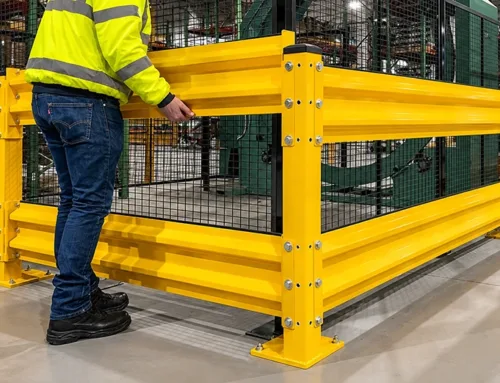
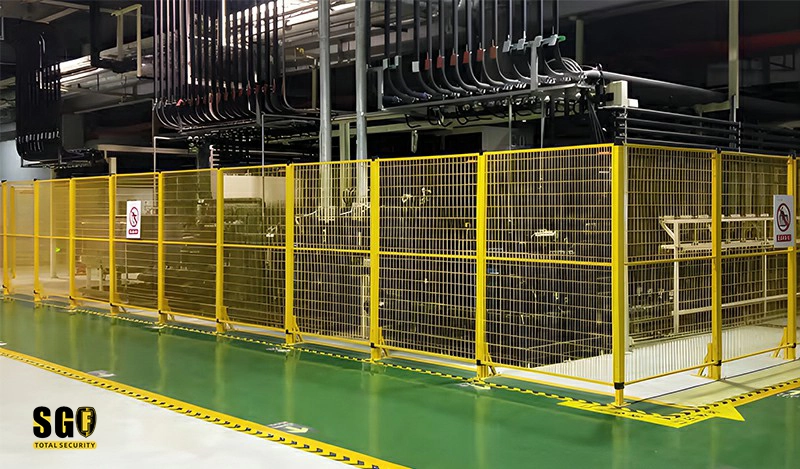
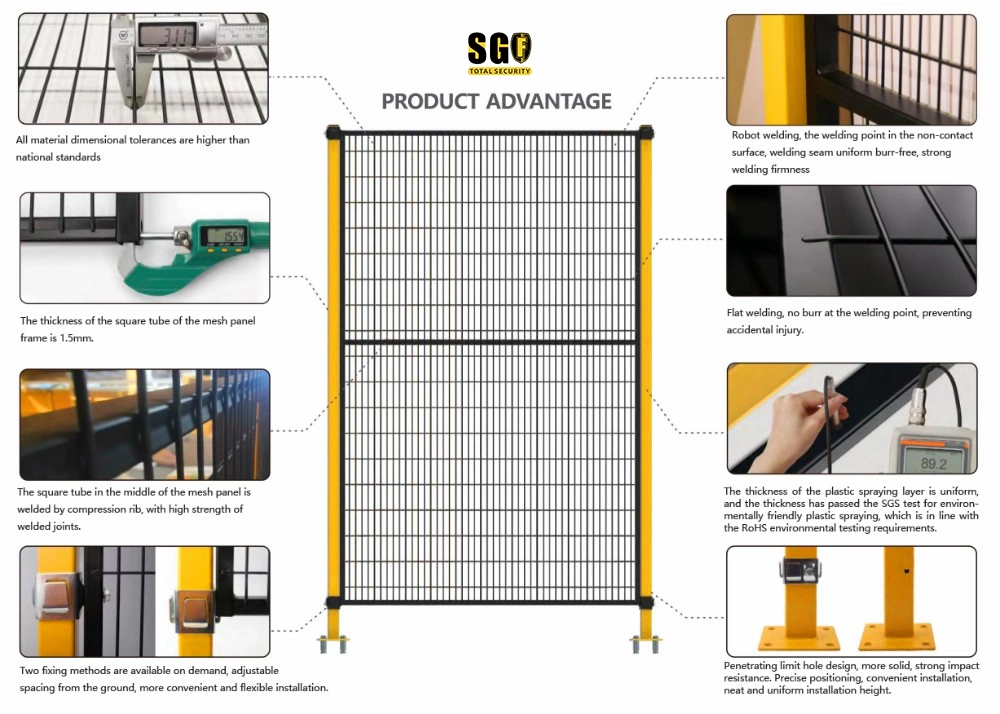
This technical front view helps show the real workhorse of the system: the 60x60mm Q235 post, the mesh panel, and the fixing clamp relationship. That combination is what gives Machine Fencing its heavy-industrial identity. Under force, Q235 steel can deform plastically and keep the protection line intact, which is exactly what a steel warehouse needs when a truck brushes or slams the boundary.
3) Enclosed zone protection for high-frequency collision sites
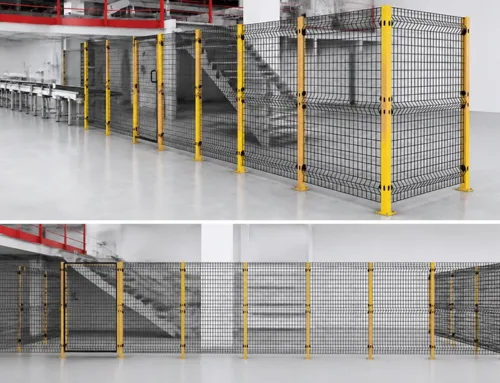
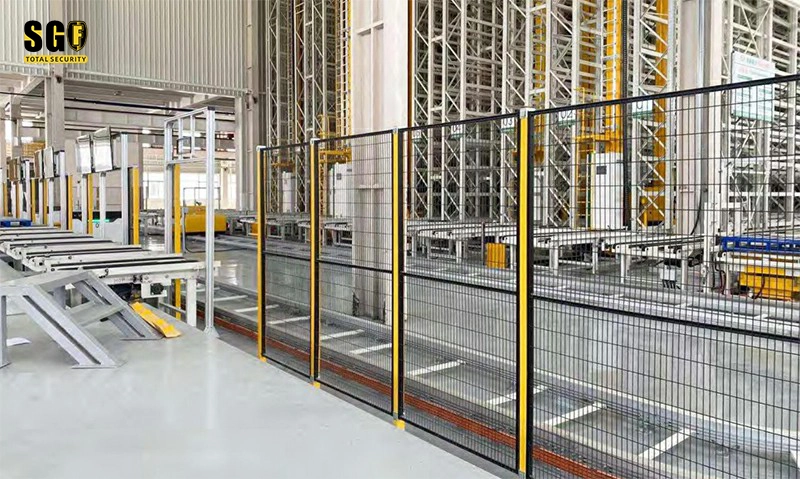
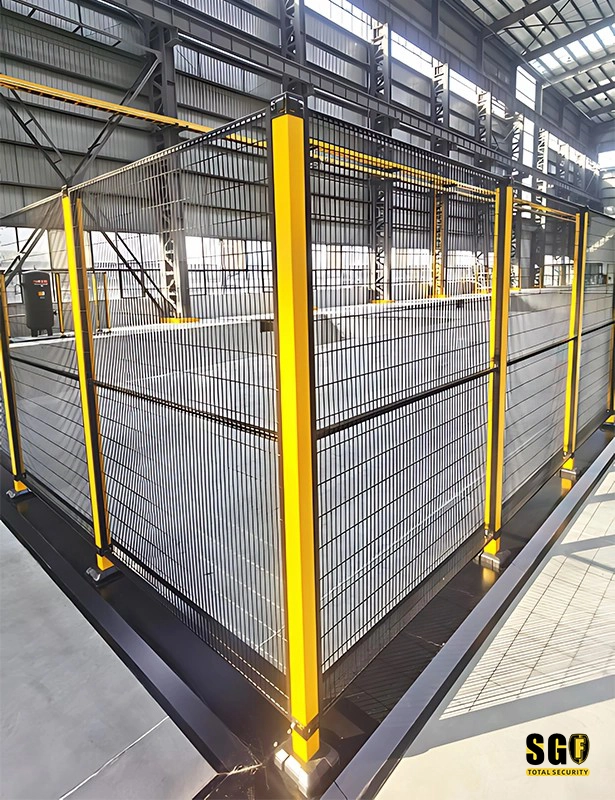
The square enclosed layout is important because the risk is not only a direct front hit. Forklift operators cut corners, swing wide with load overhang, and rub the fence repeatedly at the same turning points. The dense black-mesh enclosure gives the protected zone a continuous perimeter, while the steel structure absorbs abuse and keeps the machine cell or aisle separated after repeated contact.
Where Machine Fencing makes the biggest difference
- Steel coil staging lanes where forklifts pass within inches of the protective boundary.
- Sheet handling zones where side impacts are frequent and a light mesh fence would fail fast.
- Machine cells near traffic routes that need a real crash barrier, not just a visual separator.
- Warehouse corners and turning points where repeated scrapes usually destroy ordinary wire mesh.
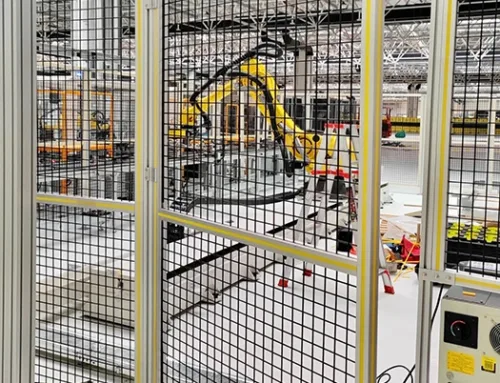
For these scenarios, the value is simple: the line stays in place, the energy gets absorbed, and the operation does not lose its safety boundary after the first collision. The additional framed cell view below shows how the same system supports clean, enclosed protection around a work area.
What the final result looks like on the floor
Instead of a fence that cracks, bends open, or needs frequent replacement, the site gets a heavy-duty perimeter that is designed around industrial collision reality. The result is fewer repairs, better uptime, and a safer separation between forklifts, materials, and people in the same high-traffic zone. When the impact comes, the Q235 structure deforms in a controlled way and keeps the barrier functional.
Need Machine Fencing for a forklift-heavy warehouse?
Send the aisle width, forklift model, and impact risk points. We will map the fence line against the actual traffic pattern and propose a structure that fits the collision load instead of guessing at it.