EN
EN  DE
DE  RU
RU  PT
PT  JA
JA  ES
ES  IT
IT Layout changes are the real test
Machine Fencing for Offsite Plants That Keep Changing Layouts
When the process keeps moving, the guard system has to move with it. Machine Fencing gives a British offsite manufacturer a modular, cold-assembled perimeter that can be taken down, reused, and rebuilt without turning every line change into a scrap event.
Why the old welded fence failed the changeover test
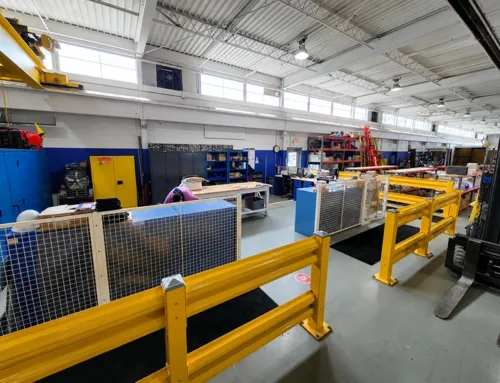
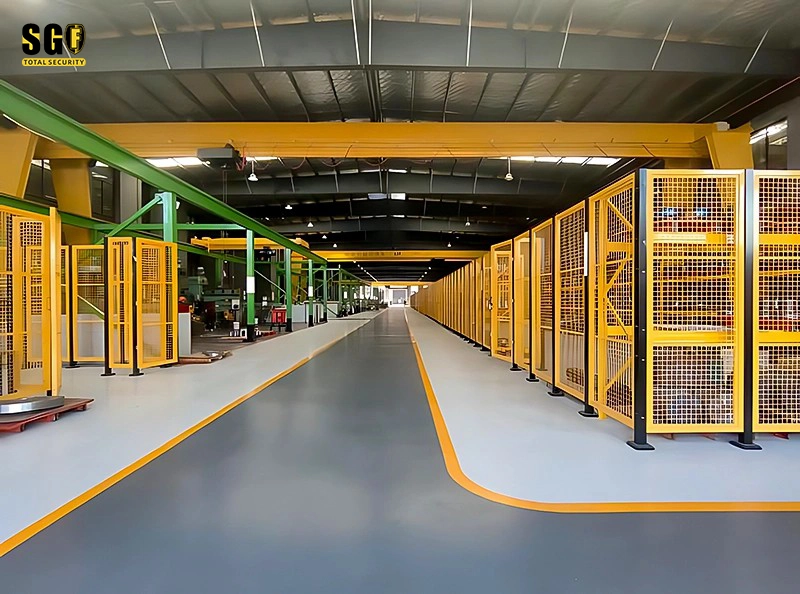
A welded local fence works only while the line stays frozen. In a plant that is still testing process flow, changing fasteners, or re-positioning robot cells, that kind of guard becomes a dead asset the moment the footprint changes. Machine Fencing is built for the opposite reality: frequent redesign, quick re-layout, and a need to keep capital equipment in circulation rather than in the scrap bin.
| Change-over requirement | Machine Fencing answer |
|---|---|
| Repeated line redesign during lean manufacturing trials | 100% modular cold assembly with clamp-ring connections that can be removed and rebuilt without cutting |
| Process shifts such as swapping one fixing method for another | No-weld hardware keeps the fence independent from the process logic, so layout changes do not damage the guard |
| Robot cell expansion or footprint reduction | Panels, posts, and access points can be re-planned as the cell changes |
| Asset reuse pressure after the line moves | High reuse lets the same fence components support the next layout instead of being written off |
What makes Machine Fencing fit a moving production plan
No-weld assembly keeps the guard out of the scrap cycle
The first requirement in a changing plant is simple: do not weld the protection to a decision that may change next quarter. Machine Fencing uses 100% modular cold work assembly, so the fence can be dismantled cleanly and rebuilt when the process map changes. That is why it suits a manufacturer that is still refining automation one stage at a time.
Clamp-ring structure makes reconfiguration practical
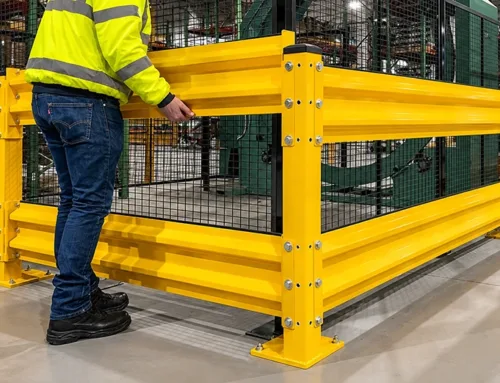
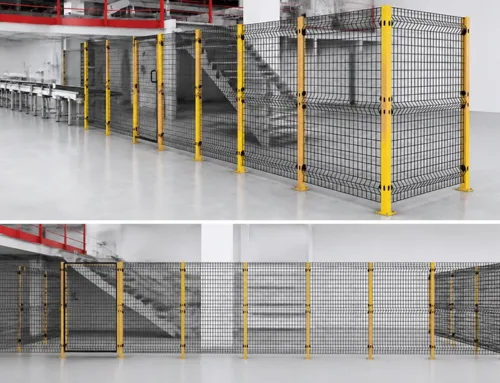
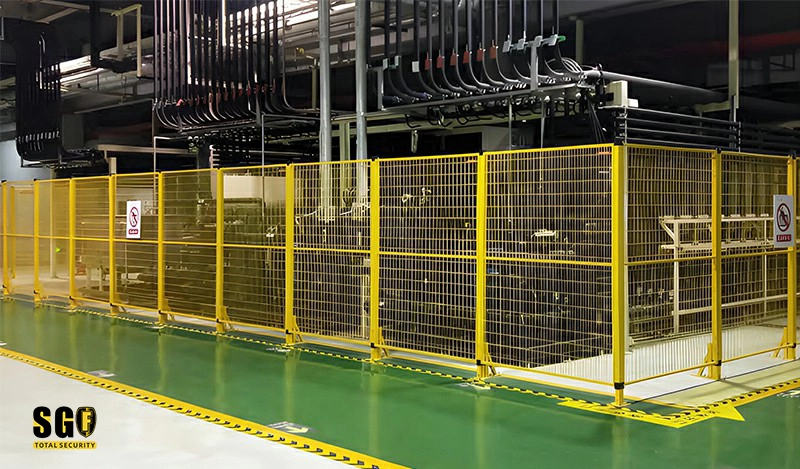
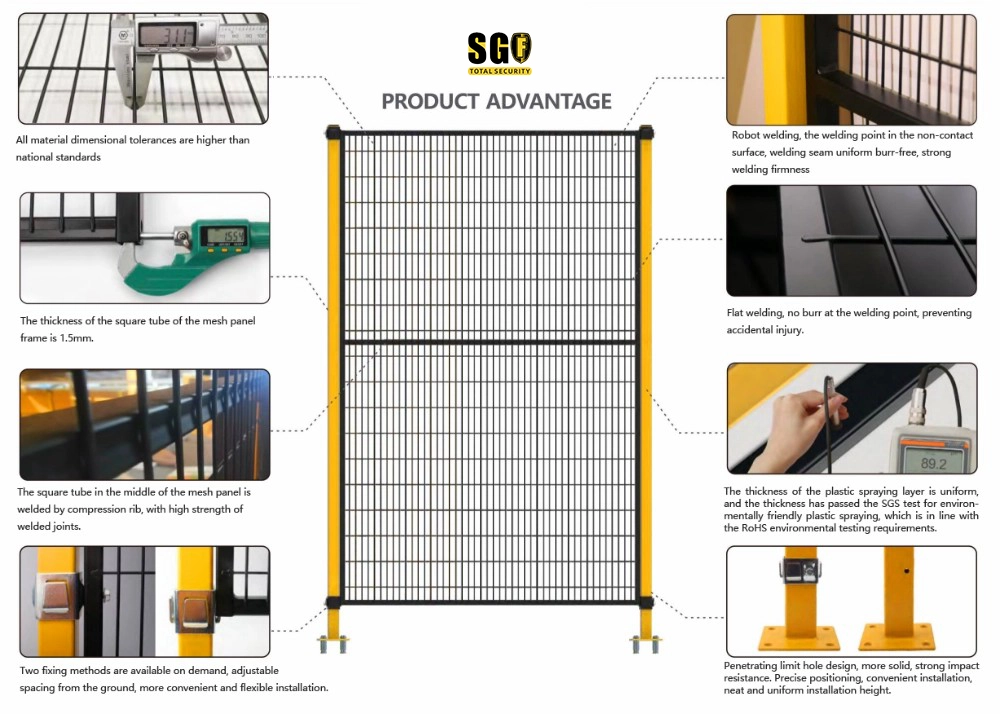
The value is not only that the fence is modular. The value is that each post, panel, and corner can be re-used as the line shape changes. The fixing-clamp layout is visible in the structure itself: it is a reconfigurable system, not a one-way installation. That matters when the production team is still moving equipment, changing access routes, or widening a robot bay.
Real-cell fit proves it works inside a live automation zone
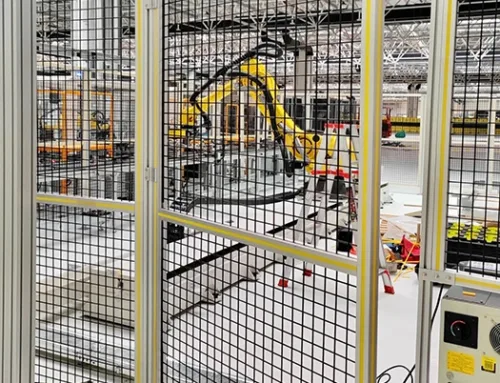
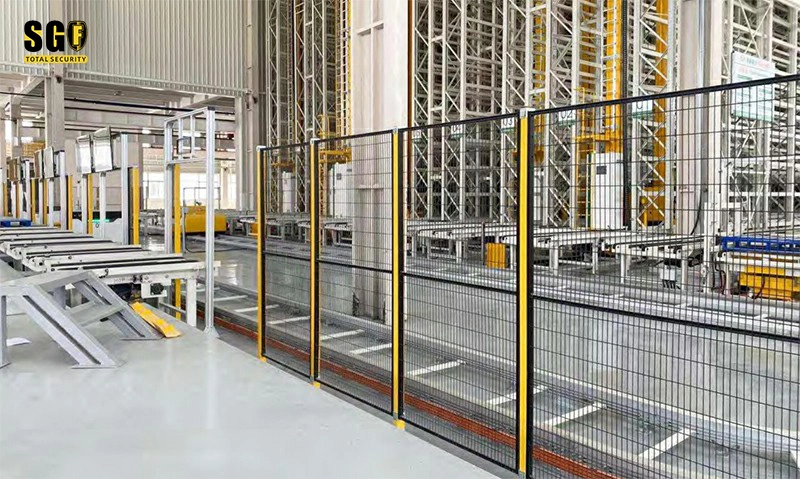
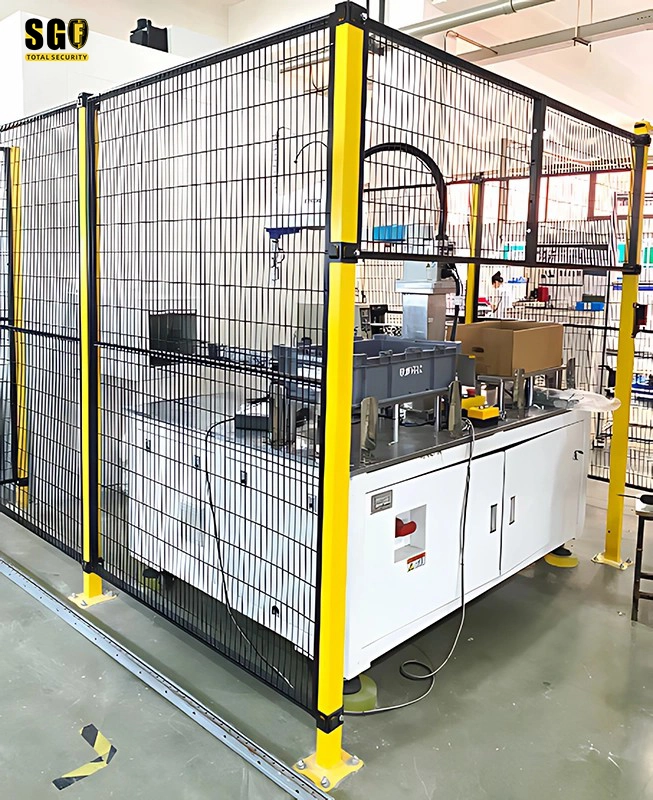
Layout flexibility still has to protect the machine cell itself. The automation-cell image shows the fence working around a real production zone, where access, enclosure, and machine safety have to stay stable even when the surrounding process is evolving. That is the key point for offsite manufacturing: the guard must support change without exposing the cell to it.
Where Machine Fencing earns its keep
- Robot cells that need to be re-planned as throughput targets change.
- Offsite manufacturing lines that keep adjusting the sequence of work.
- Plants replacing temporary local welding with reusable protection assets.
- Clean factories that need perimeter guarding without interrupting future expansion.
In this kind of environment, the fence is not just a safety boundary. It becomes a reusable production asset that follows the line, not one that locks the line into a single decision forever.
What to specify before you order a changing-layout fence
To size Machine Fencing correctly, start with the current footprint, the likely next footprint, the access points that must stay open, and the parts of the line that may still be revised. That is the right brief for a modular cold-assembled system: not just where the guard sits today, but how often it will need to move tomorrow.
Build the guard around the process change, not against it
If your plant keeps changing layout, the fence should stay useful through every revision. Machine Fencing gives you fast dismantling, reusable modules, and a cleaner path from trial line to stable production.