EN
EN  DE
DE  RU
RU  PT
PT  JA
JA  ES
ES  IT
IT Machine safety fencing for a reconfigurable offsite plant
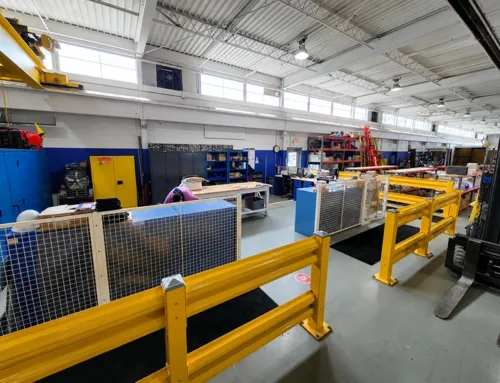
Machine safety fencing that keeps pace with a line that never stands still
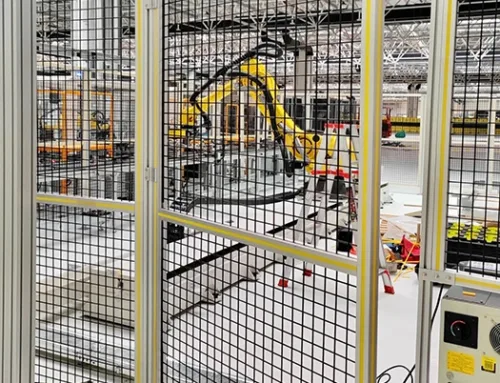
For a British offsite manufacturer, the real challenge is not only guarding robots and process zones. It is keeping the fence system aligned with a production line that keeps changing layout, tooling, and cell boundaries. Mdfence solves that with 100% modular cold assembly, clamp-ring connections, and non-destructive disassembly that supports 95%+ asset reuse.
Talk to Mdfence about a reconfigurable machine safety fencing layout
Why the old welded guard became a dead asset
This type of customer does not have a fixed-line mindset. In the first 18 months of automation, process changes can be frequent: a fastening method is replaced, a robot cell is moved, throughput is expanded, or the cell perimeter is narrowed to match a new workflow. A traditional local welded fence is built like a permanent structure. Once it is removed, it usually loses its value. That creates friction in every trial-and-upgrade cycle and slows the entire plant down.
| Customer need | Mdfence response |
|---|---|
| Fast line re-layout | Modular machine safety fencing with non-destructive拆装 |
| Asset reuse | Clamp-ring connection supports 95%+ reuse after reconfiguration |
| No hot work on site | 100% cold assembly, no dependency on on-site welding |
| Robots and cells keep changing | Panels, posts, and corners can be re-planned around new cell geometry |
What makes Mdfence fit an evolving automation plant
Modular cold assembly that does not lock the layout
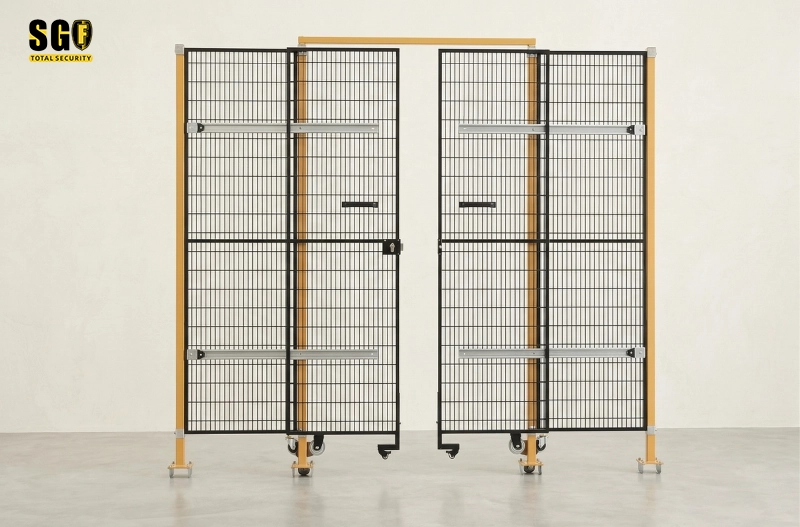
Mdfence is built for plants that treat their current layout as a temporary version, not a final one. The modular machine safety fencing architecture uses cold-work assembly, so the team can add, remove, or reposition sections without cutting and rewelding the perimeter. That matters when the next iteration may be a new robot base, a widened access opening, or a different material route around the cell.
Structure evidence you can verify on the shop floor
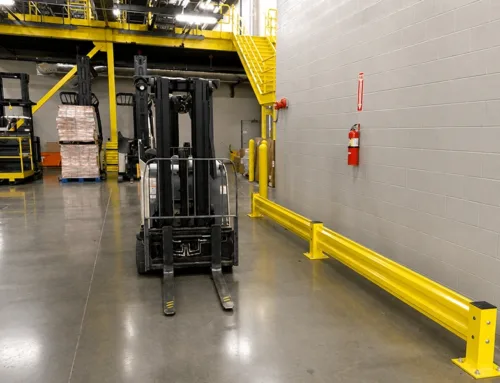
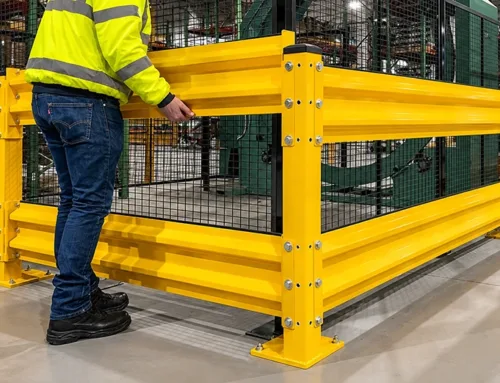
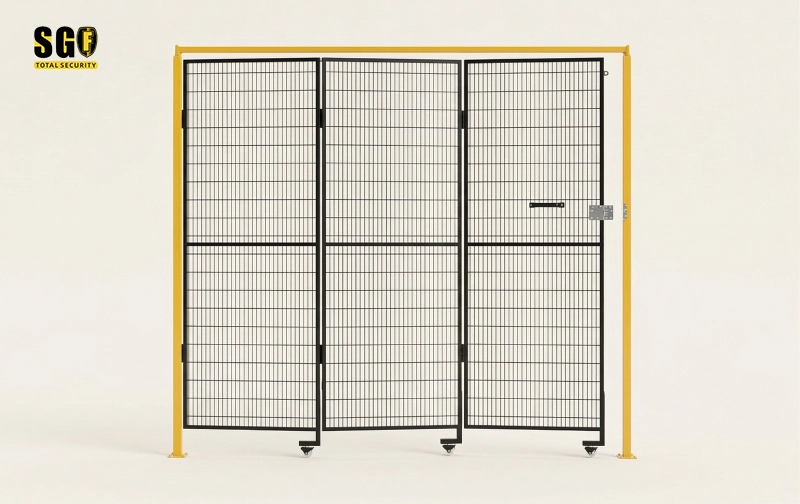
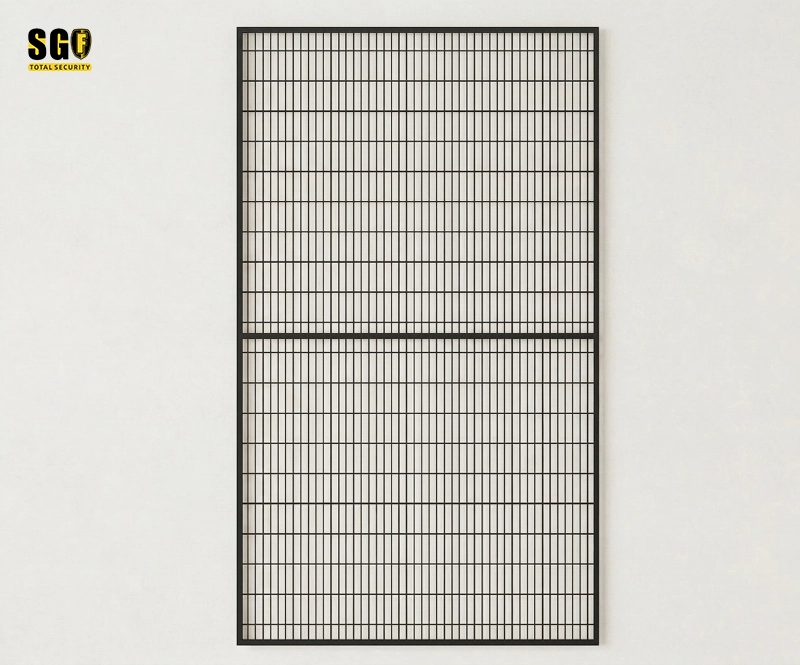
The product proof image shows the kind of build quality that supports repeat use: weld seam control, coating finish, and base plate details. The assembly guide image shows drilling, expansion bolts, and retaining rings. Those details are important because a reusable guard has to stay stable after every move, not just look correct on day one. For the customer, this is the difference between buying a one-time barrier and buying a reusable production asset.
Corner and aisle pieces that support future expansion
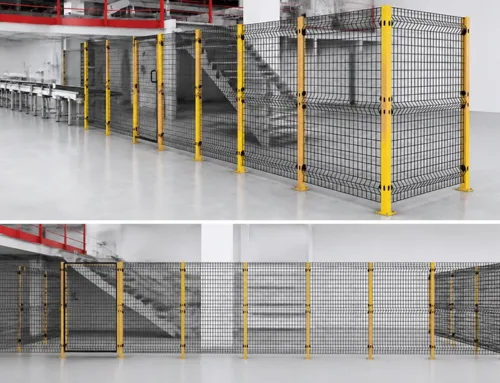
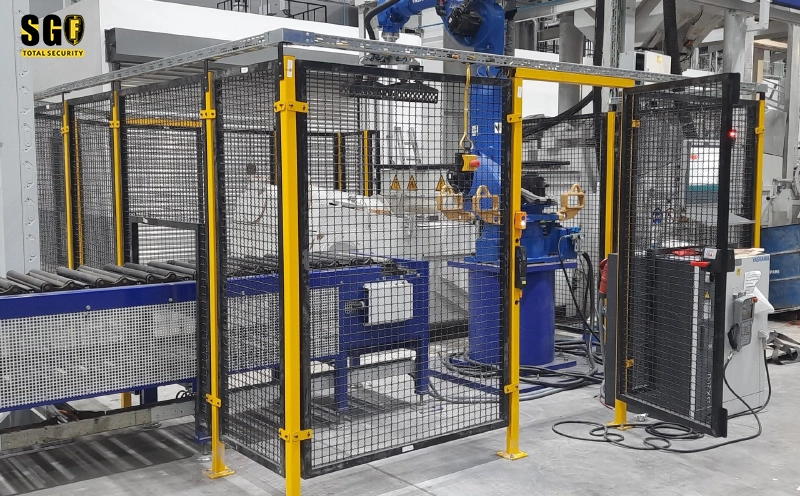
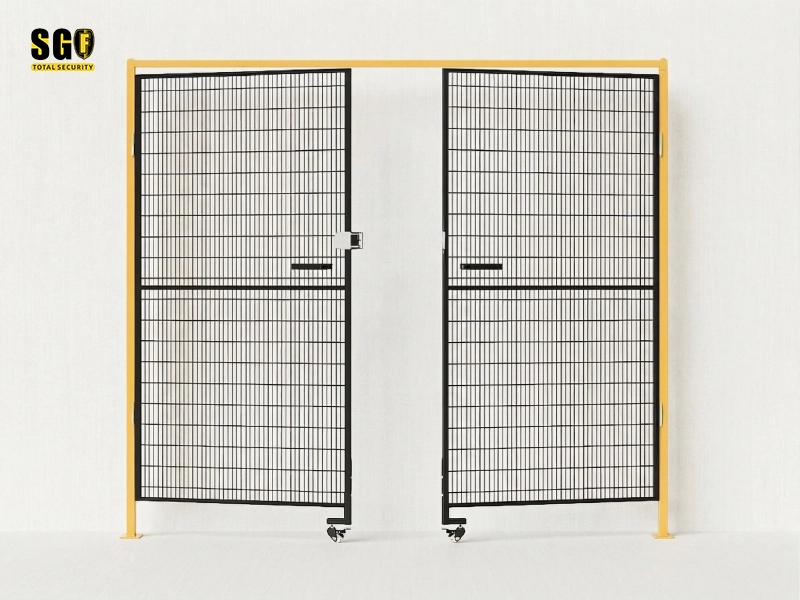
The corner detail and aisle layout images show how the system keeps its logic when the plant grows. Corners close cleanly. Aisle-side runs can extend alongside workflow routes. That is exactly what a British offsite manufacturer needs when a robot cell is re-planned and the guarding perimeter must move with it. Instead of scrapping welded panels, the team can redeploy the same modular elements into the new layout.
Where this solution fits best
- Robot cells that are still being tested and rebalanced
- Offsite manufacturing lines that change tooling and access routes
- Plants that want machine safety fencing without the cost of welded throwaway assets
- Automation projects where expansion is expected, not exceptional
The key result is simple: the fence no longer fights the process. It follows the process. That is why Mdfence is a better fit than a fixed welded barrier for plants built around continuous improvement and rapid iteration.
Final result: safer cells, faster changes, less scrap
When a plant keeps upgrading its automation, the guarding system has to evolve with it. Mdfence gives the customer a machine safety fencing platform that can be disassembled without damage, rebuilt in a new configuration, and reused at a high rate. That reduces dead inventory, protects the new layout, and keeps future expansion practical.
Plan your next machine safety fencing move with Mdfence
If your line is still changing, your guarding should be change-ready too. Talk to us about a modular layout that supports reconfiguration, reuse, and cleaner expansion planning.