EN
EN  DE
DE  RU
RU  PT
PT  JA
JA  ES
ES  IT
IT Robot Safety Fencing for changing automation layouts
Robot Safety Fencing for Reconfigurable Offsite Cells | Mdfence
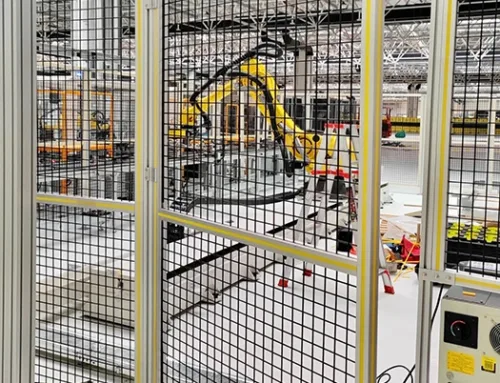
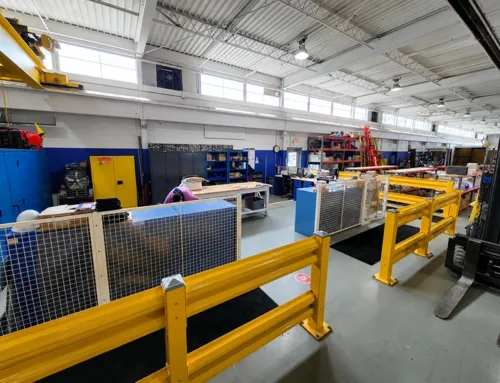
When a line keeps changing, welded barriers turn into scrap. Robot Safety Fencing gives a British offsite manufacturer a 100% modular, cold-assembled guard that can be dismantled, reused, and expanded without hot work.
Why this layout problem needs a modular guard, not a welded one
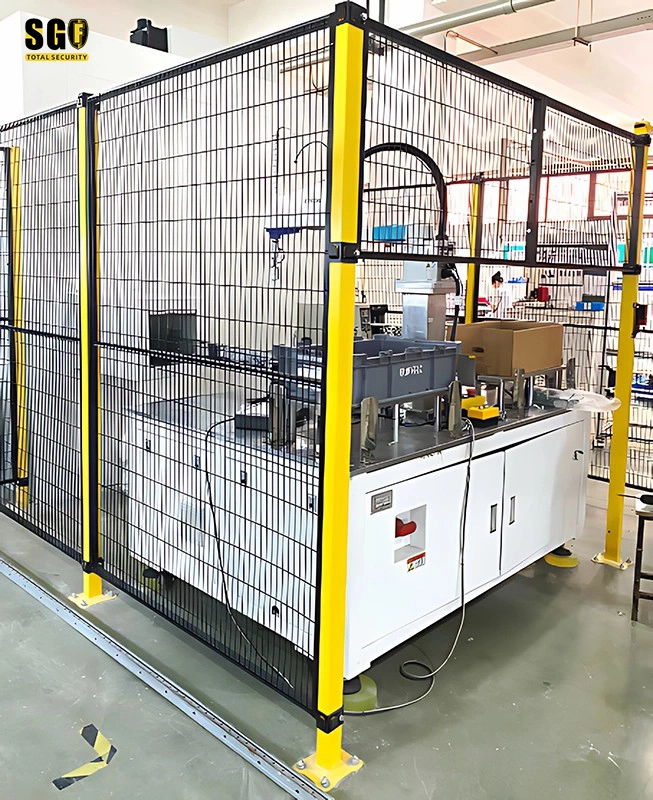
A production line that changes every few months does not need a barrier that is permanent in the wrong way. It needs a system that protects the robot cell today and still makes sense after the next process revision, the next machine move, or the next capacity expansion. Mdfence is built for that reality: modular panels, cold assembly, and fast reconfiguration without destroying the asset.
| What the customer needs | How Mdfence answers it |
|---|---|
| Layout changes without capital waste | 100% modular steel sections can be taken down and reinstalled with high reuse, supporting future line redesigns. |
| No hot work on the shop floor | Cold-assembled clamp-style ring connections reduce disruption and help avoid on-site welding. |
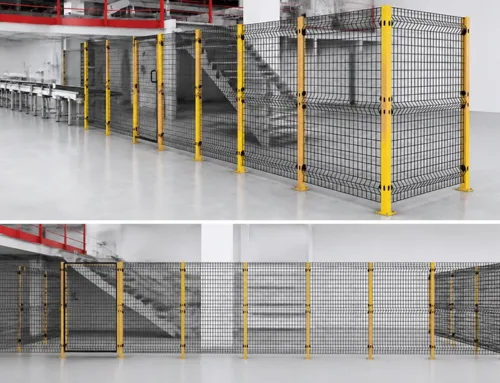
| Stable robot cell protection | Framed mesh panels and rigid posts keep the enclosure square, visible, and easy to inspect. |
| Fast project adjustment | Panels, gates, corners, and anchors can be reconfigured when the process changes instead of being scrapped. |
How Mdfence fits a line that keeps evolving
1. Welded barriers lock the line into yesterday’s layout
British Offsite’s own production history shows the issue clearly: in just eighteen months, processes were revised multiple times, including a move from nail fixing to screw fixing. A local welded fence may look simple at handover, but once the line shifts, it becomes a dead asset. Mdfence is specified for movement. Its modular structure lets the team keep the same protection concept while changing the cell geometry around new equipment, new access paths, or a larger footprint.
2. Structural proof matters when the enclosure has to be moved again
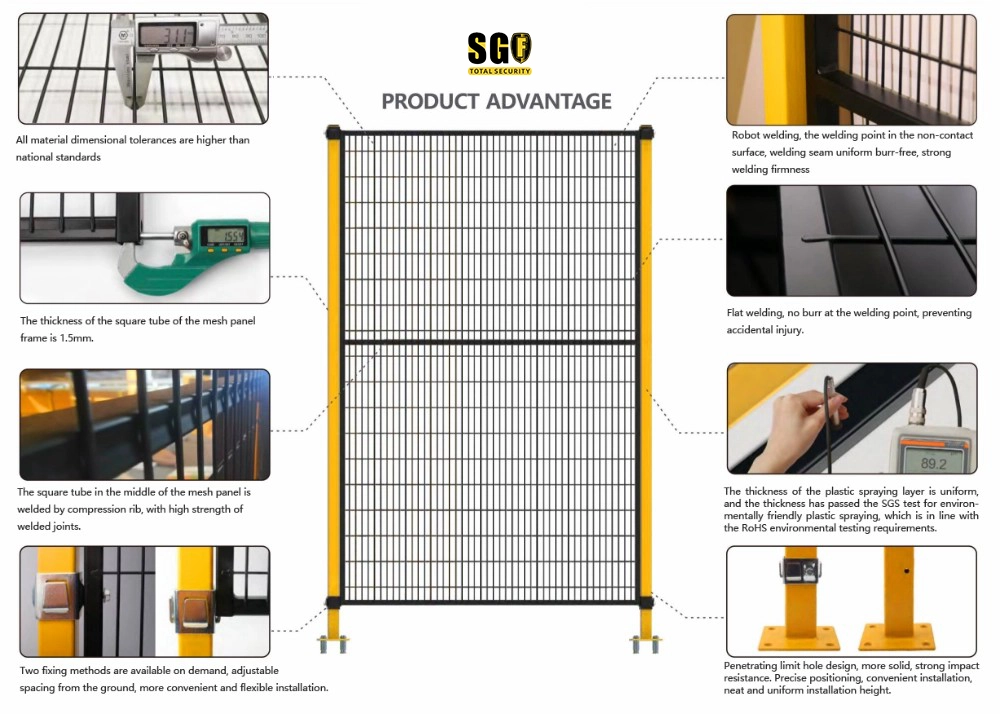
The product is not just a visual boundary. The Mdfence build uses framed mesh panels, rigid posts, and anchored base details so the guard stays aligned after installation and still comes apart in a controlled way later. The composite detail shot shows the weld seam, coating, caliper check, and base plate together. That matters because offsite manufacturers need more than a fence that looks straight; they need a system that can be measured, documented, and reinstalled without losing its geometry.
3. Cold assembly keeps the project flexible instead of fragile
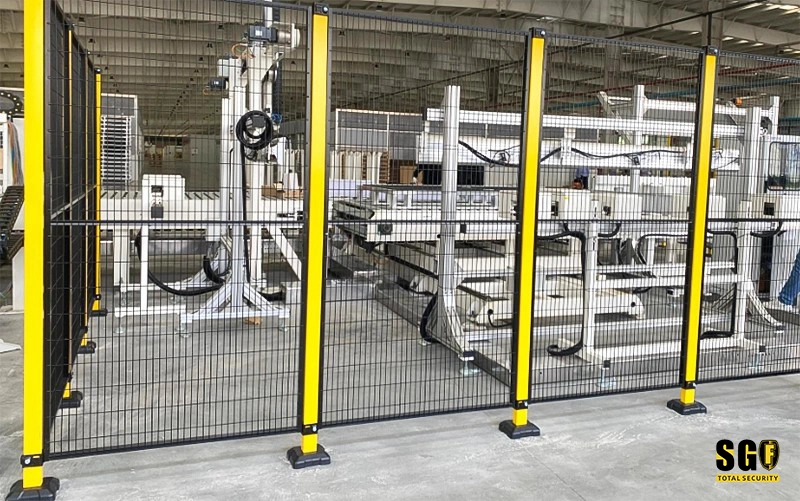
When a new robot unit is added or an aisle is shifted, speed matters. The installation diagram shows base plate drilling, expansion fixing, and retaining-ring assembly as a clear, repeatable process. That is the point: Mdfence supports controlled field installation without turning the whole project into a welding job. The same logic makes later disassembly practical. The enclosure can be unlocked, lifted, relocated, and rebuilt to fit the next layout instead of being cut apart and thrown away.
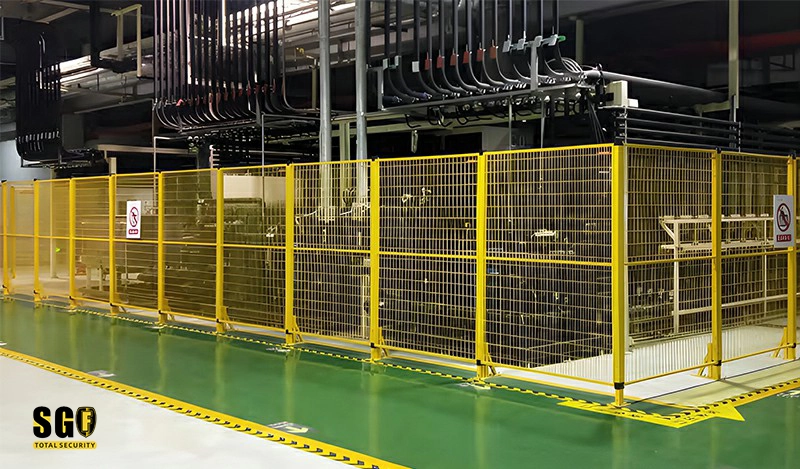
Where this approach pays off fastest
- Robot cells that are still being tuned during ramp-up.
- Offsite manufacturing bays where the process route changes as the team improves takt and flow.
- Lines that need a guarded corner, a new access path, or a larger service opening later.
- Projects where the customer wants the safety asset reused at the next layout revision.
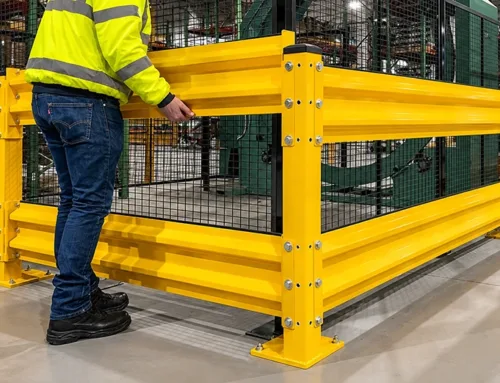
That is why the corner connection matters. A reconfigurable cell is only useful if the corners, posts, and mesh still close cleanly after the first move. The close-up below shows the yellow post, top beam, and black mesh corner working as one enclosure rather than a loose collection of parts.
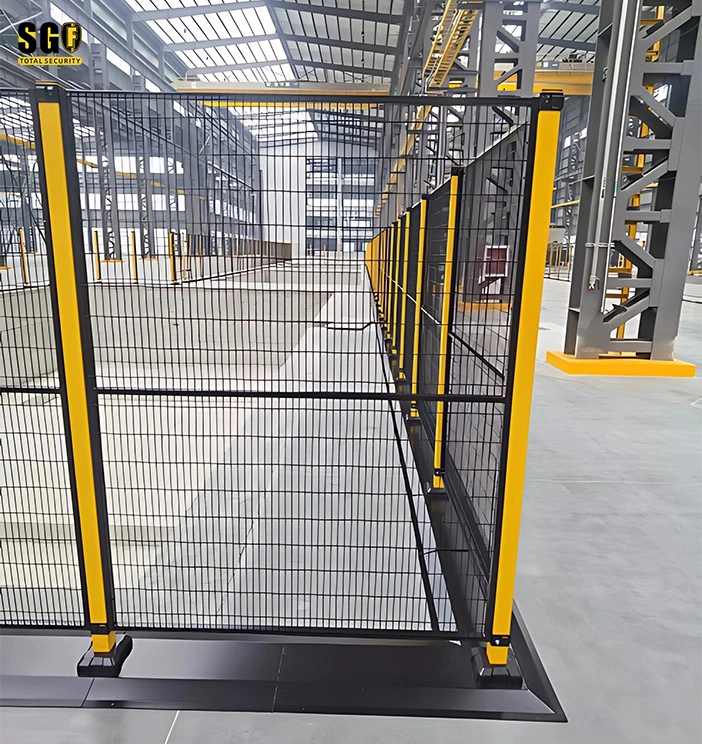
For a manufacturer that wants flexible evolution, the result is simple: the safety fence follows the process, not the other way around.
What to ask before you specify a robot safety enclosure
Before you approve a guarding package, confirm whether the system can be taken apart without damage, whether the corners and gates stay aligned after reinstallation, and whether the project can be expanded when the robot cell changes. Mdfence is built to answer those questions with modular steel, cold assembly, and reusable structure logic.
Plan the next layout change before the current one is finished
If your line is still evolving, do not buy a dead asset. Specify Robot Safety Fencing that can be moved, reused, and extended as the plant learns. Mdfence is designed for that job.