EN
EN  DE
DE  RU
RU  PT
PT  JA
JA  ES
ES  IT
IT GLOBAL EHS STANDARDIZATION · FCBarrier
Make Flexible Guardrail a Repeatable Standard Across Every Plant
Flexible Guardrail gives multinational manufacturers a standard, auditable route to warehouse safety barrier protection: choose the right modular configuration for racking, pedestrians, loading bays, or cold-storage operations, then replicate the documented impact and energy basis across sites.
Why Distributed Procurement Creates an EHS Control Gap
A fast-moving consumer goods group may operate dozens of factories across multiple countries. When each site buys a different steel barrier, steel bollard, concrete barrier, or traditional guardrail, the group inherits inconsistent layouts, impact assumptions, inspection records, and replacement practices. That makes workplace safety audits slower and makes PAS 13-related requirements harder to translate into a common site standard. A flexible safety barrier program should let EHS teams compare like-for-like evidence instead of comparing local product names.
| Common site-by-site approach | Standardized FCBarrier approach |
|---|---|
| Different steel rack protectors and rail heights at each factory | Four defined series: SR, DR, TR, and CTR, selected by the protected zone |
| Impact claims recorded in incompatible units or omitted from audits | Energy-based comparison, including the 28,950J rated barrier reference for an 8-ton forklift at 9.6 km/h |
| Rigid steel repairs after a forklift impact create downtime | ARMORFLEX™ polymer absorbs energy and self-rebounds after absorbing up to 80% of impact energy |
| One fixed barrier is used for racking, walkways, and loading bays | Modular barrier and column protector configurations match racking protection, pedestrian safety, and loading dock protection needs |
How Flexible Guardrail Supports a Replicable Specification
1. Select by scenario, not by local preference
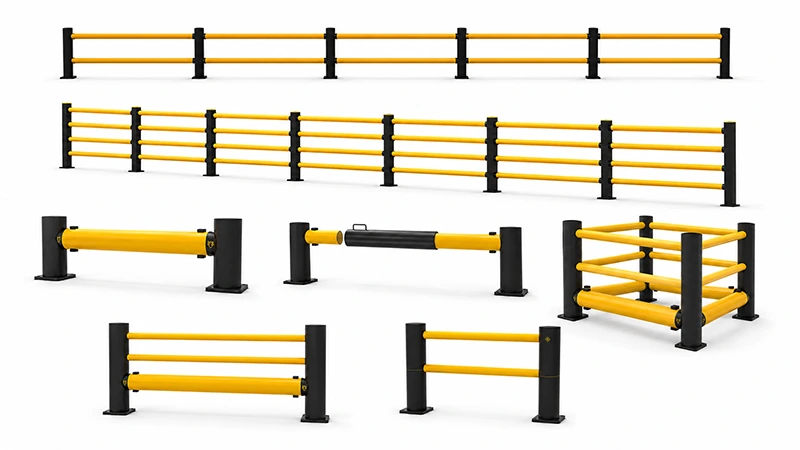
Use the SR Series for single-rail separation, the DR Series for double-rail protection, the TR Series for traffic and pedestrian routes, and the CTR Series for column protection. This creates a practical selection language for warehouse safety barrier, forklift safety barrier, pedestrian barrier, and column guard layouts. The same logic can be carried from a logistics centre to a manufacturing plant without rebuilding the specification from zero.
2. Make energy calculations reviewable
Impact performance is easier to audit when the reference condition is explicit. FCBarrier documentation can be organized around energy rather than vague labels: the 28,950J reference corresponds to an 8-ton forklift travelling at 9.6 km/h. EHS and engineering teams can then check whether the selected heavy duty safety barrier and high impact rating match the vehicle, route, and asset exposure at each location. PAS 13 compliance should be verified against the project’s applicable certification and test requirements; this article does not claim an unverified third-party certification.
3. Standardize installation and maintenance records
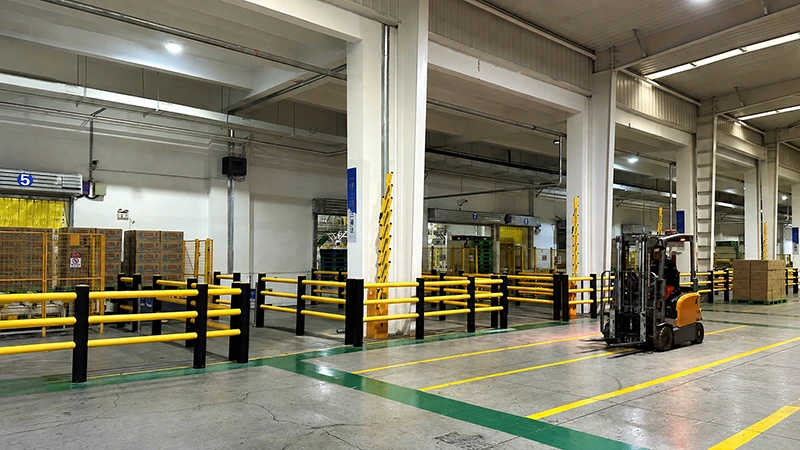
Floor-anchored bases, modular installation, and mortise-and-tenon quick-install connections give contractors a defined installation method. A site can record barrier series, rail configuration, anchor locations, and replacement modules in the same handover format. The polymer safety barrier is impact resistant, corrosion free, UV resistant, recyclable, and designed for low maintenance; self-rebounding behavior can help reduce repair cost and accident downtime when the impact remains within the specified performance envelope.
One Framework for Racking, People, and Plant Assets
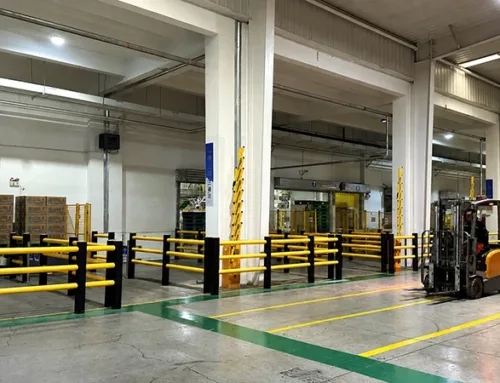
- Warehouse and distribution: use flexible rack protection and warehouse guardrail sections to protect racking, columns, and loading routes from forklift damage.
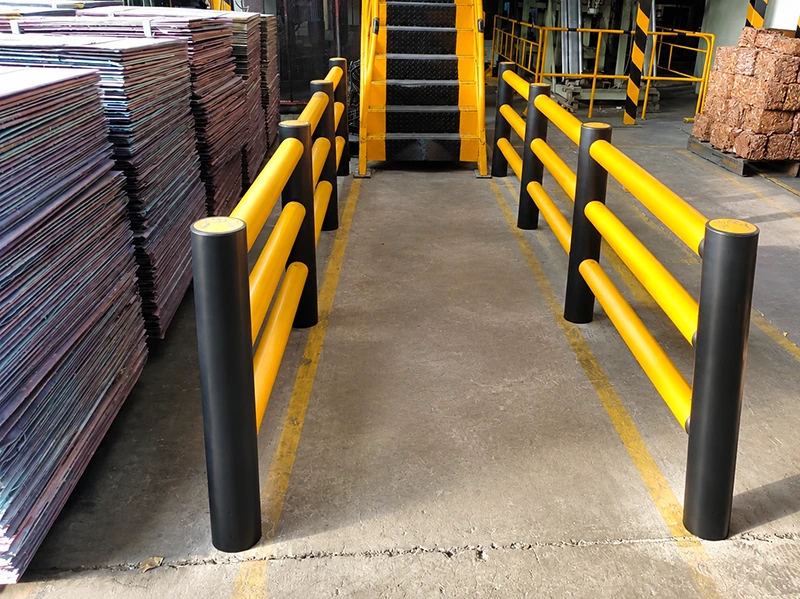
- Pedestrian routes: use TR Series pedestrian barrier layouts to separate people from vehicle paths and support pedestrian and asset protection.
- Loading docks: define loading dock protection around dock edges, approach lanes, and equipment interfaces, with the impact condition recorded for audit.
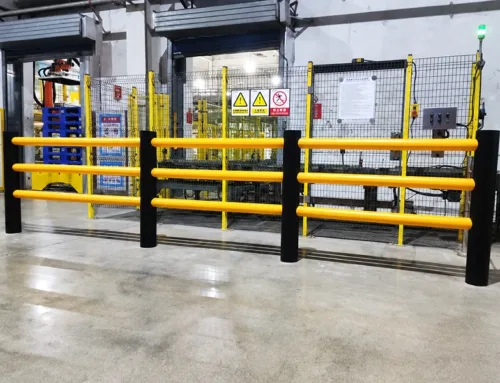
- Manufacturing plants: protect machinery, conveyor openings, and work-cell boundaries with industrial safety barrier modules and floor-anchored bases.
- Food, beverage, and pharmaceutical sites: consider corrosion-free, easy-clean polymer protection where the environment and project specification require it.
- Cold-storage and retrofit projects: treat cold storage barrier suitability as a project verification item, and use modular installation for phased retrofit barrier work.
Across each application, the deliverable is more than a rail: it is a repeatable selection, test-reference, installation, and inspection record that can be copied across countries and reviewed by EHS teams.
Build the Audit Pack Around Evidence
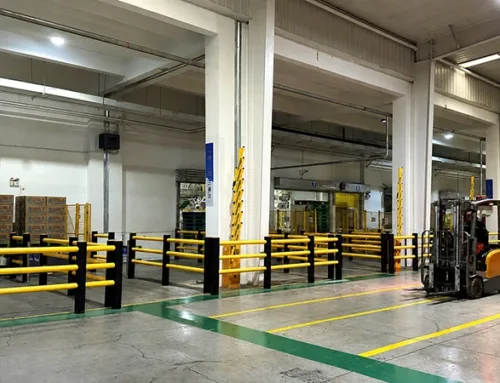
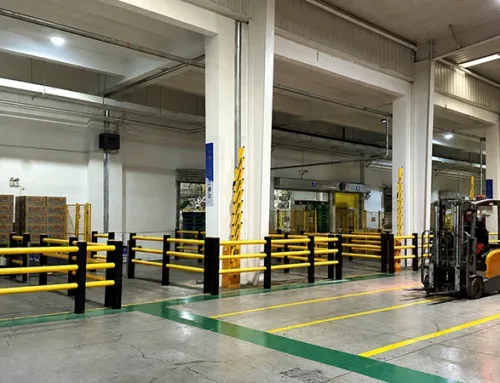
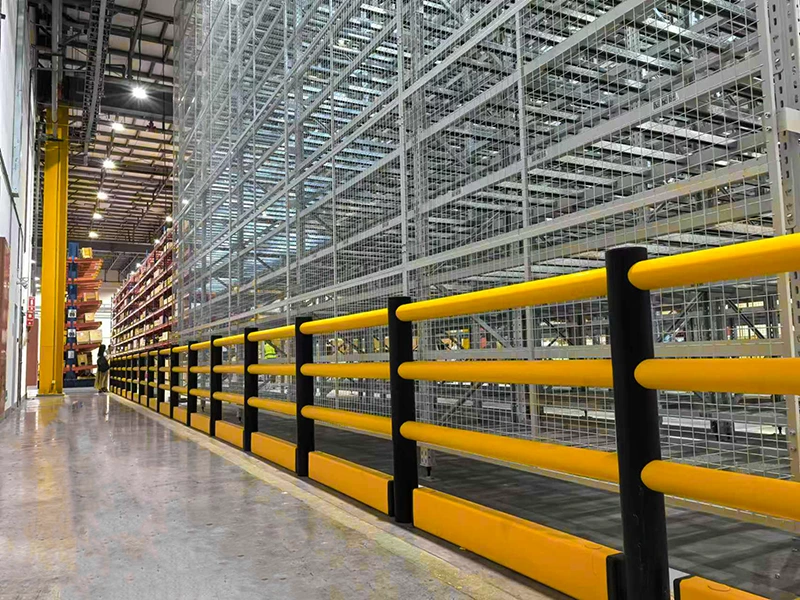
For each plant, record the protected asset, vehicle class, travel speed, selected FCBarrier series, rail arrangement, base and anchor details, impact-energy reference, installation photos, and inspection schedule. The product images above show the visual evidence a specification should preserve: modular rail choices, bolted base plates, continuous warehouse runs, and pedestrian/equipment segregation. This makes a global Flexible Guardrail standard easier to tender, install, inspect, and update.
Turn a Local Barrier Purchase into a Global Standard
Share your plant layout, forklift operating conditions, racking and pedestrian zones, loading dock requirements, and audit format. SGF can help map them to FCBarrier series and provide a scenario-based, impact-referenced Flexible Guardrail specification for multi-site rollout.