EN
EN  DE
DE  RU
RU  PT
PT  JA
JA  ES
ES  IT
IT Machine Safety Fence for Machining Environments
Machine Safety Fence That Survives Coolant, Oil Mist, and Swarf
A machine safety fence in a metalworking cell lives in the worst conditions for steel: cutting-fluid spray, oil mist, and metal swarf create a permanently damp, mildly corrosive atmosphere. Steel guards rust, shed flakes, and contaminate precision machining zones — yet EN ISO 14120 still requires guard materials to be corrosion resistant. Alfence answers with aluminum profiles and a powder-coated finish cured at 185 °C for 15 minutes: inherently corrosion resistant, no rust, no flaking, no contamination of the work area.
Steel vs. Powder-Coated Aluminum: What the Machining Floor Actually Sees
In a coolant-rich environment, the specification on paper rarely matches what happens after six months of exposure. The table below compares the two guard materials against the failure modes that matter on a machine shop floor.
| Failure Mode | Welded Steel Guard | Alfence Powder-Coated Aluminum |
|---|---|---|
| Corrosion from coolant / oil mist | Rusts within months; needs repainting | Naturally corrosion resistant; coating unaffected |
| Flaking or debris into precision zone | Sheds rust and paint chips | No rust, no flaking — clean enclosure |
| Surface treatment | Paint or galvanize (wear-prone) | Powder coating, 185 °C / 15 min cure |
| EN ISO 14120 corrosion resistance | Requires ongoing maintenance | Met by material + finish as supplied |
| Indoor oil-mist exposure | Film buildup, accelerates decay | Wipes clean; does not absorb oil |
Why Alfence Stays Clean in a Wet Machining Cell
Aluminum extrusion + powder coating, cured at 185 °C
Alfence uses aluminum alloy profiles finished with a powder coat cured at 185 °C for 15 minutes. Aluminum is inherently corrosion resistant, and the cured powder layer seals the surface against coolant and oil mist. There is no steel to rust and no loose coating to flake into the work area — exactly what EN ISO 14120 expects from a guard material in a damp, oily cell.
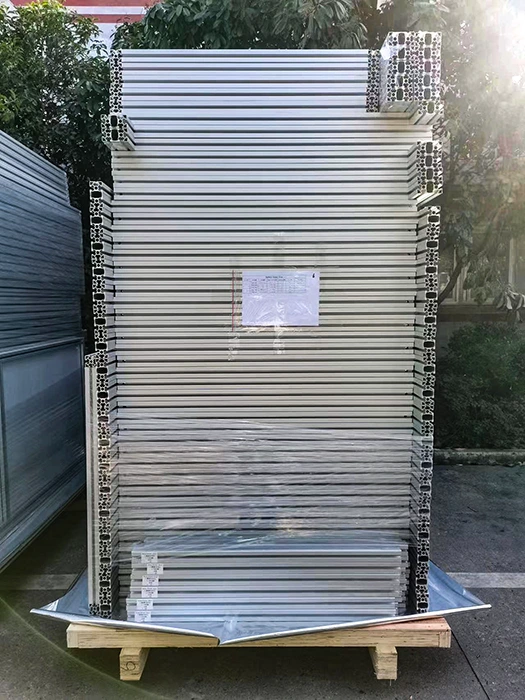
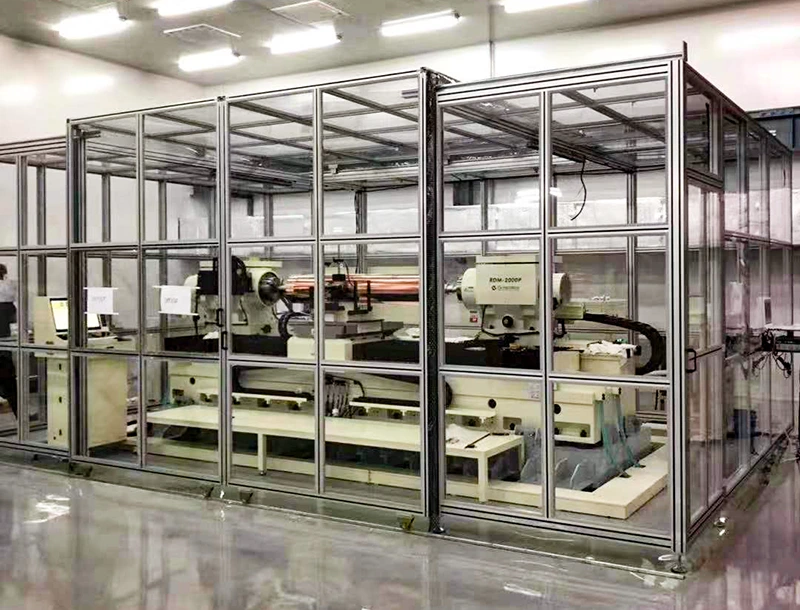
Transparent panels that isolate mist without contaminating precision zones
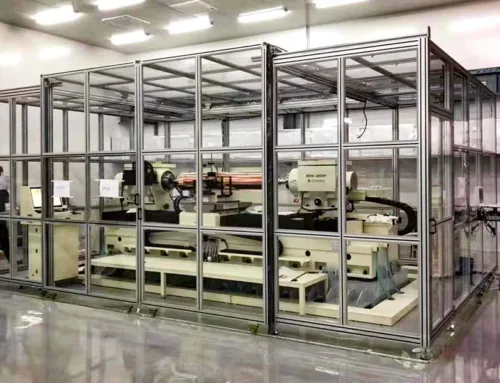
Modular frames accept transparent polycarbonate or acrylic panels, so operators keep visual contact with the machine while the enclosure keeps oil mist and swarf inside the guarded area. The aluminum framing does not off-gas or shed, protecting nearby CNC and measuring equipment from particulate contamination.
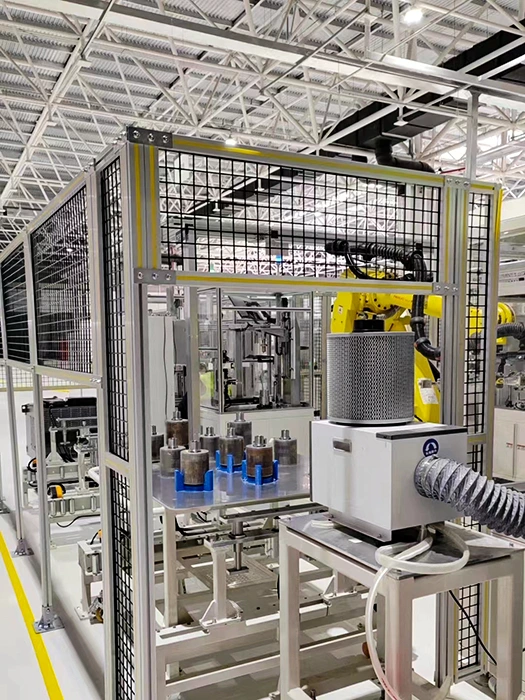
Built for the robot cell and grinding line, not just the showroom
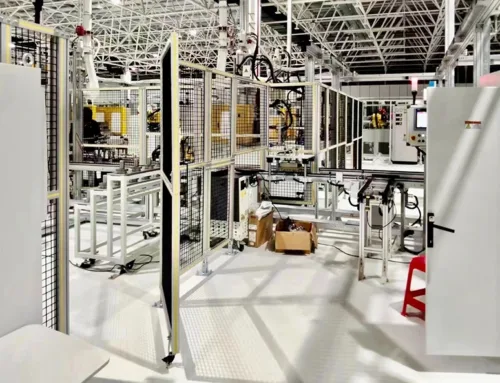
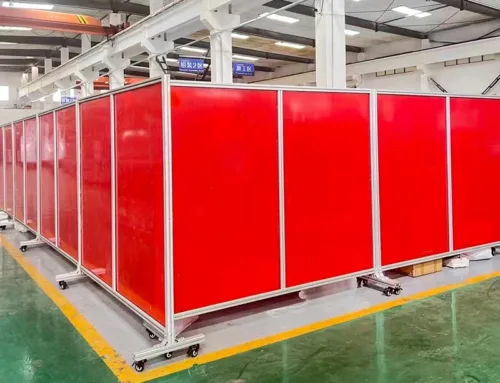
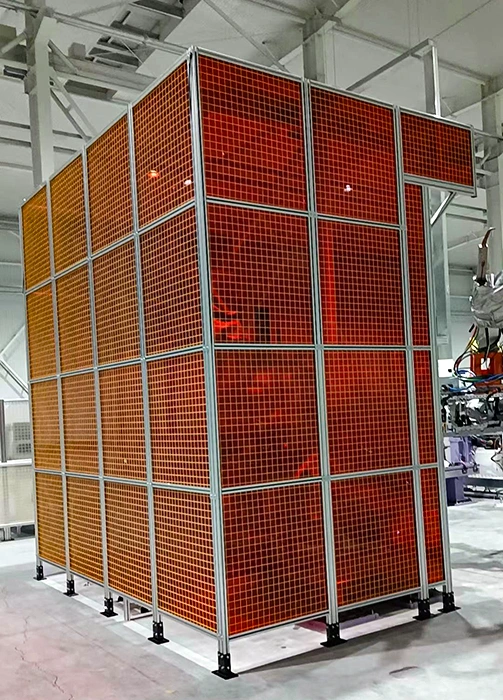
In robot cells and grinding areas, Alfence panels bolt into hinged access doors and integrate with local dust extraction. Because the profiles are aluminum, they resist the damp, oily atmosphere that destroys painted steel — no rust streaks down the mesh, no repainting shutdowns that stop production.
Where a Corrosion-Resistant Machine Safety Fence Pays Off
- CNC machine guarding and machine tool guarding in coolant-rich cells
- Robot cell guarding and welding cell guarding with integrated extraction
- Cleanroom guarding where flaking steel would fail particulate limits
- Retrofit guarding that replaces rusted steel fences without re-painting
Anywhere cutting fluid, oil mist, or swarf meet a guard, powder-coated aluminum is the lower-lifecycle-cost choice for a machine safety fence.
Spec Sheet and Finishing Options
Get the Alfence profile-section data, powder-coat RAL options, and panel configuration guide. Tell us your coolant type and cell layout and we return a corrosion-resistant machine safety fence layout sized for your floor.
Specify Alfence for Your Machining Floor
Stop scheduling repaint shutdowns for rusted steel guards. Alfence gives you a machine safety fence that meets EN ISO 14120 corrosion resistance from day one.