EN
EN  DE
DE  RU
RU  PT
PT  JA
JA  ES
ES  IT
IT WOOD PROCESSING | INDUSTRIAL AUTOMATION SAFETY
Wood Processing Machine Guarding Without Hot Work: Reuse Safety Fencing When Production Layouts Change
For pallet factories surrounded by wood dust, a machine guarding fence must do more than separate people from moving equipment. It must support hot-work-free installation, safe production-line reconfiguration, and long-term asset reuse. A modular safety barrier with cold-work assembly addresses all three constraints.
Why Traditional Welded Safety Fencing Becomes Expensive in a Pallet Factory
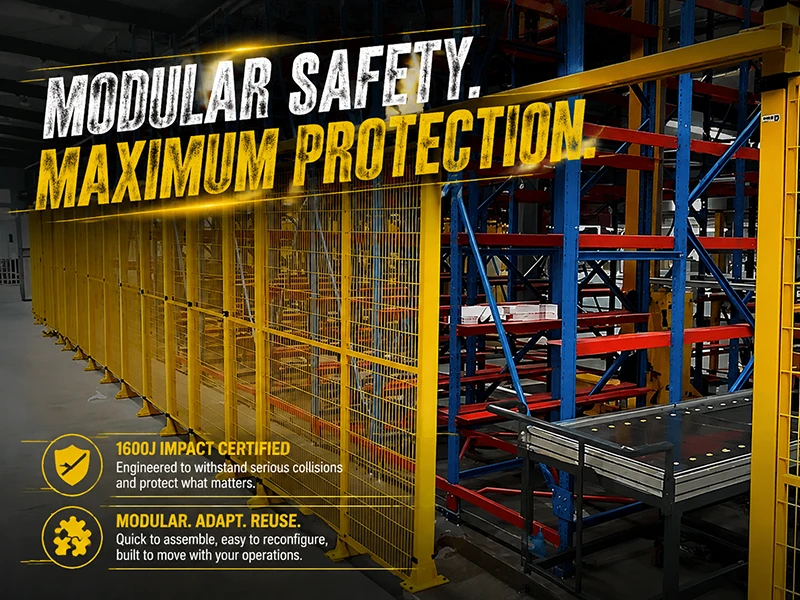
Pallet production changes with order mix, throughput requirements, and equipment additions. When the perimeter around a saw, nailing line, conveyor, or palletizer must move, welded safety fencing creates two practical problems. First, cutting and welding inside a wood-processing environment introduces sparks and hot work into an area containing combustible dust and offcuts. Second, a welded fence is difficult to recover after dismantling: posts and panels are cut to a former layout, so a safety investment can become scrap instead of a reusable factory asset.
| Production requirement | Modular guarding response |
|---|---|
| No hot work around wood dust | Patented snap-fit, cold-work assembly requires no on-site welding and produces no installation sparks. |
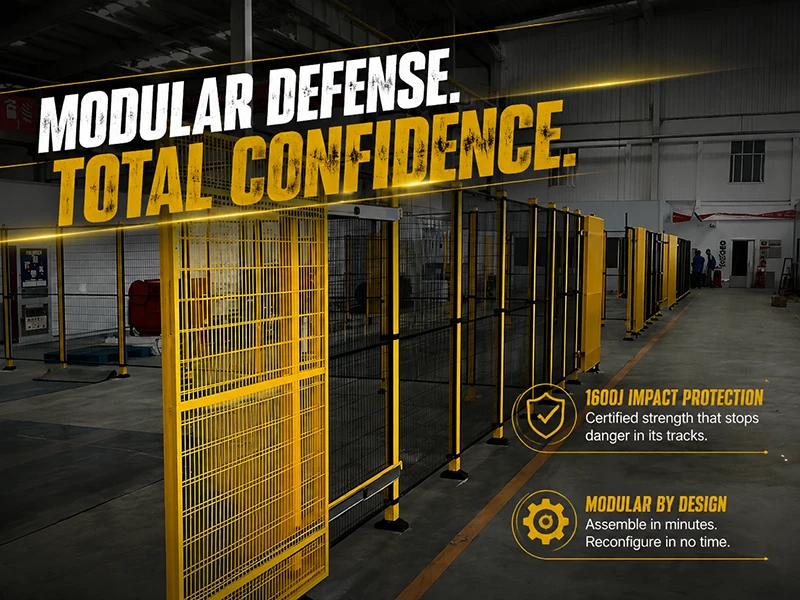
| Machine perimeter guarding that can move | Panels, posts, gates, and fixing points can be dismantled and rearranged as the line changes. |
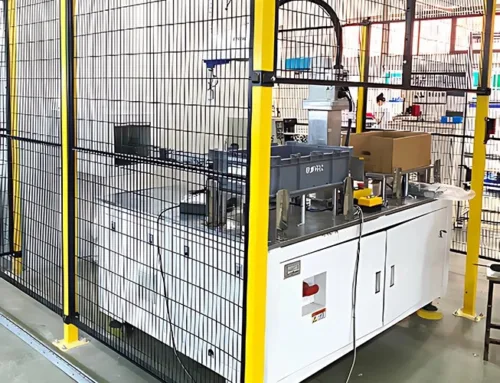
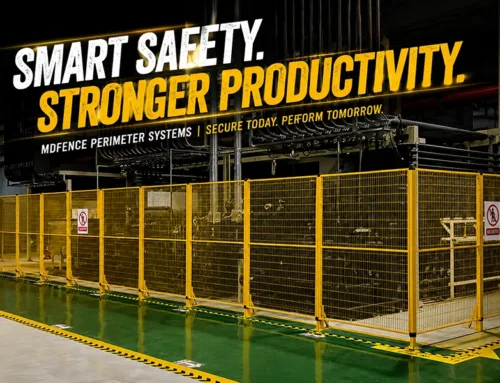
| Visible physical equipment isolation | Yellow framed mesh panels create a clear boundary between machines, operators, and material-handling routes. |
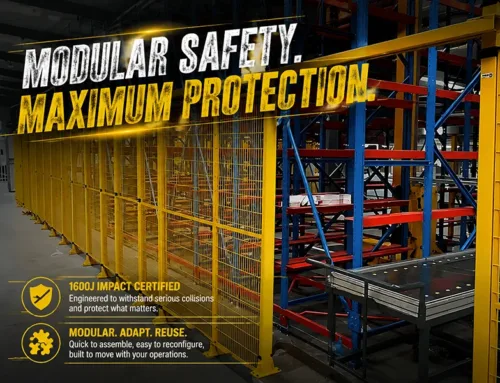
| Protection for an active production area | Documented panel configurations include high-impact protection up to 1600J, subject to the selected configuration. |
How Cold-Work Machine Fencing Fits Layout Changes
1. Snap-fit assembly removes the welding step
The system is designed as a modular safety barrier rather than a permanently welded perimeter. Safety fence posts and framed mesh panels are joined through the specified clip-based assembly method, so installation can be completed without hot work. That is a direct fit for wood-processing environments where fire prevention is part of the installation decision, not an afterthought. The powder-coated steel appearance also keeps the machine safety fence visually distinct from the surrounding machinery and material flow.
2. Gates and interlocks support controlled access
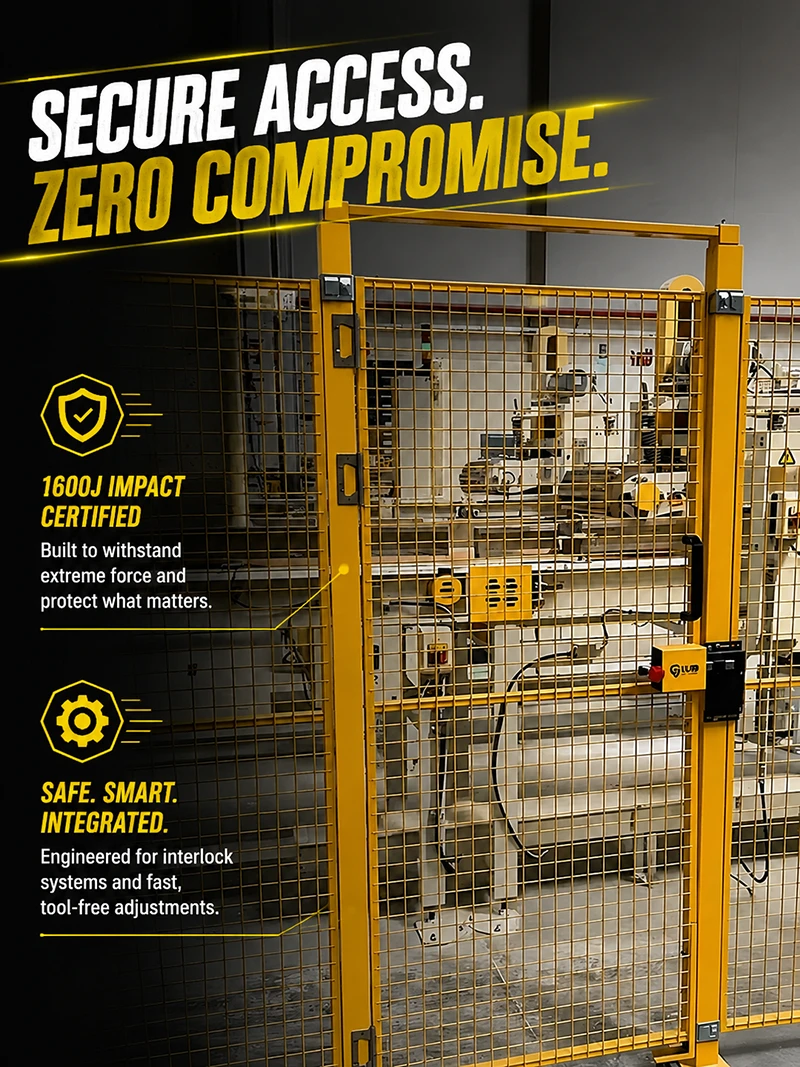
Reconfiguration should not weaken access control. A hinged safety door or other selected gate module can be positioned within the perimeter, with a lock or safety interlock device mounted at the access point. The illustrated product range supports safety interlock installation and integration planning for devices such as Omron D4NL or Pizzato FS series, when specified for the project. This allows maintenance access to remain controlled while the surrounding robot cell guarding or conveyor line safety guarding is rearranged.
3. The boundary can be rebuilt instead of discarded
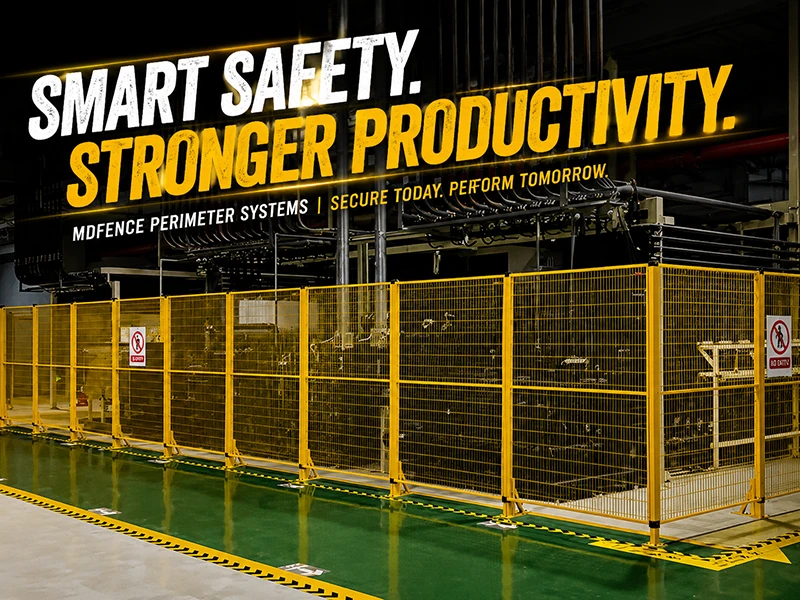
For a pallet factory, the commercial value is visible when a machine line is moved. The same posts and panels can be recovered, expanded, shortened, or assigned to a new equipment isolation zone. The project brief targets an asset reuse rate of up to 95%, converting what is usually a one-time safety consumable into a long-term movable asset. That flexibility helps improve production line layout flexibility, shorten automation project cycles, and save engineering hours during future changes.
Where This Industrial Safety Fence Adds the Most Value
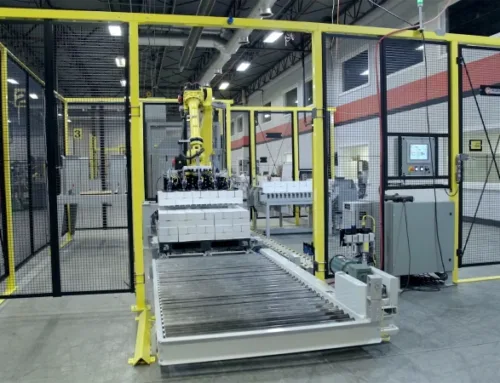
- Palletizer safety guarding: define a machine perimeter while preserving access for maintenance and material flow.
- Conveyor line safety guarding: separate transfer routes from operator walkways without creating a permanent welded obstruction.
- Automation system isolation: establish factory safety zoning around saws, nailing equipment, robots, and control cabinets.
- Forklift and pedestrian safety: make equipment boundaries clear where vehicles and personnel share the workshop.
- Future line expansion: reuse the same machine guarding fence when production capacity or floor layout changes.
The result is not simply a cleaner installation. It is a physical guarding solution that aligns fire-risk control with operational flexibility. Final panel height, mesh selection, gate type, anchoring, and interlock configuration should be confirmed against the machinery risk assessment and applicable OSHA machine guarding requirements, ISO 14120, or other project standards.
Specification Evidence for Project Review
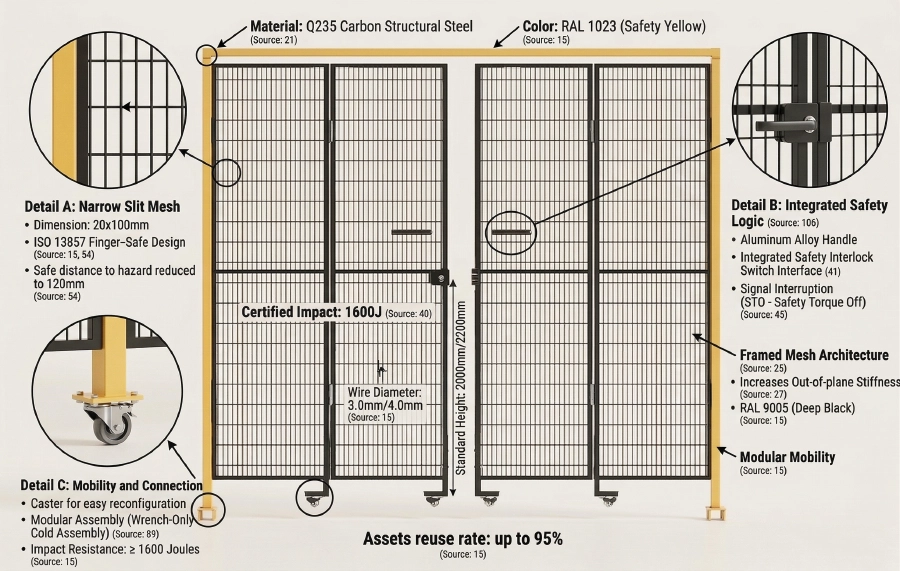
The engineering reference image identifies a Q235 carbon steel frame, narrow-slit mesh options, safety interlock handle, caster-based movement options, standard heights of 2000mm and 2200mm, and 3.0mm or 4.0mm wire diameters. Other project inputs may include 60x60mm square tube posts, 2.0mm wall thickness, RAL1023 yellow powder coating, and the required base fixing method. Use these details to coordinate the guarding fence with the machine footprint, aisle width, access route, and safety switch location.
Plan a Safer, Reusable Factory Layout
When welding is restricted and equipment locations are not permanent, modular machine safety fencing gives the project team a practical alternative to welded safety fencing. Share your machine perimeter, access points, conveyor routes, and expected future changes to evaluate a configurable safety fence for machinery.