EN
EN  DE
DE  RU
RU  PT
PT  JA
JA  ES
ES  IT
IT MDFENCE | MACHINE FENCING FOR WOOD PROCESSING
Wood-Processing Machine Fencing: How Mdfence Enables Cold-Work Safety and 95% Asset Reuse
In a pallet factory filled with sawdust, production-line changes should not require hot work. Mdfence is a modular industrial safety fencing system designed for machine perimeter guarding without on-site welding, sparks, or disposable welded barriers. Its cold-work assembly helps control fire exposure today, while its reusable modules reduce the cost of tomorrow’s layout changes.
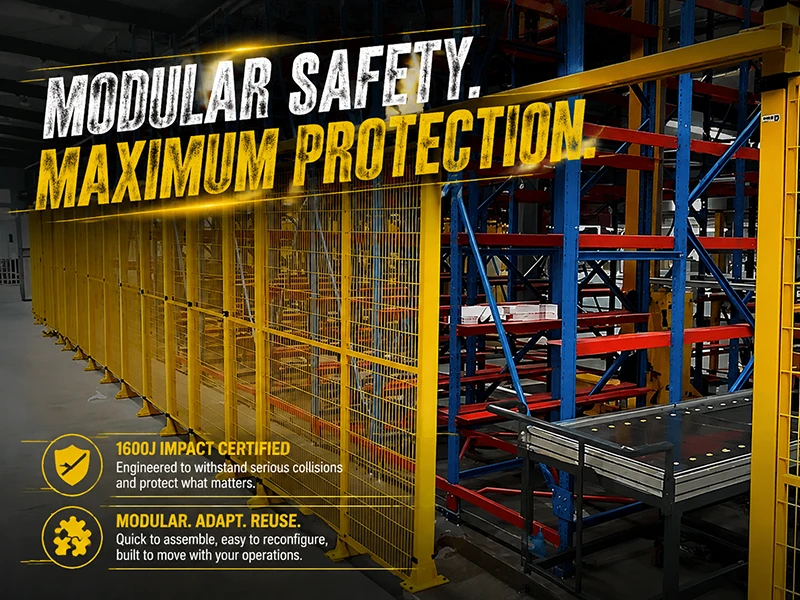
Why a Pallet Factory Needs More Than Welded Safety Fencing
Pallet production environments combine combustible wood dust, moving equipment, forklifts, and changing product demand. When a new order or machine is added, a traditional welded safety fence often means cutting, grinding, hot-work permits, fire-watch controls, and a new fabrication cycle. Once removed, much of the old barrier becomes scrap. This makes a layout adjustment expensive twice: first in engineering and installation hours, then in lost fence material.
| Factory requirement | Mdfence response |
|---|---|
| No hot work around sawdust | Patent clip-based modular assembly supports cold-work installation without welding or sparks at the production site. |
| Frequent machine-layout changes | Panels, posts, gates, and fixing components can be dismantled and reassembled in a new configuration. |
| Clear machine and pedestrian separation | Framed mesh panels create a visible machine perimeter guarding line around equipment, service zones, and access routes. |
| Controlled access to hazardous equipment | Hinged safety doors and safety lock mounting carriers provide a defined interface for interlock devices. |
| Industrial impact and durability needs | Q235 carbon steel construction, framed panels, and a documented ≥1600J impact-resistance context support demanding guarding applications. |
Cold-Work Assembly Backed by a Reusable Guarding Structure
1. Clip-Based Modules Replace Site Welding
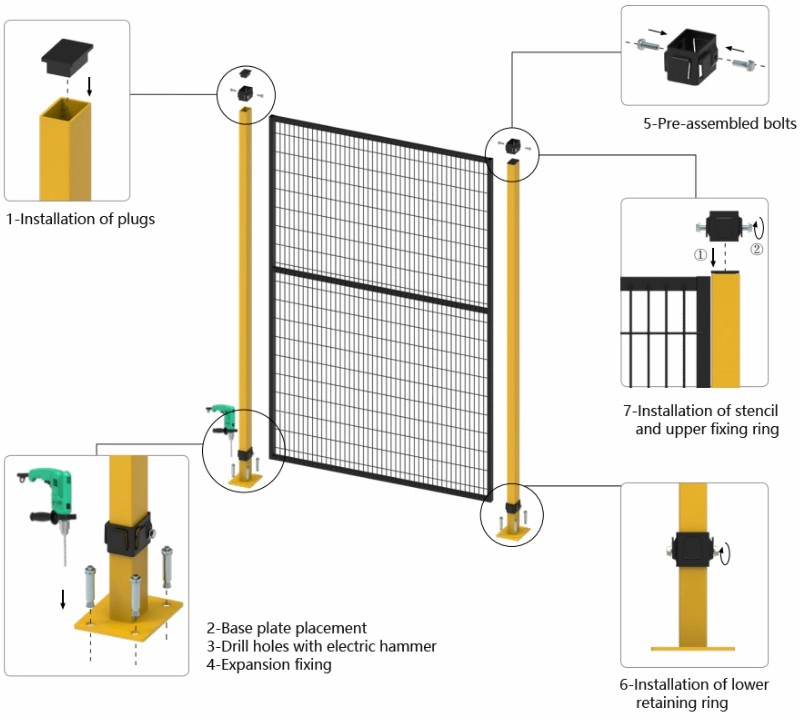
Mdfence uses a patented clip-based modular connection logic. Posts, framed mesh panels, base plates, fixing rings, and anchors are assembled as a coordinated system rather than fabricated permanently beside the machine. The installation diagram shows the practical sequence: position the post, drill and anchor the base plate, then secure the panel with the upper and lower fixing elements. For a wood-processing shop, this directly addresses the fire risk of welding and grinding in a dust-laden environment. It also helps project teams shorten automation project cycles and save engineering hours.
2. Framed Mesh Panels Create a Defined Machine Perimeter
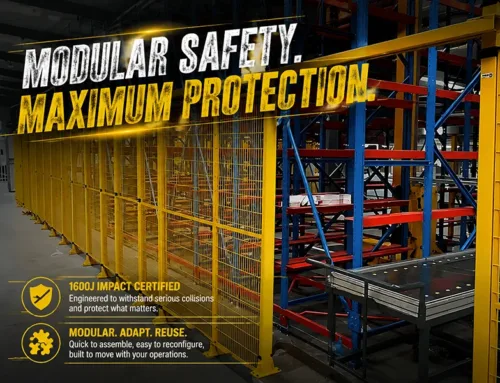
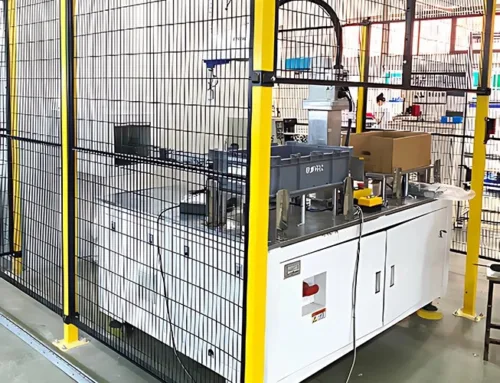
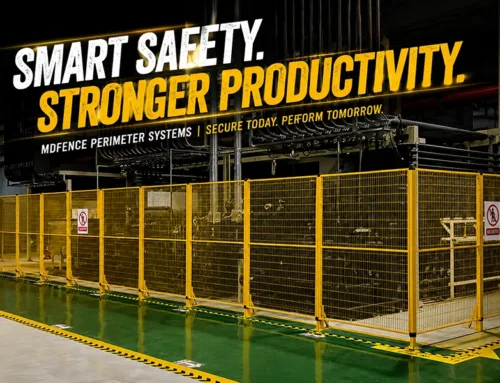
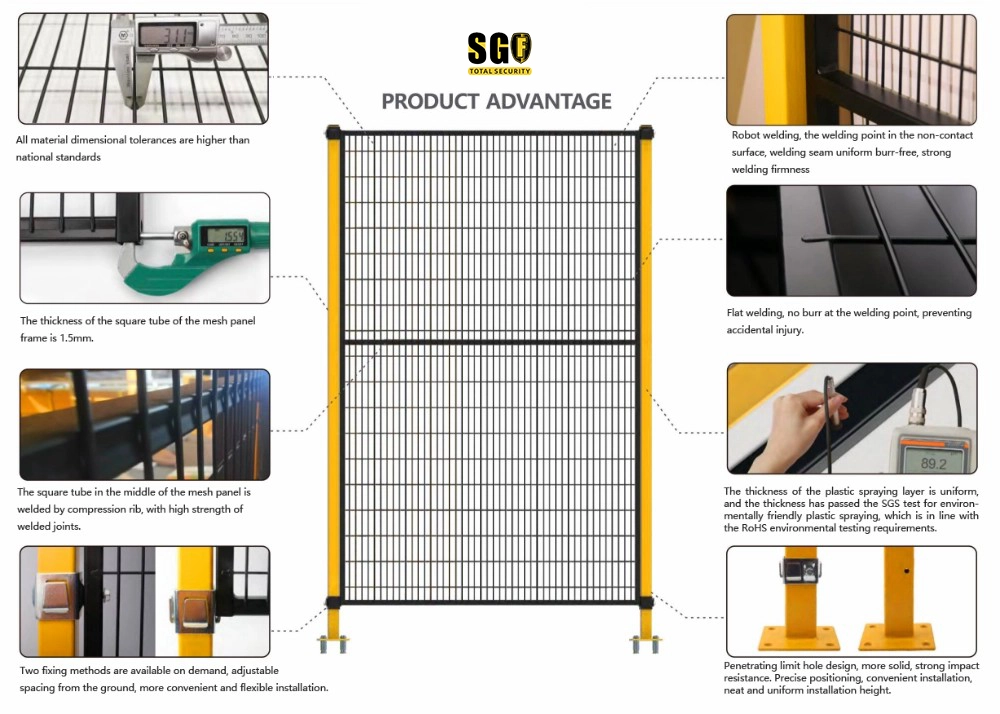
The product evidence combines a square-tube frame, reinforced mesh, robotic welding, flat full welds, and powder-coated steel posts. The standard machine-guarding configuration uses Q235 carbon steel, 20x30mm panel framing, a 20x100mm machine-guard mesh pattern, and 3.0mm or 4.0mm wire options. Common posts are 60x60mm square tubes with 1.5mm or 2.0mm wall thickness. The yellow-post and black-mesh arrangement makes the hazard boundary easier to read while the rigid framed mesh panels provide a more complete physical guarding solution than loose mesh.
3. Gates and Interlock Interfaces Stay Part of the Plan
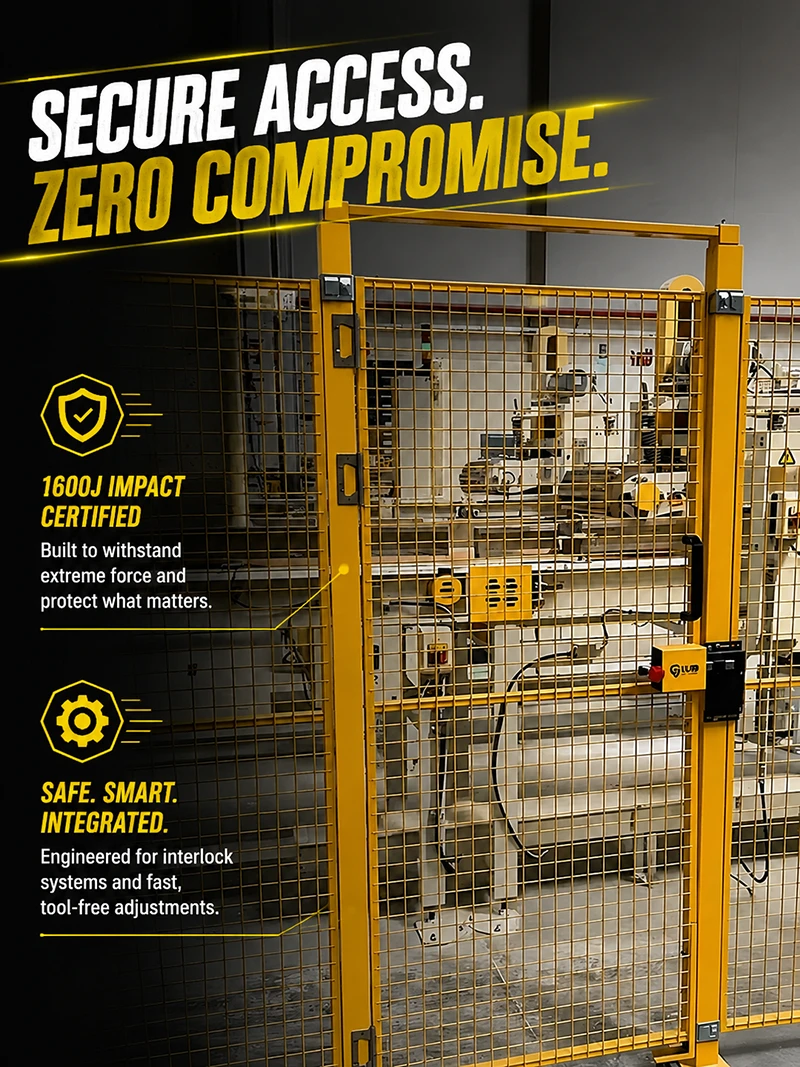
Layout flexibility does not remove the need for controlled access. Mdfence supports hinged safety doors, sliding safety gates, folding or double-leaf openings, and gate hardware with lock or interlock interfaces. The illustrated gate shows a welded mesh panel, yellow steel frame, handle, and interlock locking system. This gives an integrator a defined place to coordinate safety interlock devices such as Omron D4NL or Pizzato FS series hardware, subject to the final risk assessment and selected configuration. The result is a machine safety fence that supports equipment isolation and more orderly LOTO procedures instead of leaving access control to site improvisation.
Where Mdfence Fits in a Changing Pallet-Plant Layout
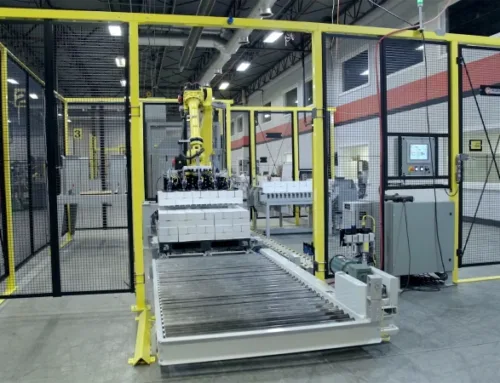
- Machine perimeter guarding: Enclose saws, nailers, conveyors, palletizers, and automated handling equipment while keeping service access defined.
- Automated material handling safety: Separate forklift and pedestrian routes from transfer points and moving machinery.
- Automation system isolation: Create a configurable safety zone around a robot cell or dedicated manufacturing line without committing the plant to a permanent welded arrangement.
- Maintenance and LOTO control: Combine lockable gates and safety interlock installation points with the site’s documented energy-control procedure.
- Warehouse security fence and smart warehouse zoning: Reuse compatible modules when storage, inspection, or blocking areas move.
For a pallet factory planning a future line reorganization, the commercial difference is substantial: the briefed Mdfence configuration can be dismantled and rebuilt with an asset reuse rate of up to 95%. That turns industrial safety fencing from a one-time safety consumable into a long-term, movable plant asset.
Engineering Information to Confirm Before Specification
Share the machine footprint, required safe distances, access points, forklift routes, gate opening direction, target height, floor condition, and interlock device. Mdfence is commonly specified at 2000mm or 2200mm high, with 2.0mm wall-thickness post options, RAL1023 yellow powder coating, floor-mounted base plates, expansion anchors, and standard flat-pack packaging on wooden pallets. The final panel, mesh, gate, anchor, and safety interlock selection should follow the equipment risk assessment and the applicable OSHA machine guarding, ISO 14120, or ANSI/RIA R15.06 requirements for the project.
Reduce Fire Exposure Without Sacrificing Future Flexibility
When sawdust rules out hot work and production demand keeps moving the machines, Mdfence provides a practical path: cold-work modular assembly now, structured machine guarding throughout the plant, and high-value reuse when the next layout arrives.