EN
EN  DE
DE  RU
RU  PT
PT  JA
JA  ES
ES  IT
IT Industrial automation safety | Safety interlock installation
Packaging Line Machine Guarding Fence with Pre-Engineered Interlock Access
For pallet nailing and packaging lines, a machine safety fence should do more than mark a boundary. It must give the automation integrator a defined interface for safety interlock devices, reduce field modification, and support equipment isolation without creating another source of unplanned downtime.
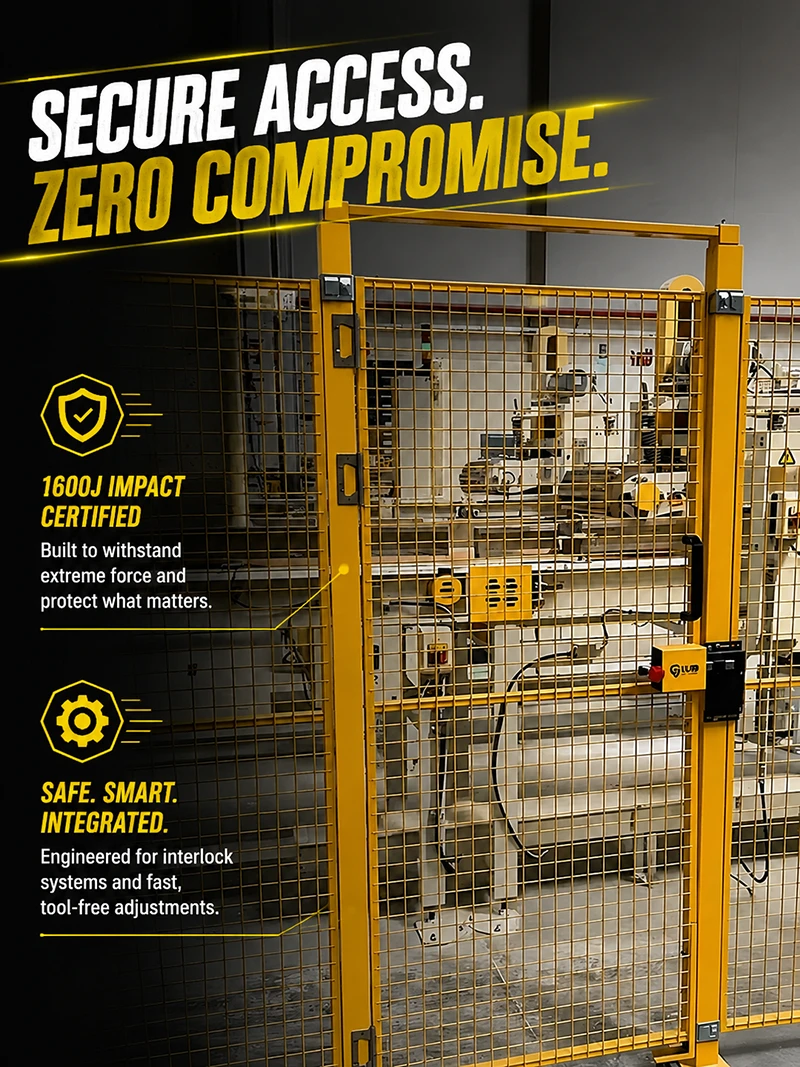
Why a Standardized Machine Guarding Interface Matters
On a modern pallet nailing or packaging line, opening a protective gate must initiate the project’s defined emergency-stop or safe-stop logic. A common welded safety fencing approach often leaves the integrator with an unfinished interface: measure the door on site, drill the post, fabricate a bracket, realign the switch, and repeat the work when the line layout changes. The visible fence may be inexpensive, but the engineering hours, production access, and commissioning risk remain hidden in the project budget.
| Integration checkpoint | How the Mdfence approach addresses it |
|---|---|
| Safety gate access | Hinged, sliding, folding, or swing-door configurations can be coordinated with the machine perimeter guarding layout. |
| Safety interlock devices | Safety lock mounting carriers and interface locations can be prepared for Omron D4NL or Pizzato FS series devices; the switch and safety circuit remain project-selected items. |
| Panel and post structure | Q235 carbon steel posts with framed mesh panels provide a defined mechanical mounting base rather than an improvised field bracket. |
| Installation and future changes | Panel-to-post fixing rings or M8 fasteners support modular replacement and extension; floor anchoring still requires confirmed concrete and project conditions. |
From the Door Interface to the Physical Guarding Solution
1. Put the interlock interface into the door design
The critical difference for an automation integrator is not the yellow finish. It is the defined relationship between door frame, latch, lock carrier, and switch position. Mdfence can be configured around Omron D4NL and Pizzato safety interlock devices, allowing the electrical team to plan the safety circuit around a repeatable mechanical interface. When the door opens, the control system must execute the specified stop function; the fence is the physical guarding element, not a replacement for the PLC, safety relay, or risk assessment.
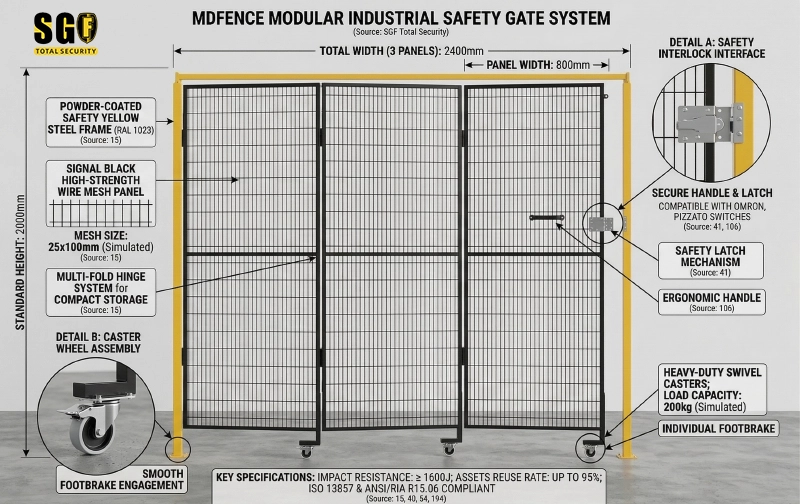
2. Use framed mesh panels with traceable engineering details
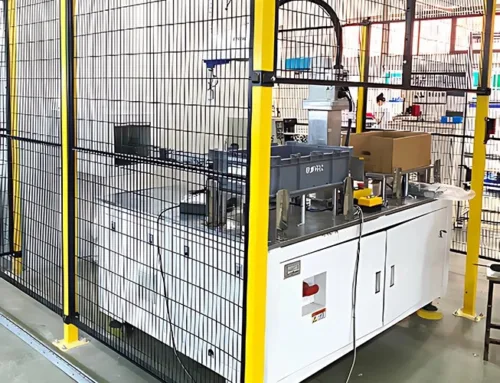
The product evidence shows a framed steel mesh construction rather than a loose, unsupported screen. Typical Mdfence data includes Q235 carbon steel, a 20x30x1.5mm tubular panel frame, 3.0mm or 4.0mm wire, and a common 20x100mm mesh opening. Standard project information also identifies 40x60mm or 60x60mm posts, 2000mm or 2200mm heights, RAL1023 safety-yellow posts, and RAL9005 dark mesh. These are configuration references, not universal promises: the final mesh, height, safety distance, and impact requirement must follow the hazard assessment and contract drawing.
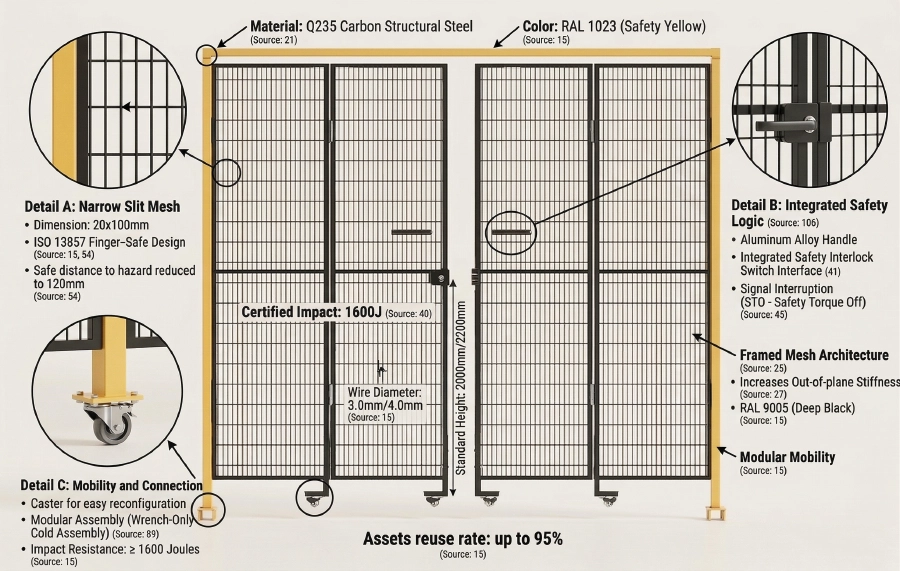
3. Anchor the perimeter while keeping the line serviceable
Machine perimeter guarding has to remain stable at corners, access points, and conveyor openings. The installation relationship includes base plates, fixing rings, and expansion anchors; common project specifications use four M10 anchors per post, subject to site confirmation. The modular connection makes a damaged panel or a revised access section easier to isolate and replace than a permanently welded run. For robot cell guarding, conveyor line safety guarding, or automated material handling safety, the layout still needs to verify clearances, forklift routes, escape access, and the separation between people and moving equipment.
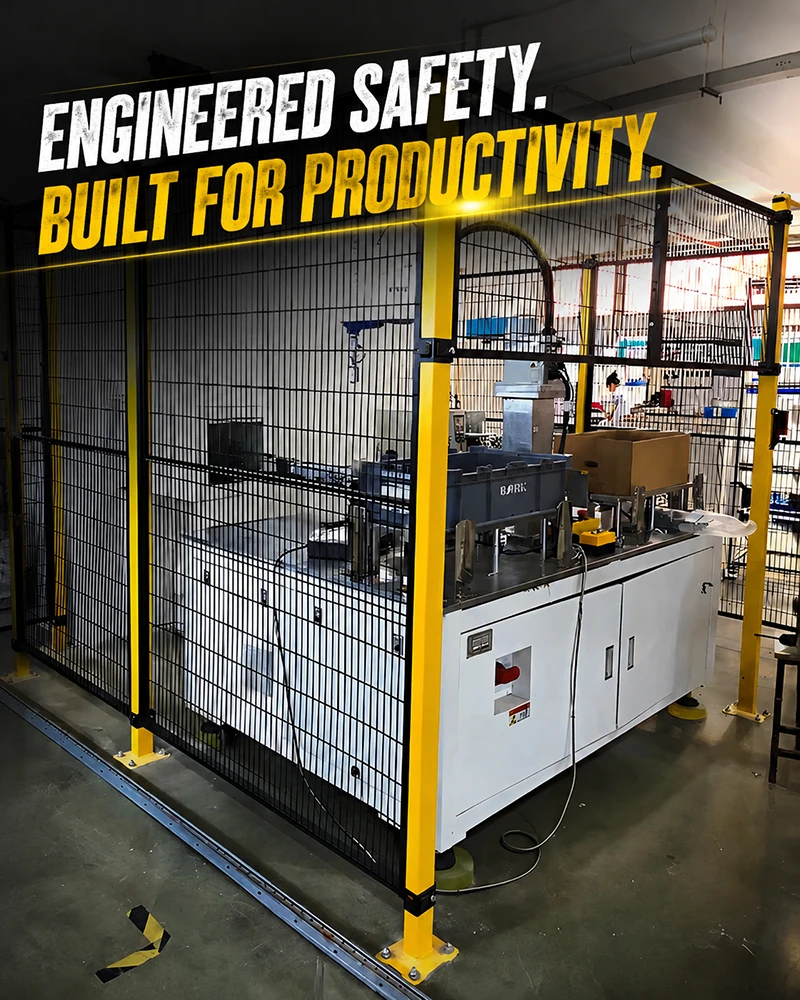
Where This Integration Model Fits
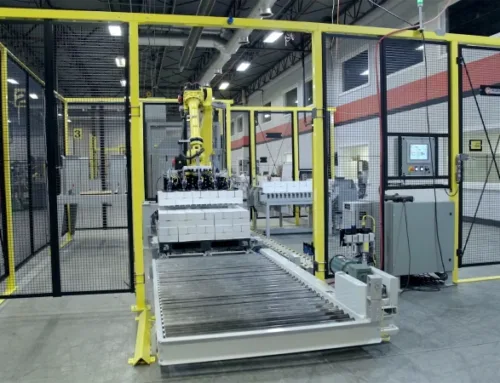
- Palletizing and packaging lines: coordinate hinged safety doors and material openings with the line’s safety circuit, so a person cannot enter an active machine zone without the defined stop sequence.
- Robot cell guarding: enclose the robot, control cabinet, and conveyor while reserving maintainable access points for safety interlock installation and LOTO procedures.
- Conveyor and transfer areas: use the framed mesh boundary to separate automated material handling from pedestrian routes, then confirm opening dimensions and guarding around transfer points.
- Flexible manufacturing and smart warehouse zoning: use bolted, modular panels to support equipment isolation and later layout changes without treating the original fence as disposable.
This is the practical value of a configurable safety fence: it connects a physical guarding boundary to the engineering information needed for commissioning. It can help shorten automation project cycles and save engineering hours, while OSHA machine guarding requirements, ISO 14120, ISO 13857, and any local rules still need to be reviewed for the complete installation.
Specify the Interface Before Fabrication
Share the machine layout, danger-zone dimensions, door type, safety distance, conveyor openings, floor condition, selected Omron D4NL or Pizzato device, and required control logic. The Mdfence configuration can then be checked against the drawing and BOM before production. Confirm the applicable impact test evidence, coating requirement, post section, mesh opening, anchors, and gate dimensions for the actual project rather than carrying a standard value into a custom installation.
Reduce Field Rework Before the Line Arrives
A machine safety fence with a planned safety lock mounting carrier gives the integrator a clearer starting point than ordinary welded safety fencing. Send your layout and switch model to confirm the interface, access arrangement, and physical guarding solution for your automated line.