EN
EN  DE
DE  RU
RU  PT
PT  JA
JA  ES
ES  IT
IT AUTOMOTIVE RECYCLING · FIRE-SENSITIVE RETROFIT
Fire-Sensitive Auto Dismantling Lines: Modular Industrial Safety Fencing for Lower Retrofit Downtime
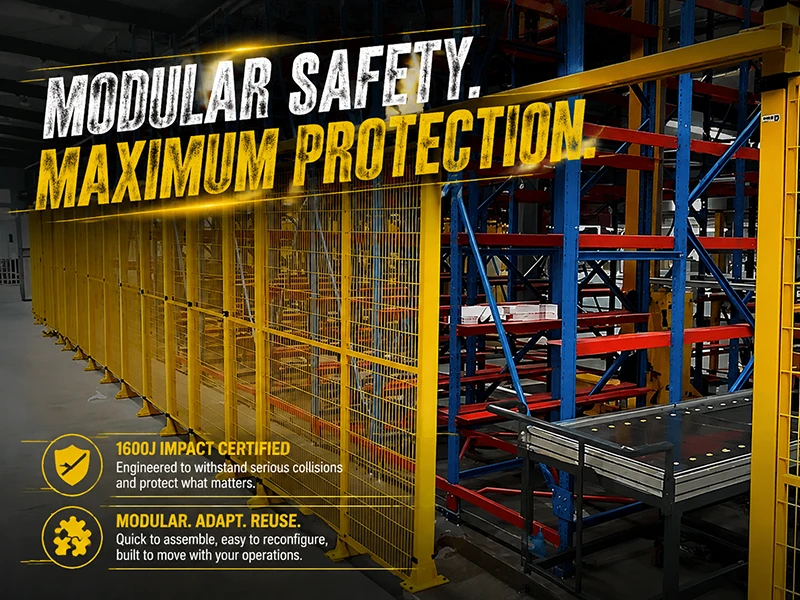
For vehicle dismantling plants handling residual fuel, engine oil and metal dust, machine guarding must create a physical boundary without introducing hot-work risk. A modular industrial safety fencing system assembled with mechanical connections helps the line adapt, reuse assets and protect production time.
Why a dismantling line needs more than welded safety fencing
A scrap-vehicle dismantling line is not a normal fabrication area. Residual fuel and oil can remain in vehicles and components, while metal dust adds another ignition and housekeeping concern. Cutting, welding and grinding an existing welded safety fencing system during a retrofit can introduce flame, sparks, fumes and permit delays. It also turns a layout change into a destructive project: panels are cut away, posts lose their original geometry and the old fence may have little value beyond scrap metal.
| Engineering concern | Configuration response |
|---|---|
| Hot-work exposure during a line change | Mechanical panel-to-post connections support a planned cold-assembly approach; the site must still control drilling, anchoring and all other work under its own fire-risk procedure. |
| Frequent equipment and access changes | Modular machine guarding fence panels, safety fence posts and gate modules can be removed, extended or rearranged instead of discarded. |
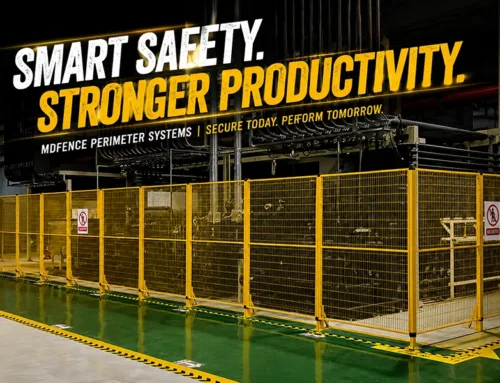
| High-energy machinery and moving vehicles | Framed mesh panels, steel posts and floor anchoring create a defined machine perimeter guarding boundary; the final rating and layout require project risk assessment. |
| Controlled maintenance entry | Hinged or sliding safety gates can be specified with a safety lock mounting carrier for devices such as Omron D4NL or Pizzato FS series equipment. |
How the modular guarding system fits the retrofit problem
1. Assemble the boundary without site welding
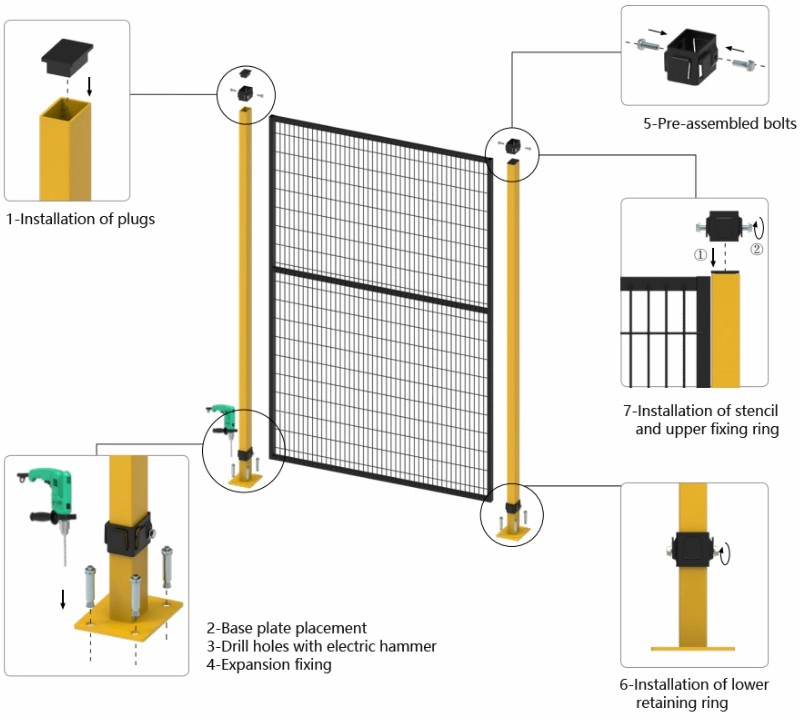
The system uses framed wire mesh panels, posts and mechanical fixing components rather than requiring every field change to be welded. The installation diagram shows the relationship between the panel, upper and lower fixing rings, post base plate and expansion anchors. That makes the assembly sequence easier to plan before shutdown. For a high-fire-risk facility, this supports a cold-work installation method with no cutting or welding at the fence assembly stage; the concrete condition, anchor drilling and permit controls still need site confirmation.
2. Use a framed panel for a defined physical boundary
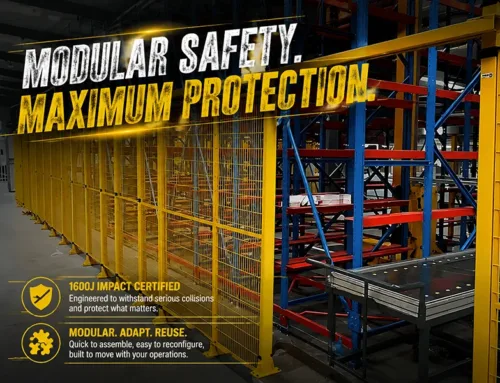
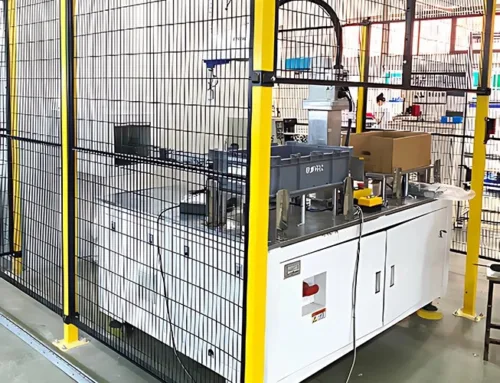
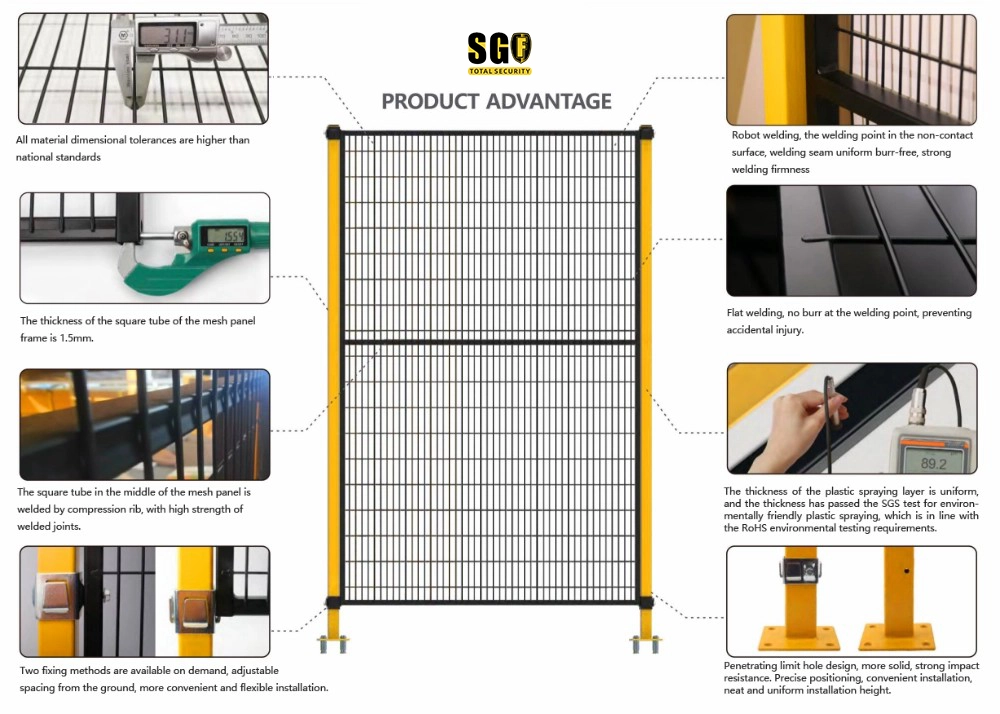
Machine safety fencing for dismantling and metalworking areas needs a load path that can be checked: panel mesh, welded frame, post, base plate and floor anchor. The product evidence shows square-tube framing, a reinforced mid rail, robot-welded joints and powder-coated steel. Standard project data commonly uses Q235 carbon steel, 20x30x1.5 mm tubular panel frames, 3.0 or 4.0 mm wire and 20×100 mm mesh, with RAL1023 safety-yellow posts and RAL9005 black panels. These are reference configurations, not a substitute for confirming the hazard, clearance and impact requirement for each zone.
3. Keep access, interlocking and future layout changes in the design
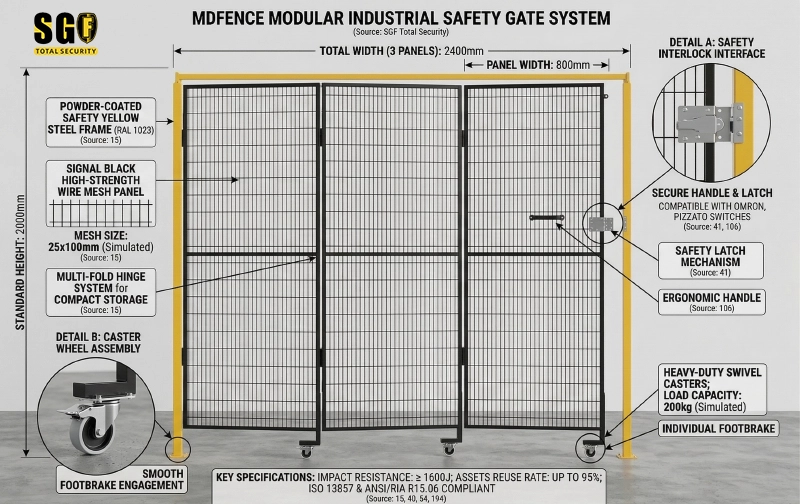
A perimeter is useful only when operators and maintenance technicians can enter through controlled points. Gate modules can be arranged around conveyors, dismantling stations and service aisles, while an adaptive lock carrier provides a defined mounting position for selected safety interlock devices. The illustrated gate configuration shows three linked panels, interlock hardware, heavy-duty casters and independent foot brakes, with a reference overall width of 2400 mm, 800 mm panel width and 2000 mm height. Final gate dimensions, safety circuit logic and LOTO procedure remain engineering responsibilities for the project team.
Where this approach creates measurable project value
- Vehicle dismantling and metal recovery: separate depollution, dismantling and material-transfer zones while avoiding routine fence welding in a fire-sensitive environment.
- Automated material handling safety: define conveyor openings and service access so vehicle movement, people and machine motion do not share an uncontrolled route.
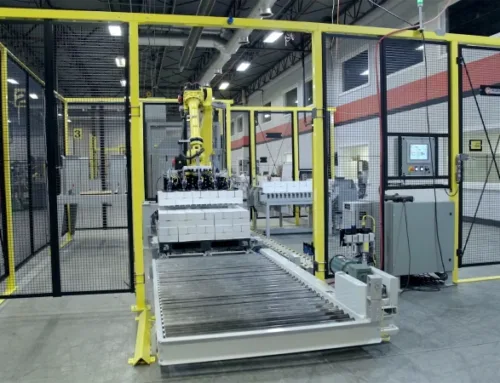
- Machine perimeter guarding: enclose shredding, pressing, lifting and sorting equipment with framed mesh panels selected against the assessed hazard and safety distance.
- Flexible manufacturing: when a line is upgraded, recover usable panels, posts and gates for the next layout instead of treating the old fence as disposable steel.
The commercial result is not just faster assembly. A planned modular safety barrier can shorten automation project cycles, save engineering hours and improve production line layout flexibility. The customer brief targets asset reuse above 95% for repeated reconfiguration; that figure should be verified against the final BOM, damaged components and the number of layout changes.
Specify the boundary before ordering
Start with the hazard inventory: residual flammable liquids, dust, moving equipment, vehicle routes and maintenance tasks. Then confirm machine guarding fence height, mesh opening, safety distance under ISO 13857 or applicable local requirements, gate clear width, interlock device, floor condition and anchor method. Standard references may include ISO 14120 and OSHA machine guarding requirements, but certification and compliance claims must follow the actual configuration, risk assessment and available test documentation. The final drawing and BOM should identify every post, panel, gate, carrier, fastener and access opening.
Plan a reusable machine guarding boundary
Send the line layout, hazardous-zone notes, access requirements and expected retrofit sequence. We can help map the industrial safety fencing modules, gate positions, safety interlock interfaces and anchoring details before the shutdown window is fixed.