EN
 DE
 RU
 PT
 JA
 ES
 IT
High-Value Stock Control
One Point of EBITDA: Locking High-Value Stock Inside a Wire Mesh Storage Cage
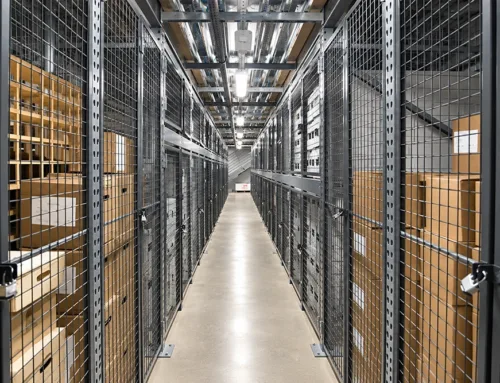
One percent of stock shrinkage removes a full point of EBITDA, and third-party logistics operators read any rate that stays above one percent as a systemic problem rather than a bad month. Smartphones, jewellery, electronic components and luxury goods absorb the loss first — they are small, portable and easy to resell. A wire mesh storage cage turns the highest-value floor positions in the building into a lockable sub-store: a cage inside the warehouse, with one hinge line and one lock position per bay.
What a High-Value Cage Is Made Of
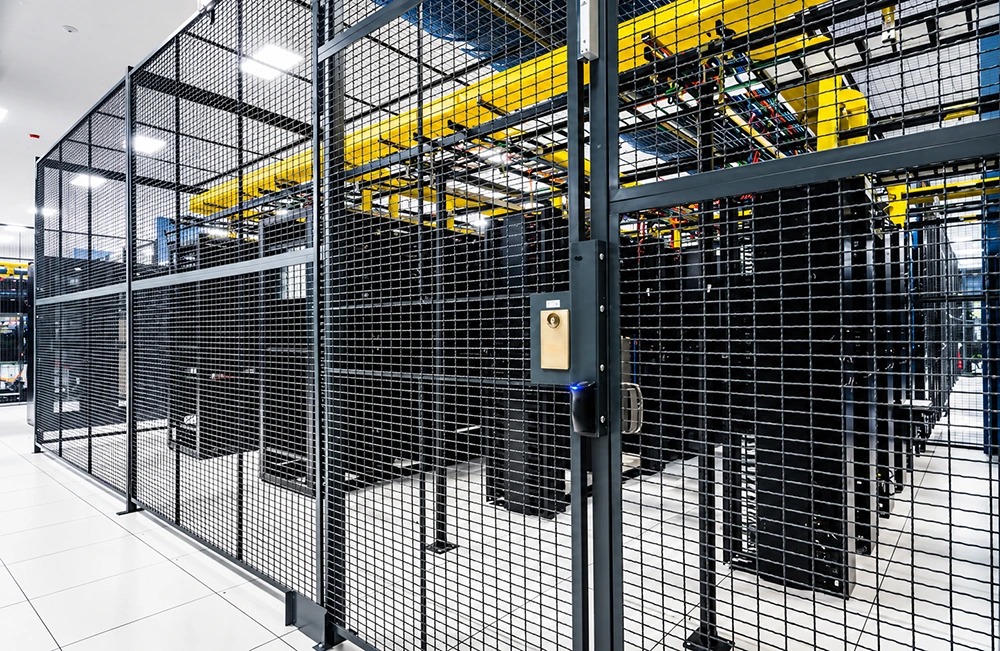
A security storage cage is specified like a run of bays, not bought like a cabinet. The details below are the ones that decide whether the enclosure can be locked, read from the aisle and extended when the high-value range grows next season.
| Element | Specification |
|---|---|
| Mesh fill | Galvanised welded steel mesh panels, fill option specified per project |
| Frame | Steel posts and edge frames, panels fixed on 90-degree angle screws |
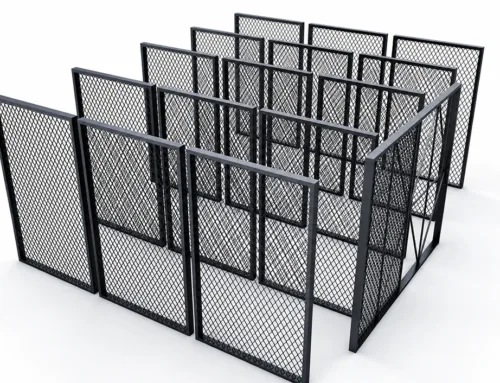
| Panel joint | Panels drawn back to back with straight bolts and through-nuts along a shared post |
| Door | One long-strip hinged mesh door per bay, hinge line carried on the bay frame |
| Lock position | Door bar drilled and marked for a padlock hasp, a keyed lock or an electronic reader |
| Ceiling | Top mesh panel on a top rail where the run stops below the slab |
| Options | Custom bay heights, widened and deepened bays, base plinth, shelves |
| Anchoring | Expansion bolts into the slab, driven after the run is squared |
| Installation | Two people, a hand drill and a wrench — no welding, no wet trades |
Open Mesh, One Lock Position, Repeatable Bays
Mesh, Not Steel Plate: Why the Enclosure Stays Open
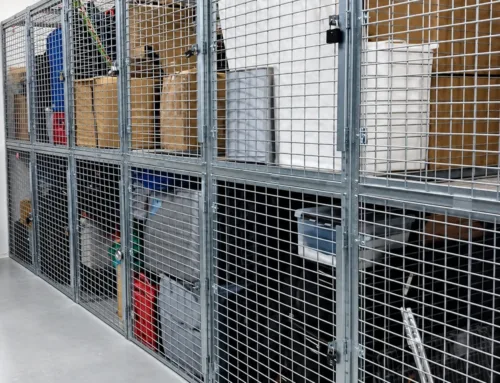
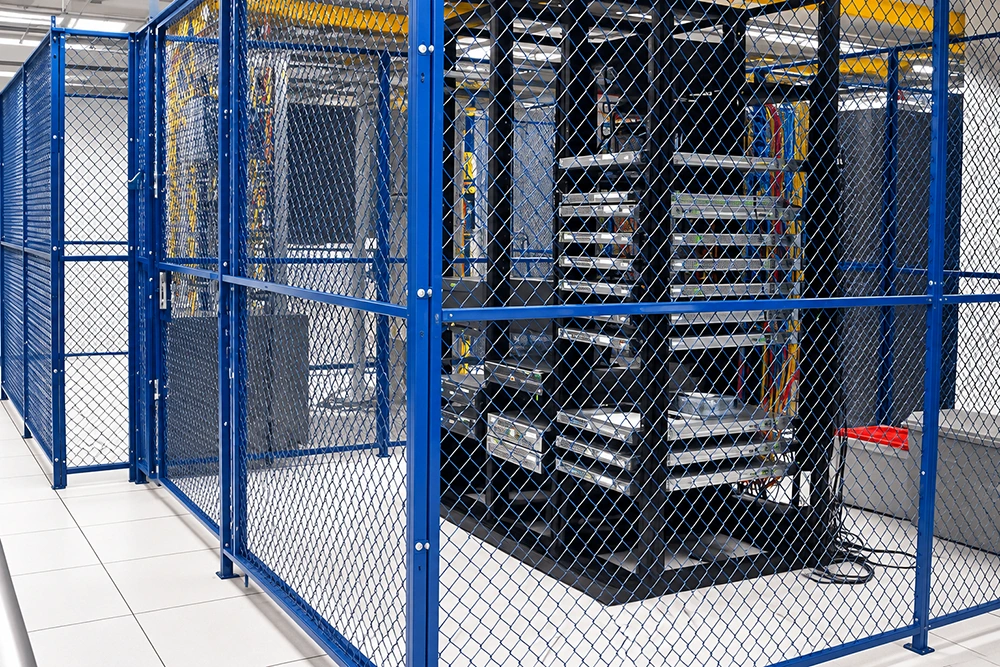
High-value stock is usually moved behind something solid first: a stud wall, a plywood partition, a solid metal locker bank. That answers the lock and creates three new problems. Sprinkler spray stops at the panel, air stops moving around cardboard and electronics, and the aisle loses its sightline, so the patrol and the camera above it can only record a grey rectangle. A ventilated storage locker built from galvanised welded mesh panels on bolted posts keeps the boundary and gives up the surface: the same bay is lockable, still readable from the aisle, and still a fire code compliant storage locker because nothing in the envelope blocks the spray path above it. The blue enclosure in the photograph is the same construction around racked electronic assets — modular posts and beams, mesh infill, a hinged access door and lock hardware, feet fixed to the floor.
One Hinge Line and One Lock Position per Bay
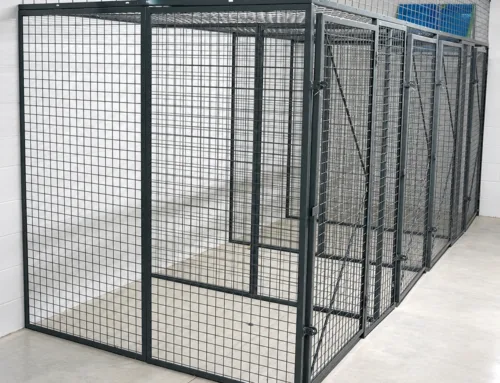
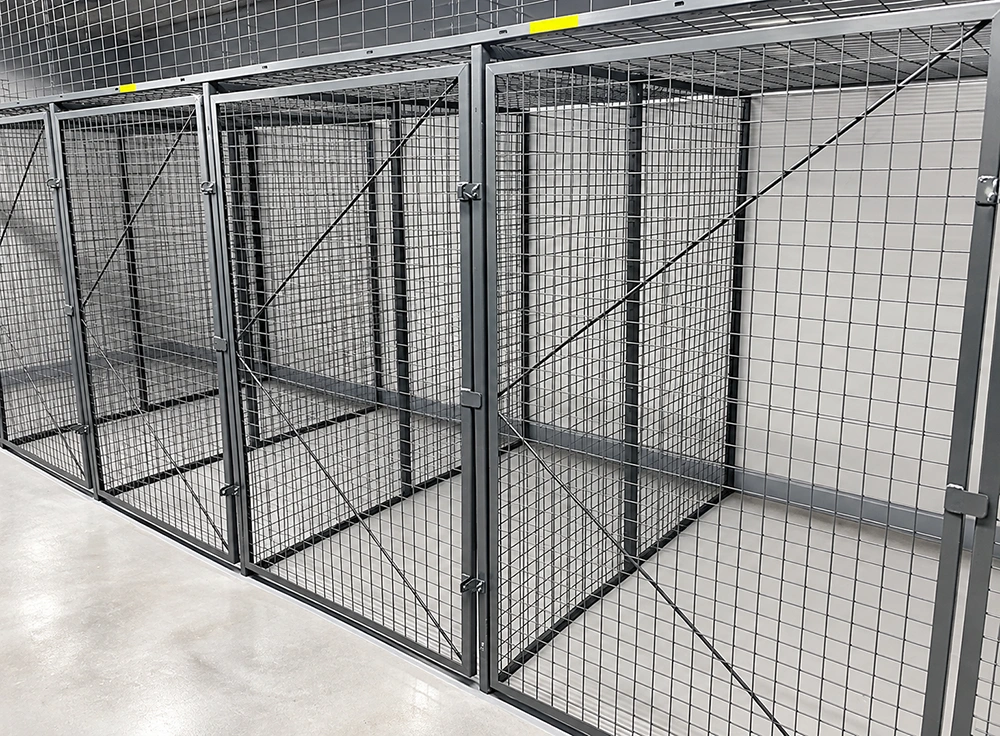
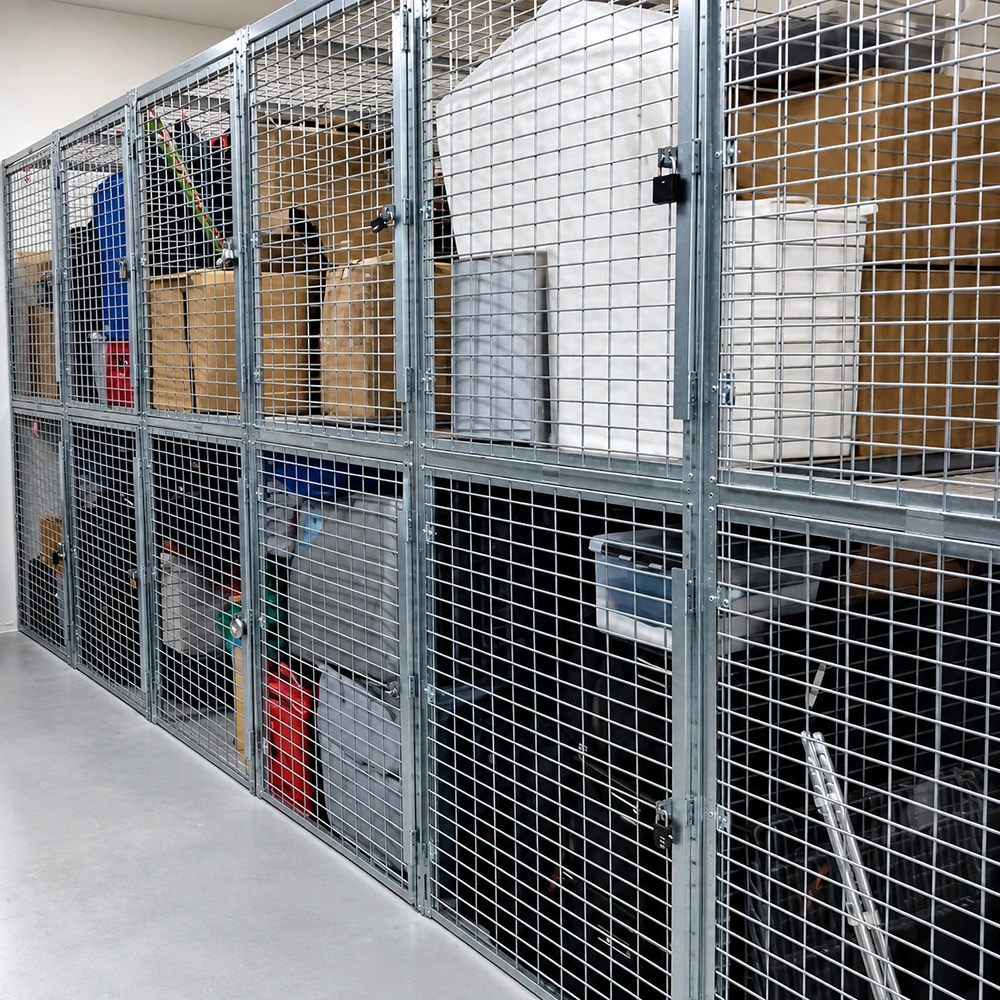
The alternative to a lockable storage cage is normally open shelving without a lock, plus a padlock that nobody can fit to a thin shelf upright. That is where shrinkage starts: the stock is inside the building, inside the badge-controlled room, and still reachable by anyone who walked in with a legitimate badge. A lockable storage cage gives each bay a single long-strip hinged mesh door with the lock position drilled and marked on the door bar, so a padlock, a keyed lock or an electronic reader lands on the same point on every bay. Cross-braced panels keep the bay square under trolley knocks, which is why the door still closes on the fourth quarter count. Two people with a drill and a wrench fix the run and set the doors — no hot work permit, no aisle shutdown.
Scaling the Sub-Store: Bays That Repeat Down the Run
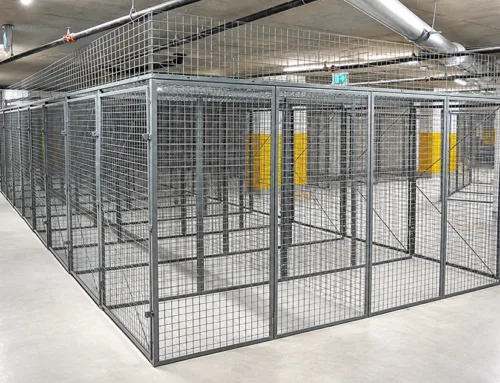
A single locked cabinet holds one SKU family and then the next delivery arrives. A modular storage cage scales as a count of identical bays: panels drawn back to back with straight bolts and through-nuts along each shared post, a hinged mesh door with its own padlock per bay, and a base plinth and shelves where the goods need to come off the slab. Warehouse storage cage runs can be drawn in custom heights with widened or deepened bays, so a pallet of handsets, a rail of garment bags and a shelf of authenticated watches live in the same enclosure under separate locks. Because the boundary is bolted rather than bonded, the same parts move when the high-value range moves.
Where a Lockable Sub-Store Pays for Itself
- 3PL and distribution high-value aisle: devices, accessories and returns stock that has to be physically separated before the next count.
- Electronics and consumer device stock, including serial-numbered units and customer-owned inventory held on your floor.
- Jewellery, watches and luxury goods waiting on authentication, valuation or dispatch.
- Tool crib and spare parts areas, where a tool crib cage gives every issued item one accountable address.
- Data centre and equipment rooms, where a server cage isolates hardware without closing the airflow path.
- Basement and garage storage, where a space saving storage cage converts dead open floor into lockable bays.
The comparison that decides the purchase is rarely cage versus cage. It is wire mesh versus a solid metal locker or a built room: one keeps the lock, the sightline, the airflow and the option to re-lay the run; the others keep only the lock.
Send the Bay List, Get the Layout
Give us the bay count, the height available under the slab, which bays need to be widened or deepened, and whether the doors will take a padlock, a keyed lock or a reader. We return a panel, post, door and lock-position schedule you can price against the stock you are currently writing off.
Stop Writing Off the Top of the Range
Shrinkage is a physical problem before it is a reporting problem. Put the high-value stock behind a lock that only authorised people hold, and keep the aisle, the camera and the sprinkler able to read it.