EN
EN  DE
DE  RU
RU  PT
PT  JA
JA  ES
ES  IT
IT MULTI-REGION MACHINE GUARDING
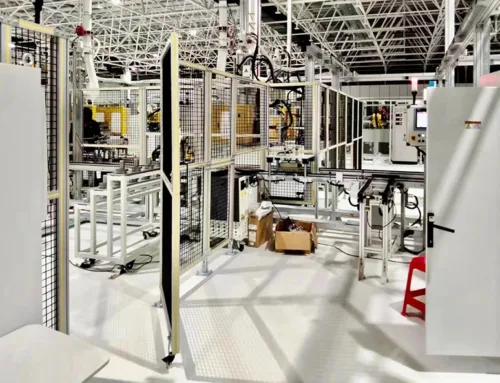
Aluminum Profile Safety Guarding for Multi-Region AGV and Robot Cell Compliance
For warehouse and logistics integrators deploying robot cells, ASRS equipment, conveyors, and AGV paths across Europe and North America, Alfence turns one modular guarding concept into a clearer compliance and SAT documentation path. The system is designed around EN ISO 14120:2015 and aligned with EN ISO 13857, while its access-control interfaces can be documented within the wider CE, OSHA, and ANSI/RIA R15.06 risk assessment.
Why Cross-Border Guarding Projects Stall at Acceptance
A warehouse automation project may combine robot workcells, conveyor guarding, shuttle-car protection, and AGV path guarding. Applying a single generic fence detail to every zone can leave gaps between the machine-guarding requirements and the mobile-equipment requirements. Welded steel fence, chain-link fence, or a fixed barrier may provide physical separation, but they often create separate drawings, retrofit changes, and evidence packages for each site. A missing safety-distance calculation, interlock record, or SAT attachment can delay handover even when the fence is already installed.
| Project checkpoint | Alfence design response |
|---|---|
| Machine guarding and perimeter guarding | Modular post-and-panel system designed around EN ISO 14120:2015, with the guarding boundary documented as part of the equipment risk assessment. |
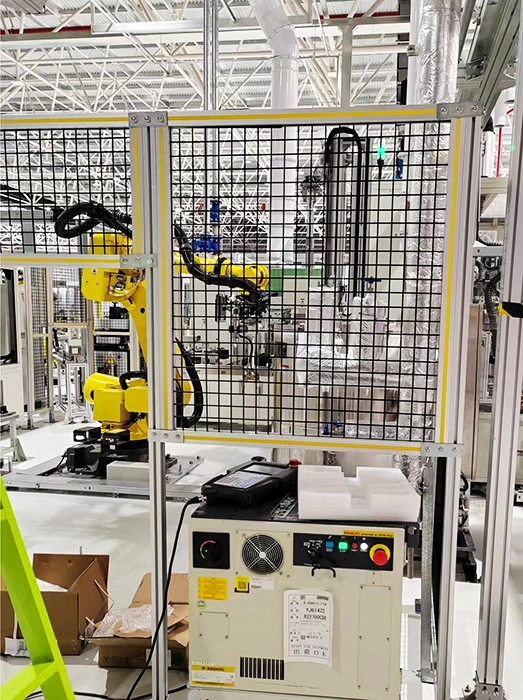
| Reach distance near the hazard | 20×100 mm welded wire mesh supports a close-to-hazard layout down to 120 mm where the risk assessment and installation conditions call for it, aligned with EN ISO 13857. |
| Robot cell or material-handling robot access | Safety doors can be prepared for safety locks and interlock switches; Schmersal AJM150 is available for 40×40 mm profiles with 1500 N locking force. |
| AGV and conveyor interfaces | Fence geometry, access points, and separation details can be coordinated with the integrator’s ISO 3691-4 / ANSI B56.5 review rather than treated as an isolated fence purchase. |
| CE and North American handover files | Supporting product and configuration information helps the integrator carry the guarding into CE / Machinery Directive 2006/42/EC documentation, OSHA / ANSI-RIA R15.06 review, and site acceptance testing. |
Structure and Evidence for a Reusable Guarding Package
1. A modular frame that can follow the equipment boundary
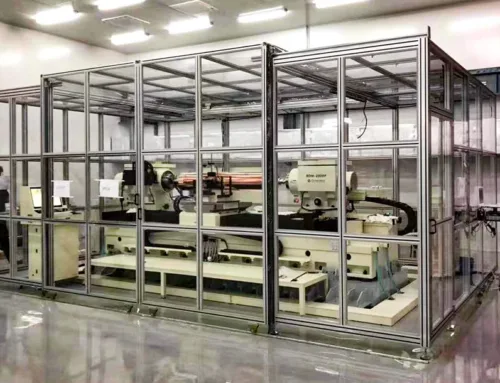
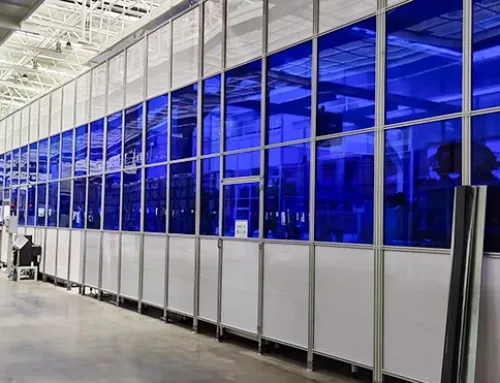
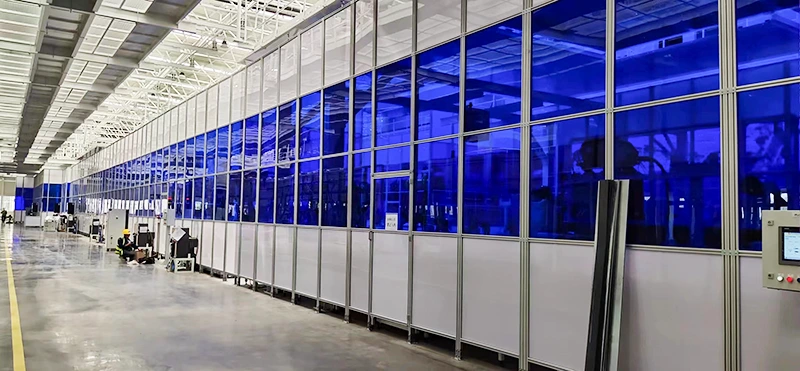
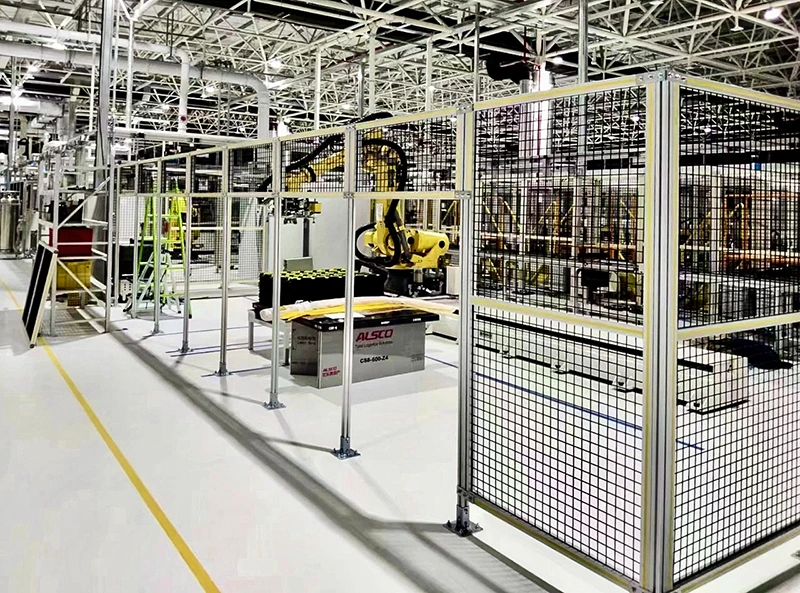
Alfence uses T-slot aluminum posts, welded wire mesh panels, and bolt-free assembly details to create a reconfigurable post-and-panel system. The lightweight, corrosion-resistant aluminum profile safety guarding can be planned around robot cells, automated warehouse guarding, packaging lines, or retrofit guarding. Removable panels support line changes without committing the integrator to a new welded steel fence layout.
2. A close mesh layout with visible access control
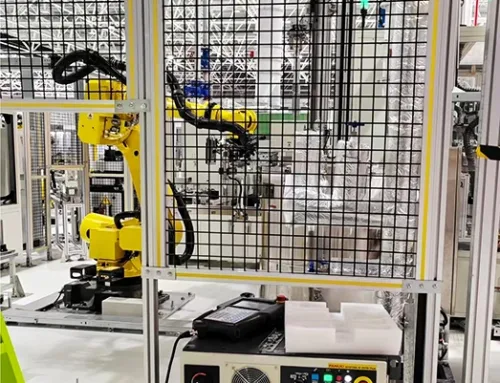
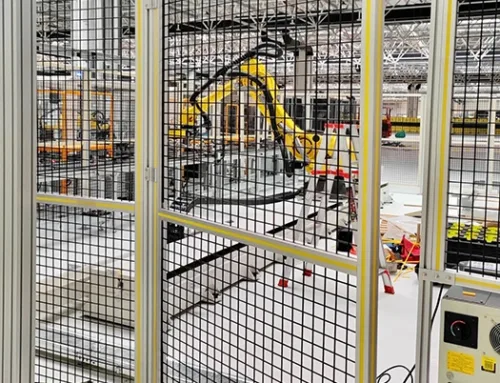
The 20×100 mm mesh grid helps the designer keep the boundary close to the hazard while maintaining visibility of conveyors and automated equipment. For access points, the system can include hinged, sliding, or folding safety doors, safety light curtains, and safety interlock switch provisions. A Schmersal AJM150 safety switch can be paired with a 40×40 mm post, while the safety lock and emergency-stop circuit remain part of the integrator’s validated control architecture.
3. Floor anchoring and configuration evidence
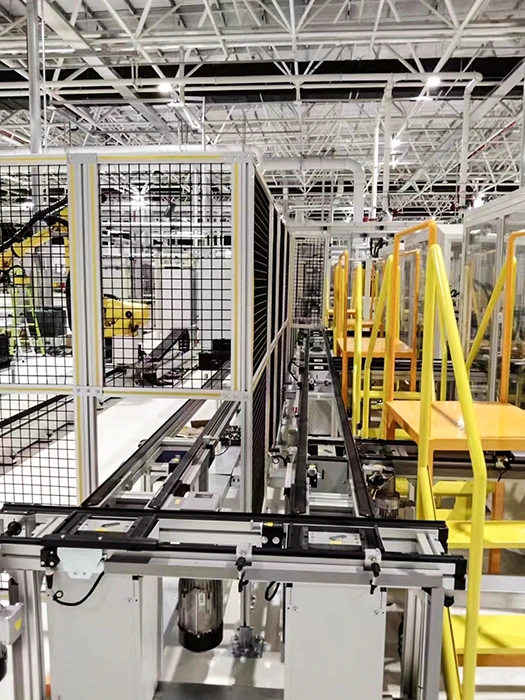
Anchored posts and floor-mounted expansion bolts provide a clear installation detail for the layout record. Standard options include 40×40 or 45×45 mm posts, 1000 / 1800 / 2000 mm heights, 200–1200 mm panel widths, and single doors up to 1500 mm or double sliding doors up to 6000 mm. These parameters give the project team a concrete basis for drawings, bill of materials, inspection points, and SAT photographs instead of relying on a generic barrier description.
Where One Guarding Logic Can Be Reused
- Automated warehouse guarding: ASRS and high-bay storage areas, shuttle-car zones, and conveyor transfer points.
- AGV path guarding: physical separation around vehicle routes, loading interfaces, and pedestrian crossing points, subject to the AGV risk assessment.
- Robot cell guarding: material-handling robots, palletizers, welding cells, CNC machine guarding, and assembly line separation.
- Retrofit guarding: indoor plant installations where reusable components, bolt-free panel swaps, and relocatable guarding reduce rebuild work.
- Documentation handover: a coordinated configuration can be referenced across drawings, risk assessment, CE / Machinery Directive files, and SAT records for multiple locations.
Alfence does not replace the integrator’s machinery risk assessment or local legal review. It gives that process a consistent physical guarding language: the same aluminum profile safety guarding approach, selected mesh and access details, and recorded installation evidence can be adapted for each robot cell or AGV zone.
Prepare the Compliance File Before the Fence Arrives
For a multi-country project, request the configuration basis with the site layout: hazard boundary, required safety distance, panel and post dimensions, door locations, safety light curtain or interlock points, anchoring method, and the applicable European or North American review criteria. This makes it easier to include Alfence in the overall risk assessment and SAT document chain, rather than adding fence evidence after installation.
Need Aluminum Profile Safety Guarding for Several Sites?
Send the robot-cell, conveyor, ASRS, or AGV layout together with the countries of deployment. SGF can help map the modular safety fence configuration, access-control provisions, and documentation inputs before procurement.