EN
EN  DE
DE  RU
RU  PT
PT  JA
JA  ES
ES  IT
IT INDUSTRIAL SAFETY FENCING / MAINTENANCE ACCESS
Keep the Hazard Zone Closed—Without Blocking the Maintenance Route
Automated warehouses are usually unmanned, but they are not maintenance-free. Mefence industrial safety fencing combines warehouse zoning, pedestrian separation, and controlled service access through on-site-cut frameless panels, lockable maintenance gates, and quick-release sections.
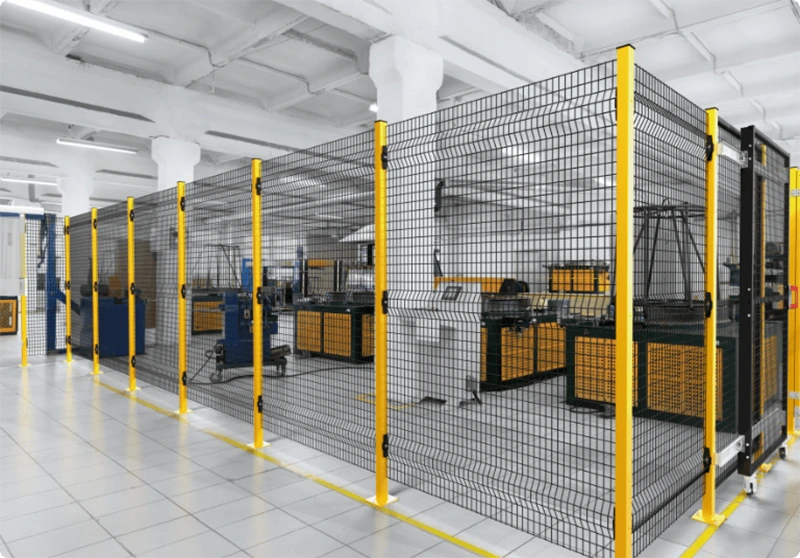
Why Maintenance Access Must Be Designed into Warehouse Zoning
In an automated warehouse, the normal operating condition is an empty hazard zone. During inspection, sensor replacement, conveyor service, or fault recovery, a maintenance worker must enter that same zone. The industrial safety fence therefore has two jobs: prevent unauthorized access during operation and provide a deliberate, controlled route when access is authorized.
| Design requirement | Mefence industrial safety fencing response |
|---|---|
| Keep pedestrians and vehicles separated | Use modular welded mesh panels for area demarcation, forklift path barrier layouts, and pedestrian-vehicle separation around AGV or forklift traffic. |
| Allow controlled entry for service work | Combine an on-site-cut frameless panel layout with a lockable maintenance gate and a defined access route instead of leaving an informal opening. |
| Fit around equipment and door openings | Cut the wire mesh panel on site where the layout requires a door opening or a tight boundary adjustment; the folded panel geometry preserves a slim barrier profile. |
| Support repeatable installation | Available configurations include 3 mm or 4 mm wire diameter, 20×100 mm or 50×50 mm mesh openings, and 40×60 mm or 60×60 mm post options, subject to the project layout. |
How the Frameless Fence Supports a Safer Service Workflow
1. A gate is part of the guarding system, not an afterthought
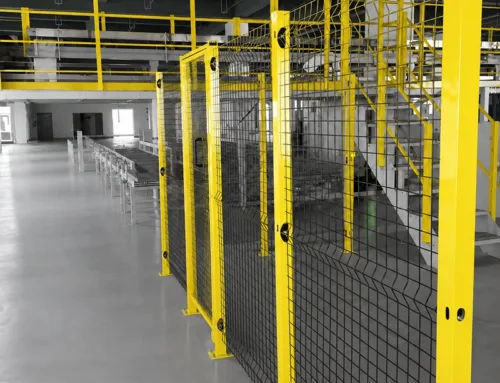
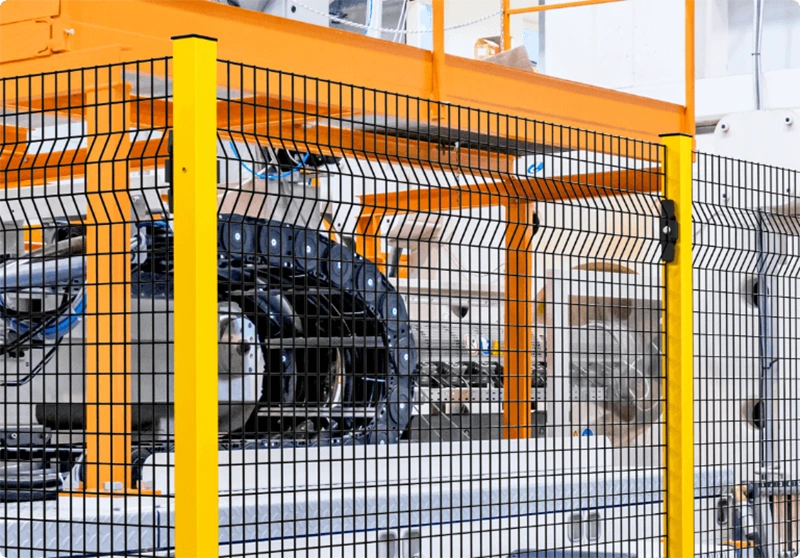
A barrier that only blocks people creates a maintenance problem. Mefence can be planned with a lockable inspection door so the normal state remains closed while authorized personnel receive a defined entry point. The gate hardware and latch arrangement shown here support a machine guarding layout where access control is visible and repeatable. That is more practical than removing a random panel or climbing over a barrier tape line.
2. Frameless 3D mesh adapts to the real boundary
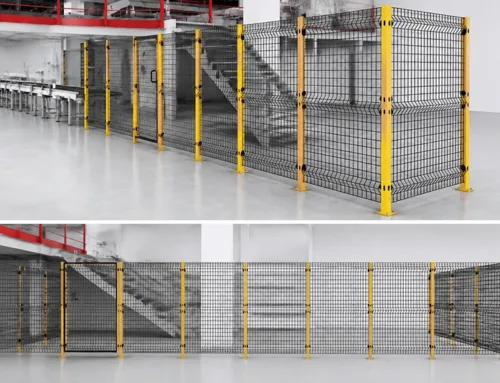
Traditional framed fence sections can make every change depend on a prefabricated frame size or a welding operation. Mefence uses a no-frame-border, 3D welded mesh panel with folded sections and a T-shaped ridge. The frameless design can be cut on site for a door opening or a boundary correction, while the panel remains a slim profile barrier that helps maximize floor space. The modular format also supports a reconfigurable warehouse partition when the equipment route changes.
3. Cable routing and removable sections keep service work moving
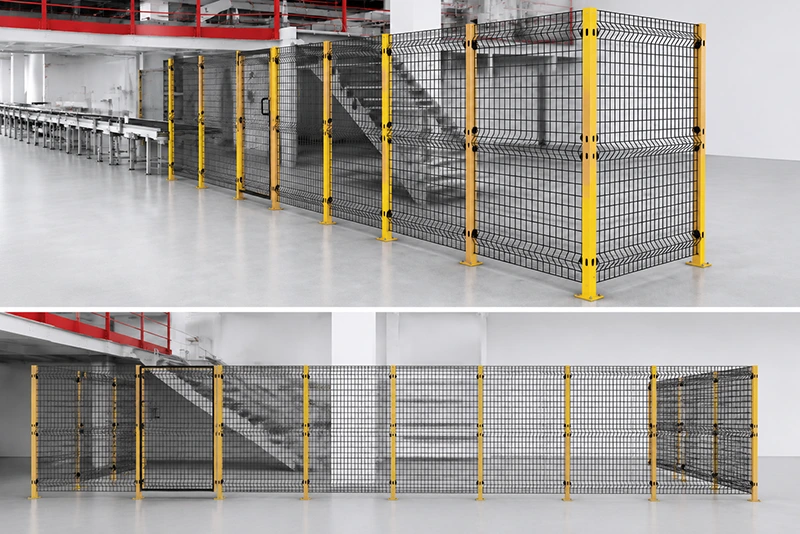
The fence line often sits beside sensors, door switches, and access-control devices. A cable-management fence layout can use the panel’s formed geometry and planned grooves to route door-control or sensor wiring without improvising loose cables across a walkway. For larger interventions, a quick-disassembly section can be released and refitted by maintenance personnel rather than a specialist welder. The powder-coated steel posts, bolt-down bases, and modular connections shown in the installation evidence make the reset location clear after work is complete.
Where This Layout Logic Applies
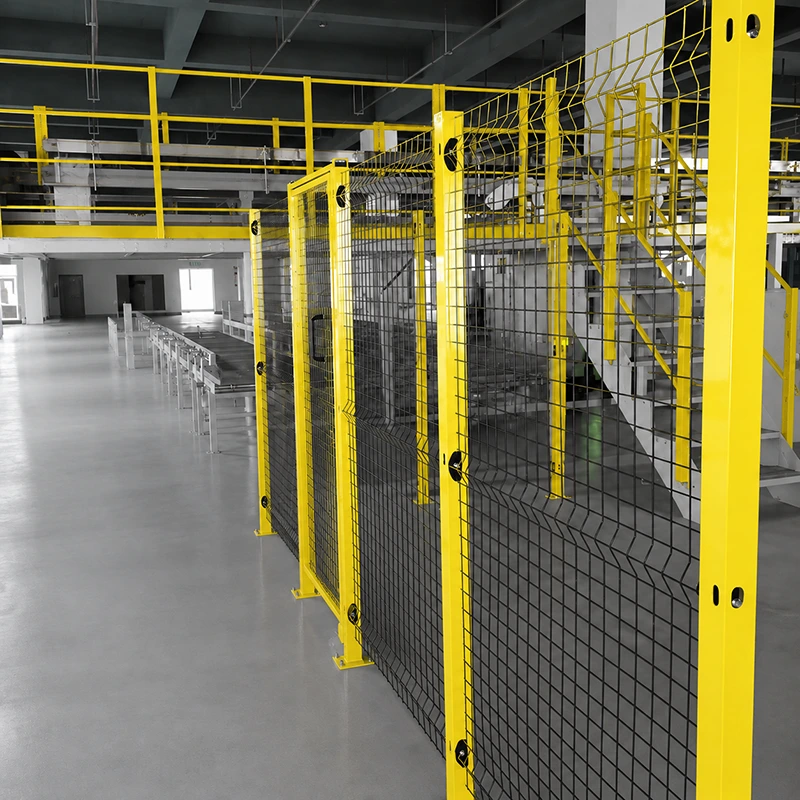
- Automated warehouse zoning: separate AGV lanes, forklift paths, pedestrian routes, and service areas with a visible workplace safety barrier.
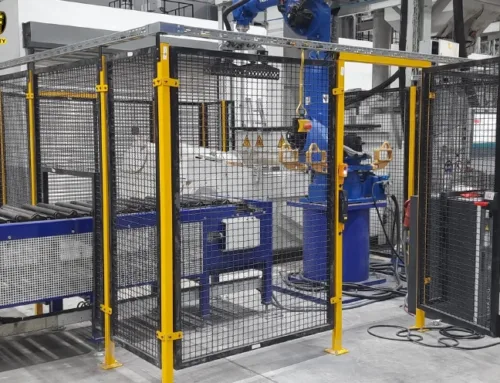
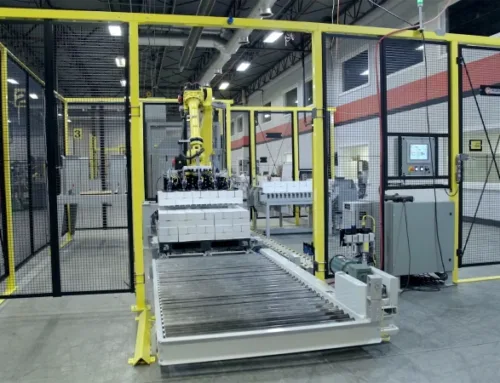
- Robotic workstation enclosure: pair a robot safety fence with a lockable gate and sensor wiring route so the robotic cell stays closed in normal operation.
- Conveyor belt isolation: use machine guarding around transfer points while preserving a planned inspection entrance rather than relying on temporary partition tape.
- Workshop isolation and site demarcation: use modular, relocatable panels where the boundary may be reconfigured as equipment or traffic flow changes.
Mefence is intended for fixed or semi-fixed separation, not as a substitute for a temporary warning tape line or an uncontrolled perimeter fence. The correct result is a hazard zone that is difficult to enter casually but straightforward to access through the approved maintenance procedure.
Specify the Access Points before Ordering
For a practical machine guard fence layout, provide the equipment perimeter, required gate positions, maintenance clearance, sensor or door-control cable routes, floor fixing conditions, preferred mesh opening, panel height, and post size. Mefence configurations cover panel widths from 200–1400 mm and heights from 200–3000 mm, with powder-coated steel components and clip, self-tapping screw, expansion bolt, or base-plate post options selected around the installation method.
Build the Access Route into the Safety Fence Plan
A warehouse should not have to choose between strict area demarcation and workable maintenance. With an on-site-cut frameless safety fence, lockable inspection door, planned cable management, and quick-disassembly section, the boundary can protect people during normal operation and remain serviceable when authorized access is required. Send the zone drawing and maintenance entry points to SGF for a Mefence layout review.