EN
EN  DE
DE  RU
RU  PT
PT  JA
JA  ES
ES  IT
IT WAREHOUSE DELIVERY · INDUSTRIAL SAFETY FENCING
Fast Warehouse Delivery Without Hot Work: How Mefence Industrial Safety Fencing Keeps a 12-Month CFC Build on Schedule
When an automated fulfilment centre must be built or upgraded in 12 months, the safety fence cannot become the late-stage bottleneck. Mefence industrial safety fencing uses a three-step clip fixing method, requires no welding or hot-work permit, and can reduce installation labour by about 50%—supporting warehouse zoning, pedestrian separation and machine guarding while the main project is being completed.
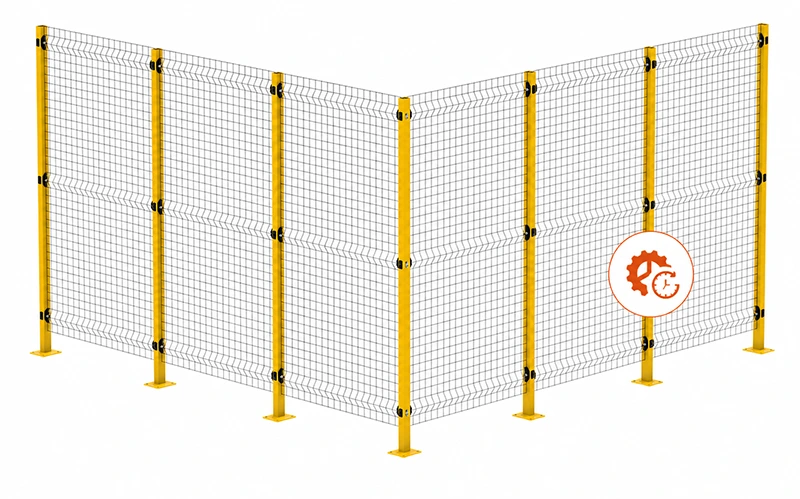
Why Traditional Framed Fencing Slows a Fast CFC Project
The pressure is not only the warehouse shell. Automated equipment, AGV lanes, forklift paths and restricted service zones must be separated before commissioning. A welded square tube fence can add a separate work package: hot-work approval, fire controls, a professional welder, grinding and touch-up. That sequence is difficult to fit around a live site, especially when installation is pushed to night or weekend shifts. Barrier tape or rope barriers may mark an area temporarily, but they do not provide a physical workplace safety barrier or machine guarding solution.
| Fast-delivery requirement | Mefence response |
|---|---|
| Keep fence work moving while other trades finish | Three-step clip fixing; no welding required and no hot-work approval in the installation process |
| Separate people, forklifts and automated traffic | Modular industrial safety fencing for area demarcation, pedestrian separation and forklift path barrier layouts |
| Fit irregular equipment and late layout changes | Frameless design, modular panels and on-site cutting for practical field adjustment |
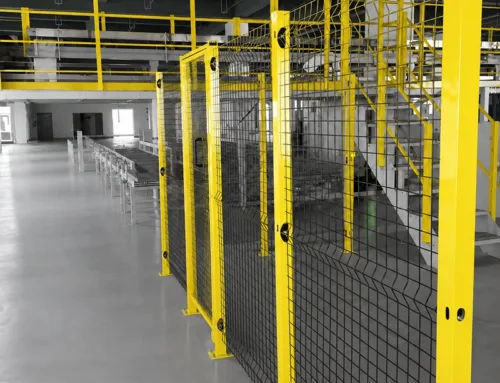
| Make the guarding visible in a busy warehouse | High-visibility yellow posts with black welded wire mesh for clear hazard-zone separation |
| Finish installation with a smaller crew | Clip fixing and bolt-down components can reduce installation labour by about 50%, subject to site conditions |
Product Fit: A Frameless 3D Fence Built for Site Pace
1. Three-step assembly replaces a hot-work sequence
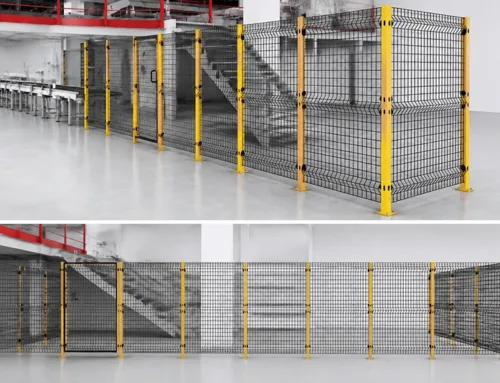
Mefence is a frameless safety fence based on folded 3D welded mesh rather than a traditional framed fence. The panel is positioned, secured with plastic clip fixing and completed with mechanical fasteners and a base plate post. This is a practical installation path for a warehouse partition or temporary construction fence when the project team needs work completed without bringing welding into the area. The result is fewer trade dependencies: no welder is required, and night or weekend installation can be planned without a hot-work permit workflow.
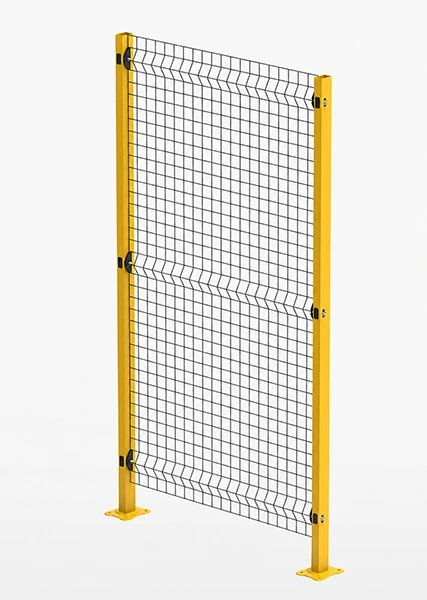
2. Folded mesh gives zoning a slim, adaptable profile
The 3D welded mesh panel uses folded sections, including a T-shaped ridge, to create a rigid wire mesh machine guard without a full perimeter frame. Available panel dimensions can be specified across approximately 200–1,400 mm in width and 200–3,000 mm in height; typical wire diameter options include 3 mm and 4 mm, with mesh openings such as 20 × 100 mm or 50 × 50 mm. This range helps the layout team coordinate machine guarding, storage area separation and pedestrian-vehicle separation without consuming more floor space than necessary.
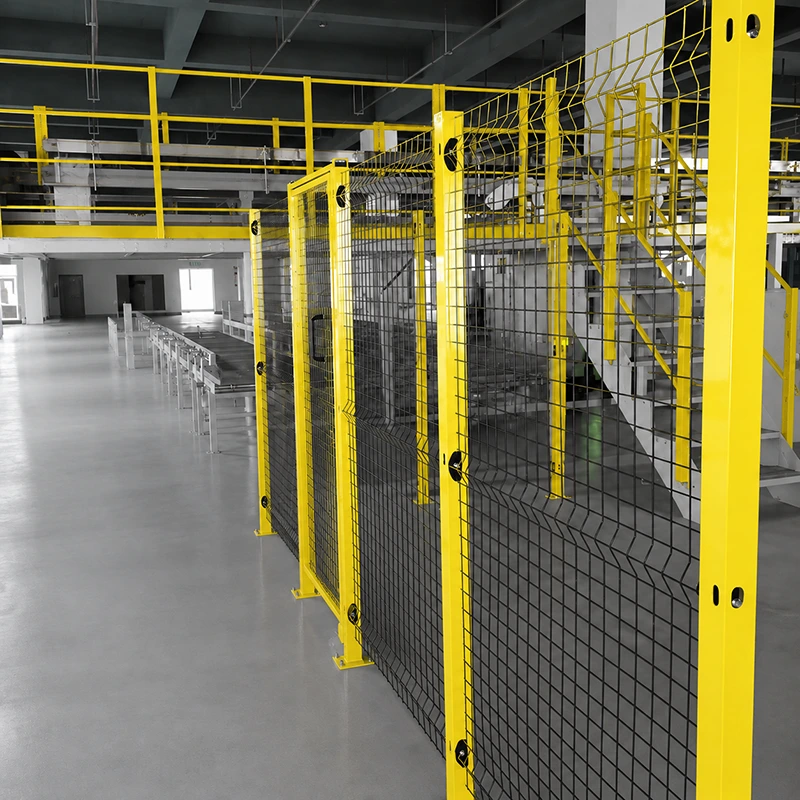
3. Mechanical fixing supports handover and reconfiguration
Close-out work often changes when conveyors, maintenance access or traffic routes are adjusted. Mefence uses bolt-mounted connectors, slotted post holes, self-tapping screws, expansion bolts and floor-mounted base plates so sections can be aligned, removed or reused without cutting out welded joints. Q235 carbon steel welded wire mesh with powder coating provides the steel barrier structure and the yellow-black safety fence contrast needed around automated equipment. It is a modular reconfigurable system for warehouse zoning—not a substitute for the project’s required risk assessment or the guarding standard selected by the site engineer.
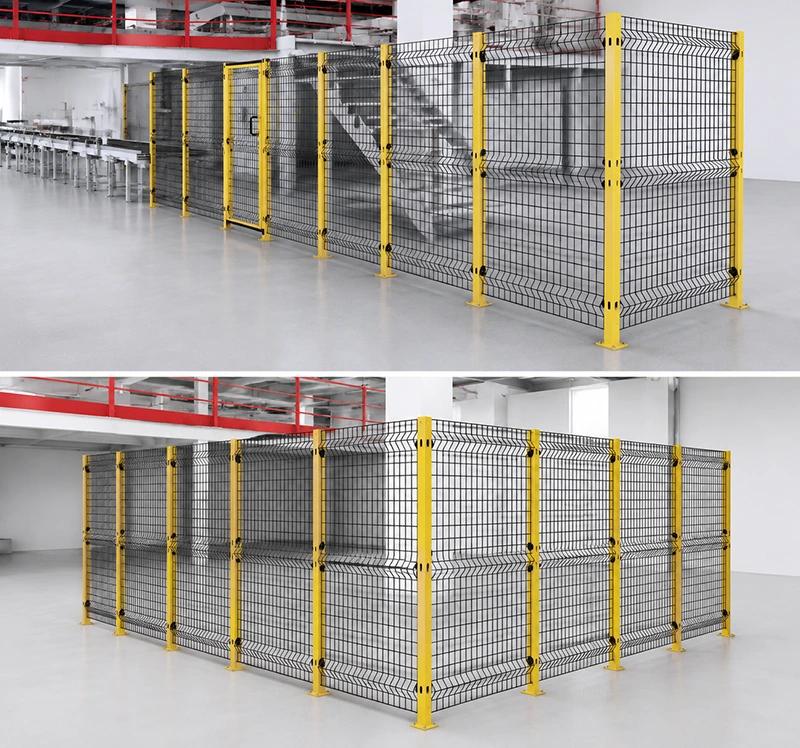
Where the Installation Advantage Matters
- Automated fulfilment centres: use warehouse zoning and AGV or forklift path barrier layouts to separate traffic from pedestrian routes before commissioning.
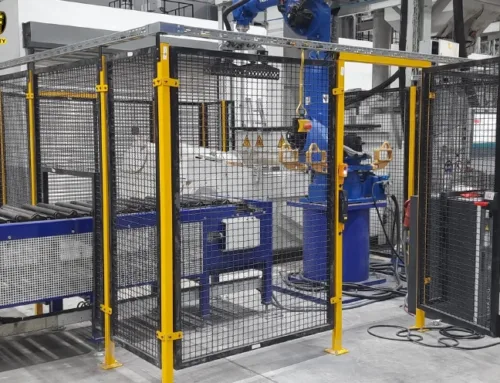
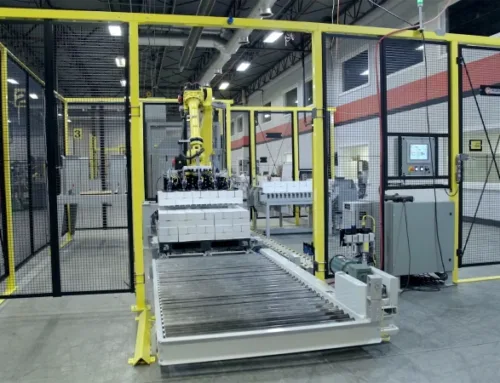
- Robotic work areas: create a robotic workstation enclosure, robot safety fence or automated equipment guarding zone with modular panels and access points.
- Retrofit and phased handover: use on-site cutting and relocatable reusable fence sections when conveyor lines, service routes or storage areas change.
- Construction and fit-out work: install a construction site barrier or workshop isolation area without adding welding to the site permit schedule.
Mefence is suited to fixed or semi-fixed separation: area demarcation, machine guarding, hazard zone separation and workplace safety barrier duties. Select the panel height, mesh opening, post size and anchoring method against the actual risk assessment; possible post sections include 40 × 60 mm and 60 × 60 mm.
Specify the Fence Before It Reaches the Critical Path
For a 12-month CFC build, the useful question is not simply whether a fence can be installed. Confirm the handover zones, traffic routes, access gates, floor condition, panel height and required mesh opening early. The Mefence 3D fence format then gives the site team a clear material and installation basis: powder-coated steel wire mesh, clip fixing, bolt-down posts and field-adjustable modules. This lets the fence scope follow the building and automation schedule instead of waiting for a separate welding crew.
Keep Industrial Safety Fencing Aligned With the Build Schedule
If traditional framed fencing is creating permit, labour or sequencing risk, send the warehouse plan and required separation zones to SGF. We can review a Mefence layout for pedestrian separation, forklift path barrier, machine guarding and fast installation, with the final specification confirmed against the site conditions and safety requirements.