EN
EN  DE
DE  RU
RU  PT
PT  JA
JA  ES
ES  IT
IT WAREHOUSE ZONING / AGV LANE SEPARATION
Why Frameless Industrial Safety Fencing Keeps AMR Routes Visible in Fulfillment Centers
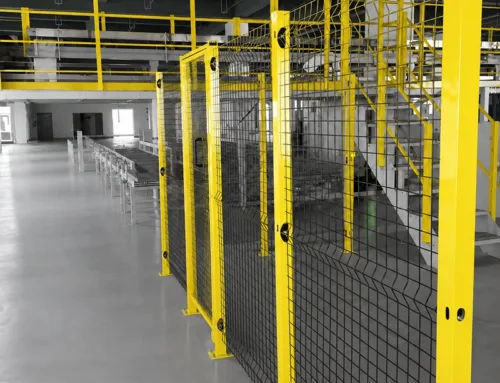
AMR and AGV fulfillment centers need physical pedestrian separation without turning robot routes into blind corridors. Mefence Industrial Safety Fencing uses open 3D welded mesh to keep unauthorized personnel outside the automation zone while preserving visual oversight, picking visibility, and a sensor-friendly layout.
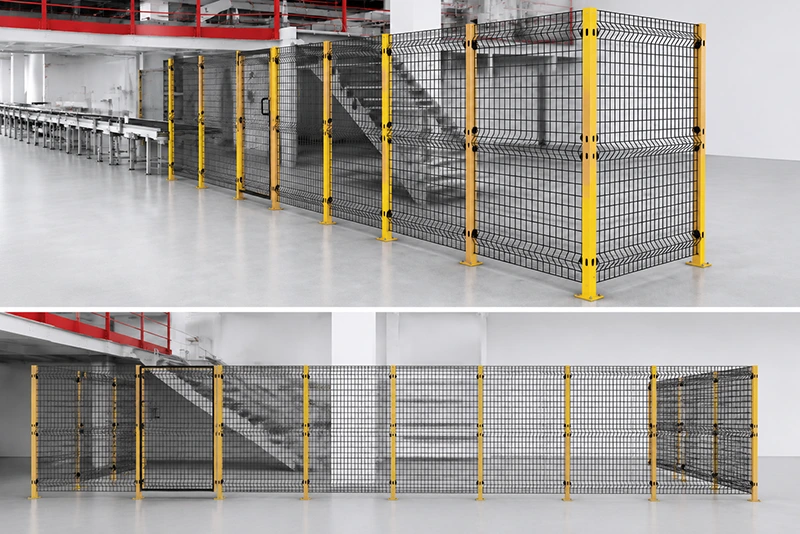
When a Robot Safety Fence Must Block People, Not Visibility
In a warehouse with AMRs, AGVs, and robotic storage equipment, pedestrian-vehicle separation is a physical design issue. Barrier tape and rope barriers do not stop an accidental crossing. A solid wall may stop people, but it can also obstruct cameras, reduce picking-line visibility, and create a broad physical surface in the path of LiDAR or laser navigation. Traditional framed fencing adds another problem: rigid perimeter frames are harder to adapt around columns, charging points, conveyors, and changing aisle dimensions.
The practical requirement is a workplace safety barrier that creates a clear hazard zone boundary while keeping the route readable. Mefence is positioned for area demarcation, traffic flow planning, and non-high-impact machine guarding—not certified anti-collision containment. Where direct impact containment is required, the higher-spec Machine Fence line should be evaluated instead.
| Mefence design point | How it addresses the fulfillment-center constraint |
|---|---|
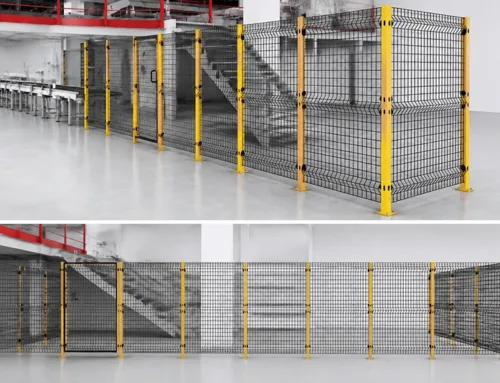
| Frameless 3D welded mesh | Defines robot workstations, AGV lanes, and storage zones without a solid visual wall. |
| Wire diameter and mesh | 3 mm or 4 mm wire with 20×100 mm or 50×50 mm openings for a visible welded wire boundary. |
| Flexible dimensions | Panel widths of 200–1400 mm and heights of 200–3000 mm support irregular retrofit areas; panels can be cut on site. |
| Posts and fixing | 40×60 mm or 60×60 mm posts, plastic clips, self-tapping screws, base-plate posts, and expansion bolts support cold-work installation. |
| Raised profile | Multiple horizontal T-shaped ridges create space for cable management and can accept wood slat inserts where visual shielding is needed. |
| Finish and warning color | Powder-coated steel in the standard yellow-and-black combination improves boundary recognition; custom colors are available. |
Three Reasons the Mesh Structure Fits AMR and AGV Zones
1. Open panels preserve operational sightlines
A fulfillment center depends on camera coverage, operator awareness, and clear picking visualization. The open welded wire mesh of this frameless safety fence establishes a real physical boundary without the continuous obstruction of a masonry wall or solid partition. Teams can see equipment status and pedestrian movement across the perimeter, while the fence remains visually prominent through its yellow-black finish.
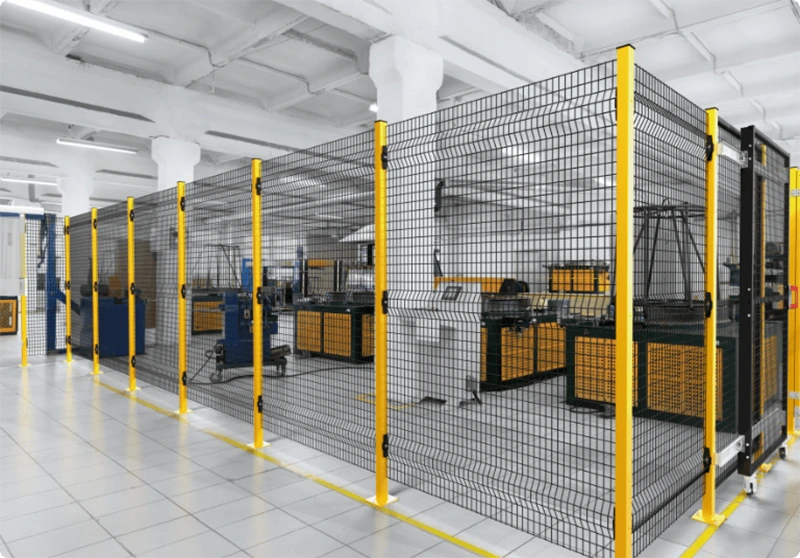
2. 3D bends add routing space without adding a wall
The 3D safety fence is not a flat sheet alone. Its folded profile and T-shaped ridges add functional space around the mesh. Cables can be routed through the raised sections instead of hanging outside the fence, and wood slats can be inserted when a project needs selective visual shielding. That combination supports automated equipment guarding, line-side cable management, and controlled visibility in one modular reconfigurable fence system.
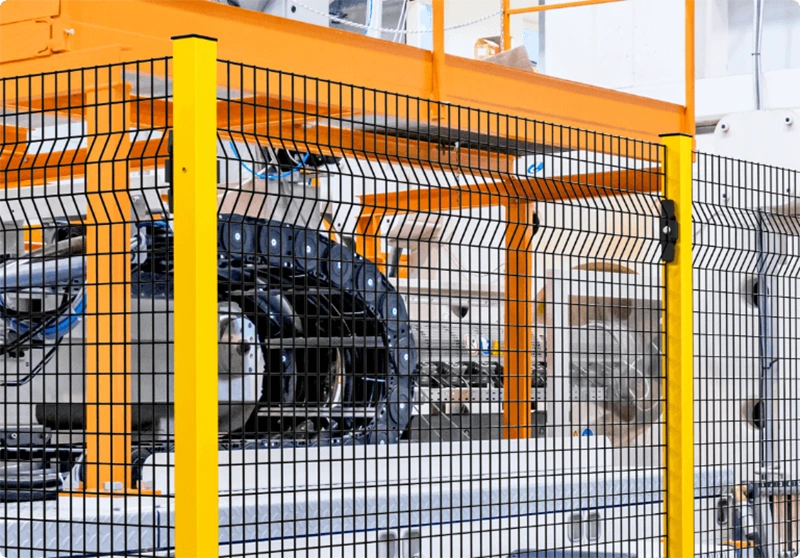
3. Modular access keeps traffic planning practical
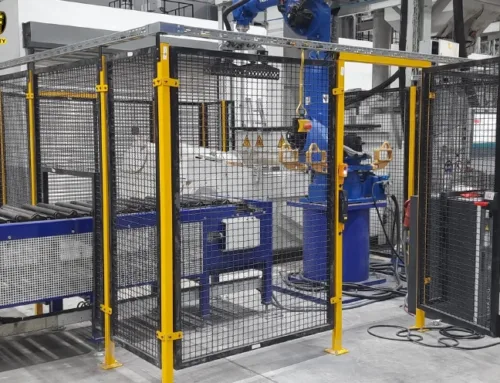
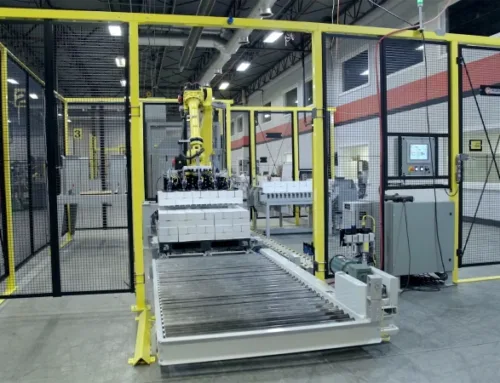
Robot workstation perimeters still need controlled entry for maintenance and replenishment. Mefence modules can be arranged around automated machinery with an access gate, while base-plate posts and bolt fixing establish the floor connection. The clip-fixed assembly avoids a site welding step. The documented installation method is designed for one person in three steps and can reduce installation time by 50% or more, useful when a retrofit window is short or a warehouse layout may change after commissioning.
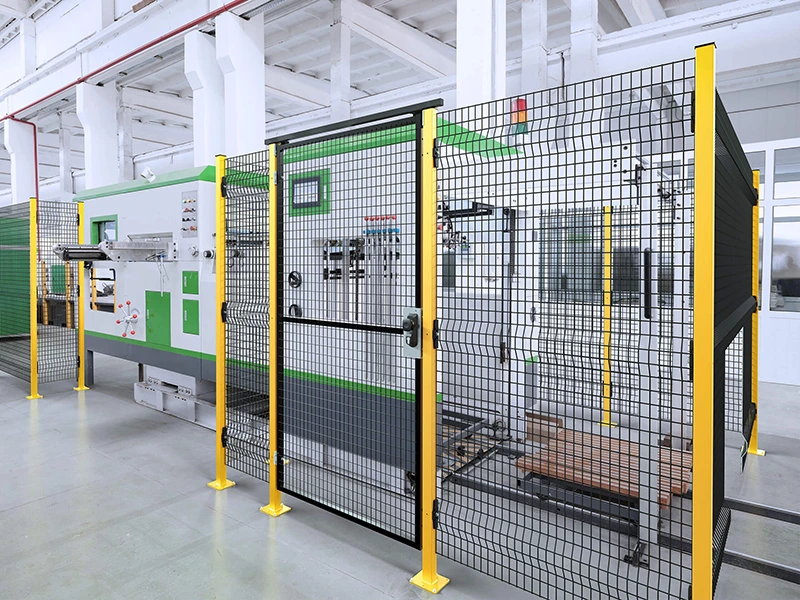
Where to Apply Mefence in a Mixed-Traffic Warehouse
- AGV lane separation: keep pedestrian walkways outside defined vehicle routes and reduce random crossings that can interrupt robot operation.
- AMR and robotic workstation enclosure: create a visible perimeter around charging, picking, or automated equipment areas while retaining camera sightlines.
- Warehouse zoning: separate storage areas, replenishment aisles, tool cribs, and restricted work zones with a slim-profile barrier.
- Forklift path barrier: clarify traffic flow planning at intersections and access points without building a solid blind wall.
- Retrofit and workshop isolation: cut panels on site, reuse modules, and reconfigure the boundary as equipment positions change.
For a compliant project specification, buyers should confirm the required separation distance, gate logic, floor condition, camera positions, and LiDAR field of view with the automation integrator. Mefence can then be sized around those constraints using its documented panel, post, mesh, and fixing options.
What to Confirm Before Selecting the Fence
Start with the robot route and the people route, not only the perimeter length. Mark charging stations, conveyor transfers, emergency access, floor joints, camera locations, and sensor envelopes. Then specify panel height and width, 3 mm or 4 mm wire, 20×100 mm or 50×50 mm mesh, post size, access points, and whether cable routing or wood slat inserts are required. The result is a machine guard fence that supports area demarcation and visual control without promising an impact rating the product does not carry.
Build a Visible Boundary Around Your Automation Zone
Mefence combines frameless safety fencing, open 3D welded mesh, yellow-black warning visibility, and quick-install modular assembly for warehouses where people and robots must share the building but not the same route. Send your layout, floor condition, panel dimensions, and sensor constraints to SGF for a practical zoning review.