EN
 DE
 RU
 PT
 JA
 ES
 IT

Freestanding Permanent Guardrail
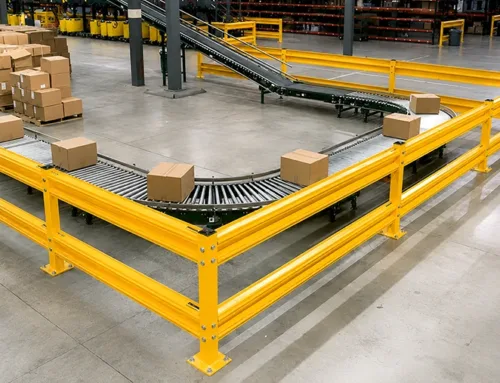
The Freestanding Permanent Guardrail is a robust safety solution designed to provide permanent fall protection for workers in various industrial settings. This freestanding guardrail system is engineered for long-lasting durability and can be installed without the need for roof penetration. It is ideal for safeguarding rooftop work areas, elevated platforms, and other high-risk zones where fall prevention is essential.
Product Introduction
Key Features
- 1. Durable Construction: The guardrail system is constructed from high-quality materials to withstand harsh environmental conditions and ensure a long service life.
- 2. Easy Installation: No need for roof penetration, making installation quick and hassle-free. It can be set up on a variety of surfaces, including concrete, metal, and more.
- 3. OSHA Compliant: The Freestanding Permanent Guardrail meets OSHA requirements for fall protection, ensuring a safe working environment.
- 4. Customizable Options: Available in different heights and configurations to suit the specific needs of your workplace.
- 5. Versatile Application: Suitable for rooftop safety, mezzanine protection, walkways, and other elevated work areas.
Working Principle
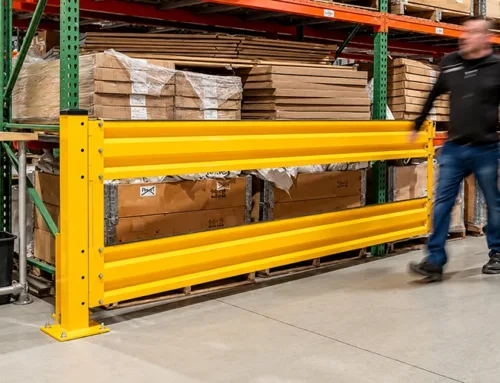
The Freestanding Permanent Guardrail is designed to create a protective barrier around elevated workspaces. It consists of sturdy posts and horizontal rails that form a secure enclosure, preventing accidental falls. The system can be customized to fit the layout of your workspace and provides continuous protection for workers.
Installation Process
Installing the Freestanding Permanent Guardrail is straightforward. The system’s freestanding design eliminates the need for roof penetration, reducing installation time and complexity. Simply assemble the posts and rails, position them in the desired location, and secure them in place. The guardrail is ready to provide reliable fall protection immediately after installation.

Applications
The Freestanding Permanent Guardrail is essential in the following scenarios:
- 1. Protecting rooftop workers from the risk of falls during maintenance, repairs, or inspections.
- 2. Securing elevated platforms, mezzanines, and loading docks in warehouses and manufacturing facilities.
- 3. Creating safe pedestrian walkways and traffic control zones in industrial environments.
- 4. Ensuring compliance with safety regulations in construction sites and other high-risk work areas.
Black-Ice Skid Between 23:00 and 05:00 No Operator Reports: Reading a 4 mm Q235 Warehouse Guard Rail with a 160×160×16 mm Base Plate the Next Morning
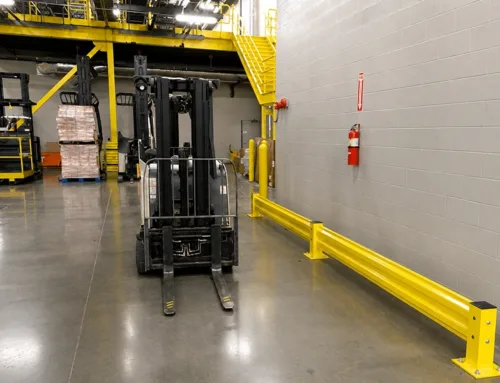
On a −6 °C ambient dock apron between 23:00 and 05:00, a counter-balanced forklift skids 1.2 m past the floor-mark, finds the rail instead of the rack, and walks away without filing a near-miss entry. A 4 mm Q235 corrugated steel warehouse guard rail with a custom 160×160×16 mm base plate is the only forensic read the 5 a.m. EHS walk-around has on what actually happened.
Frozen Loading Bay Floors and Skid-Out Forklifts: Heavy Duty Warehouse Guard Rails as the Last Physical Line of Defense for Racks, Columns, and Precision Equipment
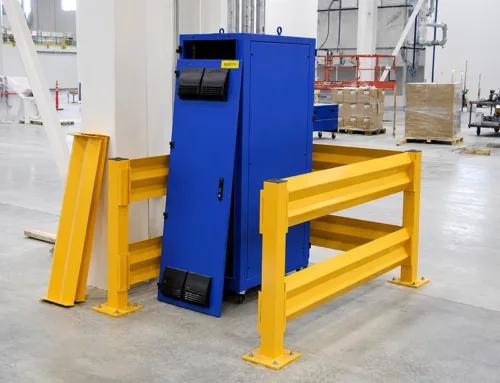
On a -8 °C dock apron a 2.5 t counterbalanced truck slides straight into rack upright A12. A 4 mm Q235 heavy duty warehouse guard rail with a custom 160×160×16 mm base plate from technical case 15176 is the last physical line of defense around racks, columns and precision equipment when the bay floor turns to ice.
Cold Storage Robots and Pickers Share an Aisle at –25 °C — and a Yellow Reflective Q235 Warehouse Guard Rail Is the Passive Boundary Neither Will Cross
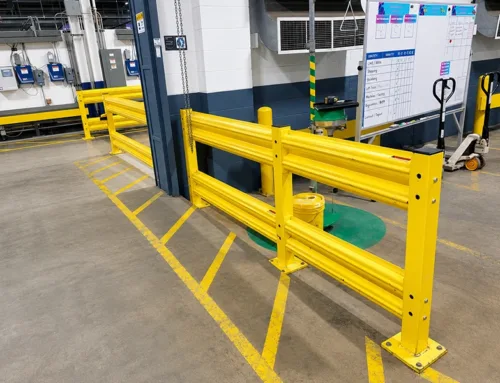
ROLT robotic pallet shuttles, reach trucks, and seasonal pedestrian pickers share the same –25 °C cold storage pick aisle. A bolted, yellow, reflective Q235 warehouse guard rail with end-cap bollards forms the physical boundary a robotic shuttle will not cross into the pedestrian lane — completing the UWB proximity and blue-light active warning stack on the layer that does not depend on training, sensor battery, or the operator's mood.