EN
EN  DE
DE  RU
RU  PT
PT  JA
JA  ES
ES  IT
IT INDUSTRIAL SAFETY FENCING FOR METAL RECYCLING OPERATIONS
Recover Floor Space Without Compromising Machine Guarding
Indoor metal recycling centers operate with expensive floor space, dense equipment layouts, and constant material movement. A compact machine guarding fence built around a 20 x 100 mm precision mesh can support compliant equipment isolation while reducing the legal separation distance to as little as 120 mm. For a network operating across 135 locations, that difference can become measurable storage and handling capacity.
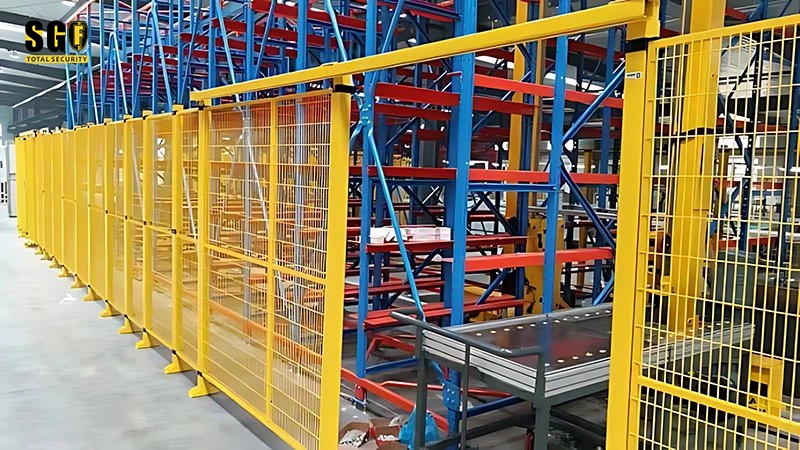
Why Dense Indoor Recycling Layouts Need a Different Fence
In an indoor metal recovery plant, every aisle has a job. Scrap must be stored, sorted, conveyed, and moved by people or vehicles without crossing the hazard zone around machinery. Traditional welded safety fencing can meet the basic need for a physical barrier, but the resulting layout may require a generous clearance around the enclosure. Across a sorting center, that unused strip is repeated beside conveyors, processing equipment, access points, and storage racks. The result is less room for material staging, more difficult forklift and pedestrian safety planning, and reduced flexibility when the line changes.
A space-saving physical guarding solution must therefore answer two questions at the same time: can it isolate the hazard in line with machine guarding requirements, and can it sit close enough to the equipment to preserve valuable operating area? The answer depends on the actual mesh geometry, not simply on the color or overall appearance of the fence.
| Layout requirement | Design response |
|---|---|
| Protect equipment in a dense sorting center | Industrial safety fence panels create a continuous machine perimeter guarding boundary. |
| Reduce wasted clearance around hazards | 20 x 100 mm precision mesh supports a minimum legal isolation distance of 120 mm, subject to project validation. |
| Keep access controlled | Hinged safety doors and safety interlock devices can be configured at required service and operator access points. |
| Adapt to future line changes | Modular posts and framed mesh panels allow configurable safety fencing rather than a permanently welded enclosure. |
How the Structure Supports Compact Equipment Isolation
Precision mesh controls the reach-through risk
The defining adaptation is the 20 x 100 mm opening pattern. A narrow, elongated mesh geometry limits access toward moving equipment while allowing the guard to be positioned closer to the hazard boundary. This is the physical reason the system can target a 120 mm isolation distance instead of relying on a wider buffer. Final distance must still be checked against the machine risk assessment and the applicable guarding standard.
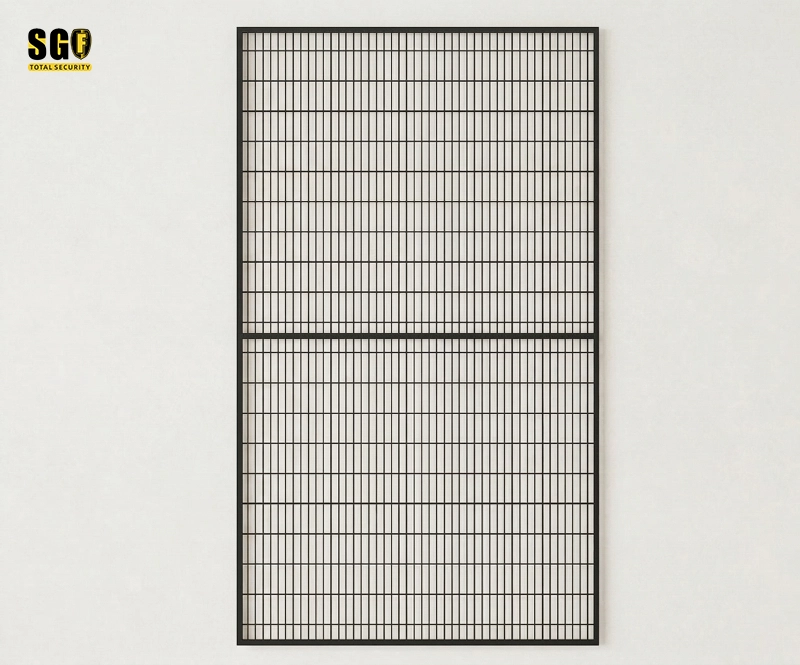
Modular panels follow the process, not the other way around
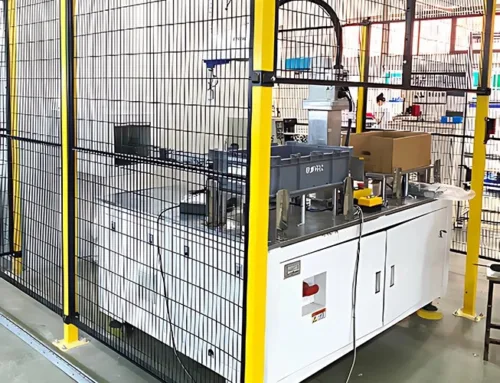
Metal recovery lines rarely have a simple rectangular footprint. Conveyors, balers, sorting machinery, control cabinets, and maintenance routes create corners and transitions. Modular industrial safety fencing can be assembled around these constraints with steel posts, framed mesh panels, and bolted base plates. That makes factory safety zoning easier to revise when a conveyor or sorting cell is relocated, while avoiding the engineering hours associated with rebuilding a fully welded barrier.
Access points remain part of the safety system
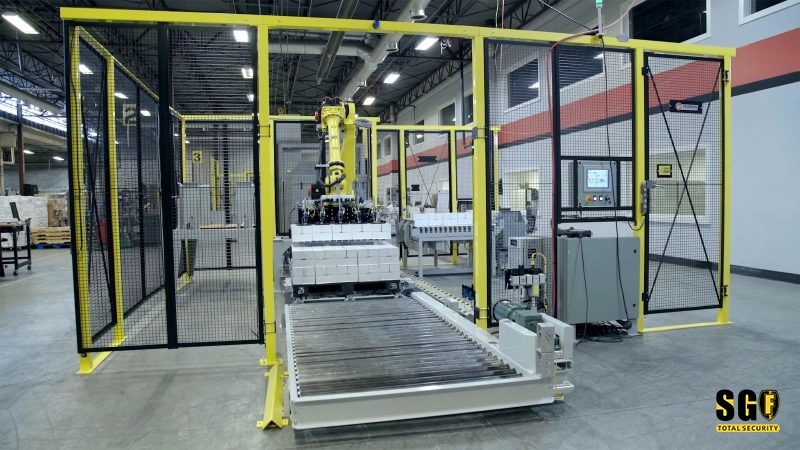
Compact guarding is only useful when operators and maintenance technicians can enter safely. Hinged safety gates, lock carriers, and compatible safety interlock devices provide controlled access for inspection and service. In an automated material handling area, this helps separate pedestrian movement from the equipment envelope and supports clearer LOTO procedures. The gate arrangement can be coordinated with the required aisle width rather than added as an afterthought.
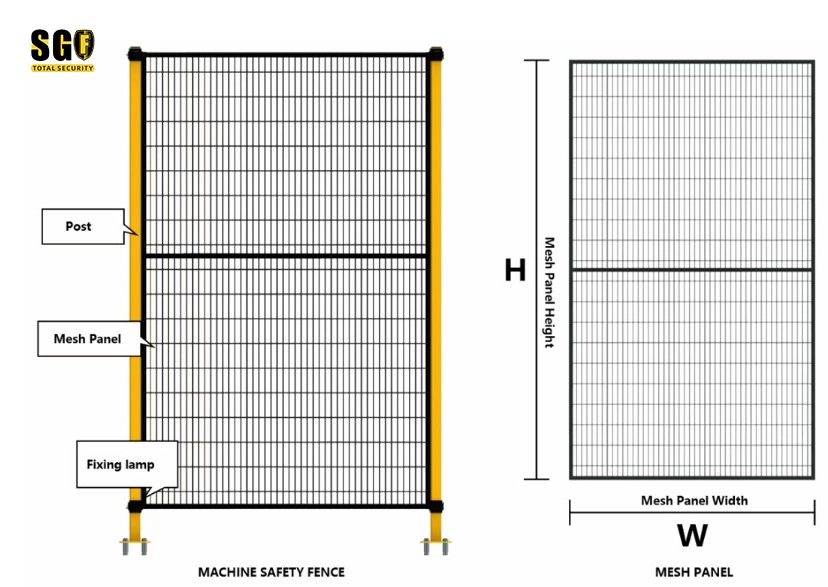
Where the Space Saving Becomes Operational Capacity
- Indoor sorting centers: preserve room for scrap accumulation and sorting equipment while maintaining equipment isolation in limited space.
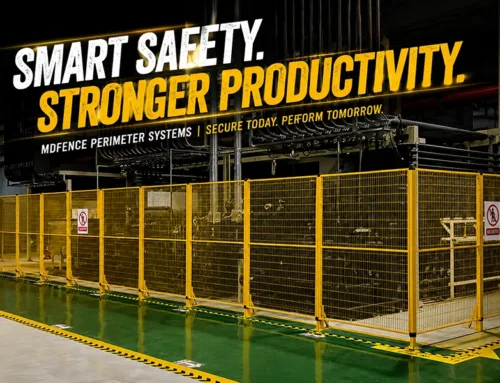
- Conveyor and transfer zones: create a defined perimeter without unnecessarily consuming the material flow aisle.
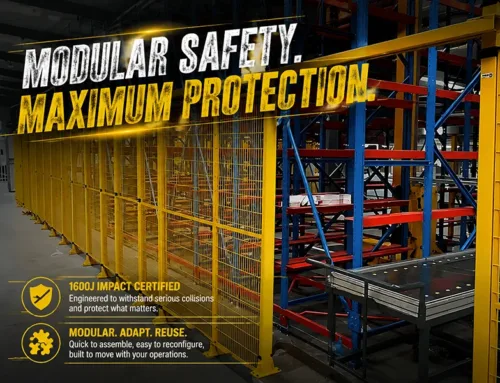
- Warehouse rack protection: separate storage and machinery zones to improve smart warehouse zoning and forklift and pedestrian safety.
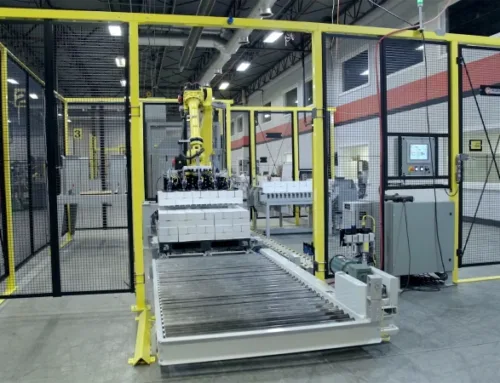
- Robot and automated cells: integrate safety doors and interlocks into robot safety fencing and automation system isolation.
For a multi-site operator such as a global metal recycling group with 135 locations, the benefit is cumulative. Saving usable width at each equipment boundary can release additional staging space, shorten travel paths, and improve production line layout flexibility. It also gives engineering teams a repeatable machine safety fencing format for future sites.
Validate the 120 mm Target Before Specification
The 120 mm figure is a project design target enabled by the 20 x 100 mm mesh opening. It should be confirmed against the machine hazard, access direction, guarding height, gate arrangement, and applicable requirements such as ISO 14120 or local OSHA machine guarding requirements. A layout review should also check maintenance access, emergency routes, forklift turning paths, and the position of safety interlock installation points.
Plan a Compact Machine Perimeter Guarding Layout
Share the equipment footprint, aisle constraints, access points, and target clearance with our engineering team. We can help translate the 20 x 100 mm mesh concept into a configurable safety fence for machinery, with the doors, posts, panels, and interlocks placed around the real process.