EN
EN  DE
DE  RU
RU  PT
PT  JA
JA  ES
ES  IT
IT Indoor recycling protection
Machine Guarding Systems for Dense Indoor Recycling Aisles
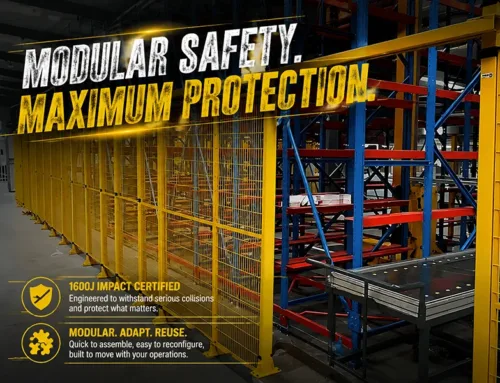
Machine Guarding Systems help space-critical metal recycling sites keep equipment protected without wasting aisle width. With a 20x100mm precision mesh and a compact 120mm legal stand-off in the approved configuration, Mdfence turns safety separation into usable floor area instead of dead space.

Why tight recycling layouts need a different guarding standard
In indoor scrap sorting centers, every meter is already assigned to bins, conveyors, forklift lanes, and maintenance access. The old answer to machine safety was to push barriers far away from the process zone. That approach may satisfy a rule on paper, but it steals high-value floor area and forces operators to compromise on storage density and traffic flow. Mdfence is built for the opposite goal: keep the protected zone compliant while keeping the footprint compact.
| Design requirement | Mdfence response |
|---|---|
| Very limited aisle width | Compact guard placement supports a much tighter separation line than conventional wide-offset fencing. |
| Need to protect moving equipment in dense flow | Perimeter guarding keeps personnel out of hazardous machine zones while preserving forklift and material routes. |
| Need legal separation without sacrificing storage | 20x100mm precision mesh enables an approved compact stand-off distance down to 120mm in the intended configuration. |
| Need stable installation and repeatable rollout | Frame, mesh, clamp, and base plate structure make the system easier to standardize across multiple sites. |
What the structure proves on site
1) Mesh density designed for compact compliance
The 20x100mm mesh is the key reason this system can stay close to the protected equipment while still supporting a compliant guard line. In a recycling facility, that matters more than visual appearance. Smaller stand-off means narrower protected corridors, less wasted aisle width, and more room for scrap storage, sorting, and circulation. This is the difference between a fence that only “blocks access” and a fence that actually fits the plant layout.

2) Hardware details that support repeatable installation
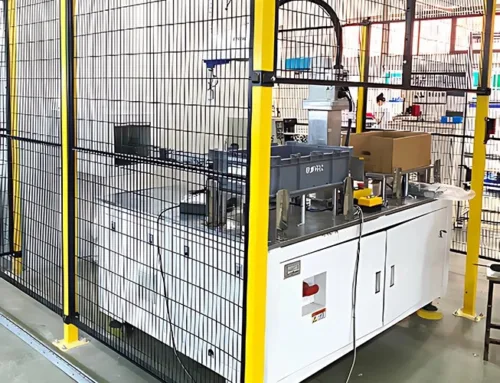
The product proof image shows the engineering evidence that buyers look for when guarding has to work in heavy-use industrial space: weld seams, coating quality, caliper checks, and base plate detail. Those are not cosmetic extras. They are the practical signs that the guard can be fixed cleanly, kept aligned, and rolled out across multiple bays without turning each installation into a custom job. For a multi-site operator, that repeatability is what protects uptime and planning accuracy.

3) Layout fit for conveyors, sorting lines, and transfer routes
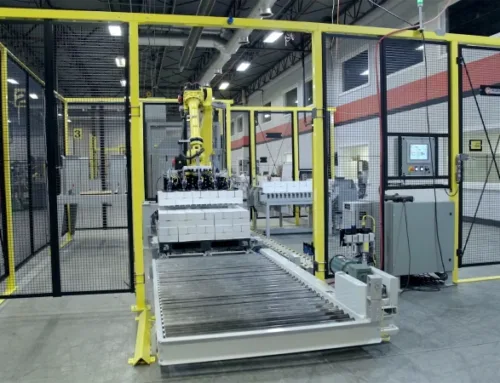
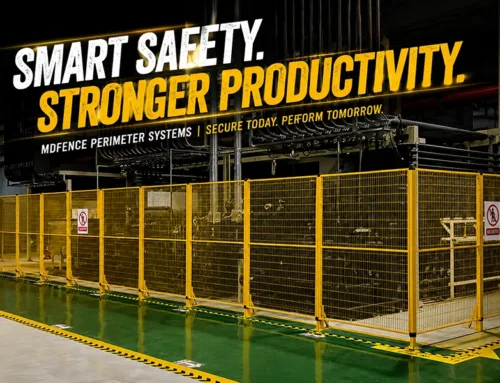
Dense recycling plants do not stop moving just because a safety fence is added. The guarding has to sit beside conveyors, transfer points, and access routes without creating pinch points. That is why the Mdfence layout shown in the factory aisle matters: it demonstrates how a guard can protect the line while keeping the process channel open. The result is safer circulation, fewer conflict points, and less pressure to rework the whole plant just to satisfy separation rules.

Where Machine Guarding Systems create measurable value
- Indoor metal recycling sorting centers with expensive, aisle-starved floor plans.
- Scrap transfer zones where forklifts, conveyors, and personnel routes cross too closely.
- Multi-bay guarding rollouts that need the same compact standard across many sites.
- Facilities that must keep legal separation while protecting storage density and throughput.
For a global operator with 135 sites, even a modest reduction in guard offset compounds into meaningful space recovery. That recovered space can be used for additional stock staging, cleaner circulation, or simply less congestion around machine zones. The practical result is not just better compliance. It is a layout that protects people and keeps the plant productive at the same time.
What to confirm before you specify a guarding layout
Before fixing the final fence line, confirm the machine envelope, traffic lane width, access points, and the legal stand-off target for the approved configuration. Then match those requirements to the guard structure, mesh density, and anchoring method. Mdfence is designed for exactly that workflow: define the zone, reduce wasted offset, and keep the installation consistent enough to scale across a full network of sites.
Turn safety distance into usable floor space
If your plant is already crowded, the right guarding system should solve the safety problem without creating a space problem. Machine Guarding Systems from Mdfence are built for dense indoor recycling aisles, compact compliant separation, and repeatable installation across multiple locations.