EN
EN  DE
DE  RU
RU  PT
PT  JA
JA  ES
ES  IT
IT Machine guarding
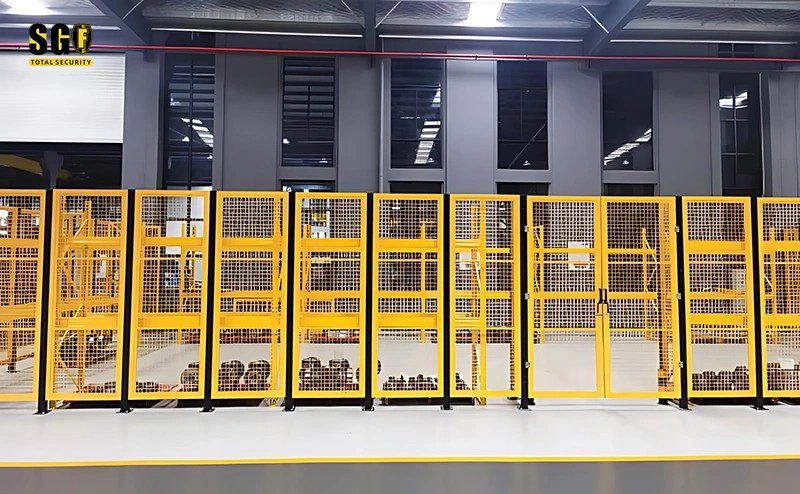
Safety fence for machinery in dense indoor recycling sorting aisles
When a recycling center packs scrap handling, sorting, and transfer equipment into one indoor footprint, every extra millimeter of safety clearance matters. Mdfence is built for that pressure: it protects the machine, keeps access controlled, and helps reclaim valuable floor area without giving up compliance intent.
Why dense recycling aisles need a different guarding approach
In indoor metal recycling and sorting centers, the old answer is usually the worst answer: oversized guard corridors, lost aisle width, and guard lines that force operators to walk farther and move materials less efficiently. If the site is already crowded with bins, conveyors, balers, and transfer points, a conventional safety fence can quietly become a space tax. Mdfence is used where that tax is too expensive to keep paying.
| What the site needs | How Mdfence answers it |
|---|---|
| Tight indoor aisles | 20x100mm precision mesh helps reduce the legal separation distance to an extreme 120mm installation gap, preserving working space. |
| Dense equipment placement | Modular fence segments keep the boundary close to the machine line instead of pushing the line outward. |
| Controlled access | Gate and panel structure supports a clear perimeter and defined entry points for operators and maintenance. |
| Repeat deployment across many sites | The same guarding logic can be applied across a network of locations, making layout standardization easier. |
Three reasons Mdfence fits compact recycling plants
1) Layout efficiency comes first
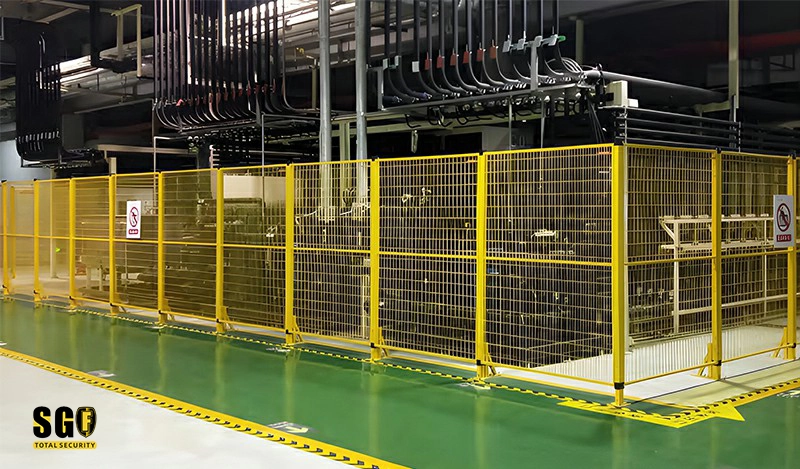
Recycling plants do not lose money in one dramatic moment; they lose it in inches. A guard line that stands too far off the equipment steals storage depth, narrows travel paths, and makes sorting flows harder to manage. Mdfence is relevant because its 20x100mm precision mesh supports a much tighter compliant isolation distance, so the safety boundary can be placed where the process actually needs it.
2) The structure is built for real installation work
Compact sites need a fence that can be installed cleanly and repeated reliably. The installation image shows the base plate drilling and expansion bolt assembly, which matters because a close-set fence only works when the fixing method is solid. In dense industrial space, the best design is not the one that looks impressive on paper; it is the one that stays aligned, anchored, and serviceable after daily traffic and maintenance cycles.

3) Boundary control stays clear at corners and enclosures
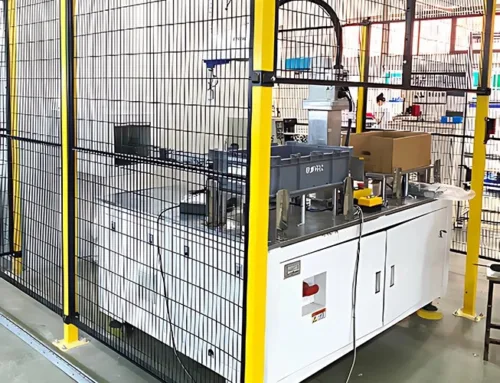
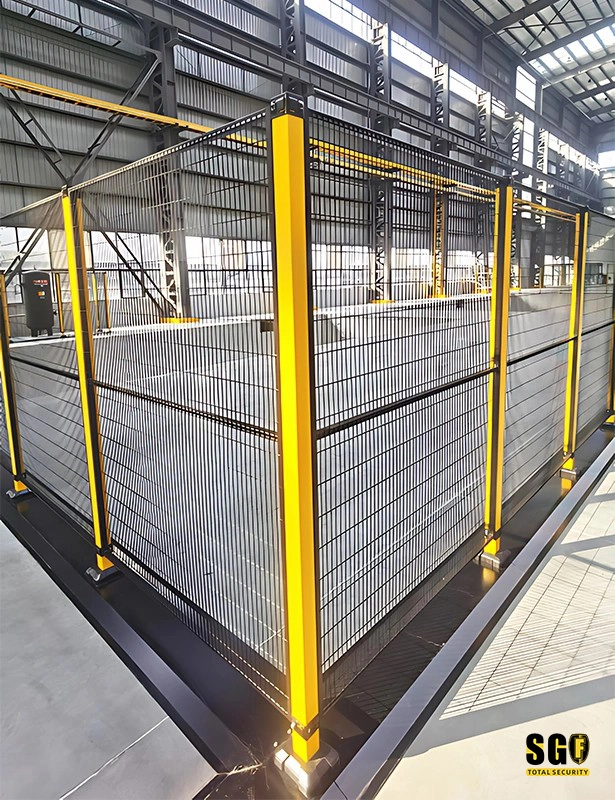
Most guarding problems show up at the weak points: corners, transitions, and entry zones. The close-up corner image shows a yellow post and black mesh frame, proving that the perimeter can remain readable and continuous even where the fence changes direction. That is important in a scrap sorting center because forklift movement, pallet movement, and operator access all depend on boundaries that are easy to understand at a glance.
Where this safety fence for machinery makes the most sense
- Indoor metal recycling sorting centers with high-density equipment placement
- Scrap transfer aisles that need perimeter control without wasting floor area
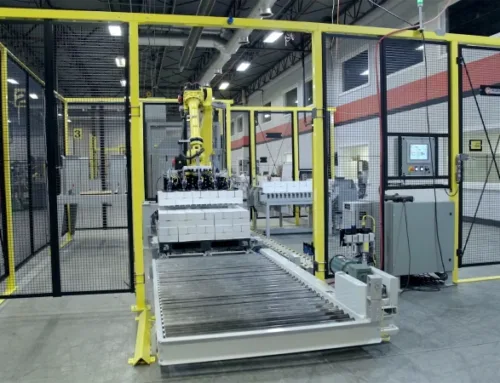
- Machine zones that require a clear boundary around conveyors, balers, or handling stations
- Multi-site operators standardizing guarding logic across many locations
The final result is simple: less wasted clearance, clearer machine segregation, and a more usable production footprint. For a network with many sites, those reclaimed millimeters add up into meaningful space savings, smoother material flow, and less conflict between safety design and operational layout.
What to confirm before you specify the fence
Check the machine boundary, the aisle width, the access points, and the maintenance route first. Then confirm whether the site needs a tighter compliant separation distance, because that is where Mdfence delivers the biggest advantage. The purpose is not to add more barrier than needed; it is to place the barrier precisely where it protects the equipment and preserves the space around it.
Plan the boundary, keep the space
If your recycling site is too dense for a traditional stand-off guard line, Mdfence is the safer starting point. It is designed for compact industrial layouts that need clear separation, strong boundary definition, and less dead space around the machine zone.