EN
EN  DE
DE  RU
RU  PT
PT  JA
JA  ES
ES  IT
IT Machine Guarding Systems
Machine Guarding Systems for Dense Metal Recycling Sites
When floor space is expensive and equipment is packed tight, Mdfence keeps the guarding line close to the process. Its 20×100 mm precision mesh helps reduce the legal separation distance to 120 mm, so indoor sorting centers can protect people and equipment without wasting usable layout.

Why tighter guarding matters in crowded recycling halls
In indoor metal recycling and scrap sorting centers, the old approach is simple but costly: keep the fence far away, protect the machine, and give up valuable aisle width and storage depth. Mdfence is built for the opposite goal. It preserves a compliant barrier while keeping the guard line tight enough to protect the working envelope, not consume it.
| Layout requirement | Mdfence response |
|---|---|
| Dense equipment arrangement | 20×100 mm precision mesh supports a compact Machine Guarding Systems layout without unnecessary bulk. |
| High-value floor space | The legal separation distance can be reduced to 120 mm, helping reclaim circulation and staging area. |
| Indoor sorting center compliance | The guarding line stays strict and repeatable for regulated machine isolation zones. |
| Multi-site standardization | A compact fence spec can be rolled out consistently across large plant networks. |
What the structure proves
1) Precision mesh that protects without opening up the layout
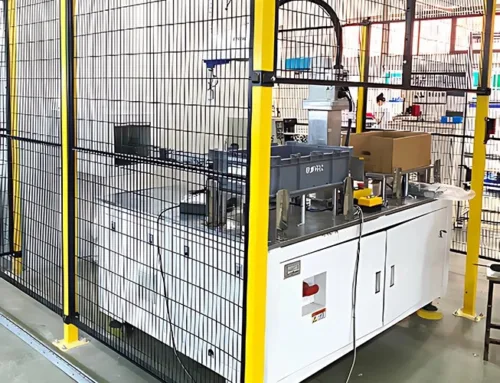
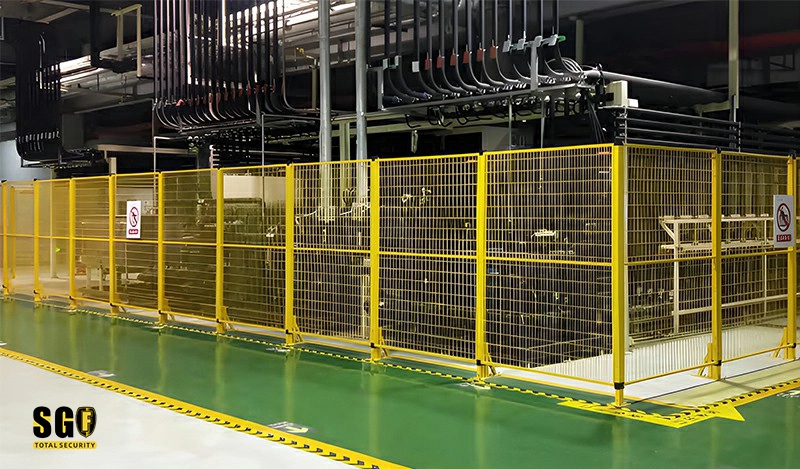
The 20×100 mm mesh pattern is the key reason this system fits crowded sites. It gives the guarding envelope a tight footprint, which matters when every aisle already carries scrap, bins, carts, and service access. Instead of pushing the barrier outward to solve compliance, Mdfence keeps the protection line close to the machine.

2) Build details that matter in abrasive recycling environments
The close-up evidence is not decorative. It shows the practical basics: weld seam quality, coating protection, and base plate construction. Those are the parts that decide whether a guarding line stays stable in a hard-use industrial site and whether the fence can be installed and maintained without turning the edge of the process zone into dead space.
3) Installation logic for retrofit projects
Sorting centers rarely get a clean-sheet build. More often, the fence must be added around existing equipment, existing traffic, and existing constraints. The installation diagram shows base plate drilling, expansion bolts, and retaining rings, which makes the retrofit path easier to plan and easier to repeat across a large site network.

Where Machine Guarding Systems creates the most value
- Indoor metal recycling and scrap sorting halls where storage space is too valuable to waste.
- High-density machine zones that need a compliant barrier with a smaller clearance footprint.
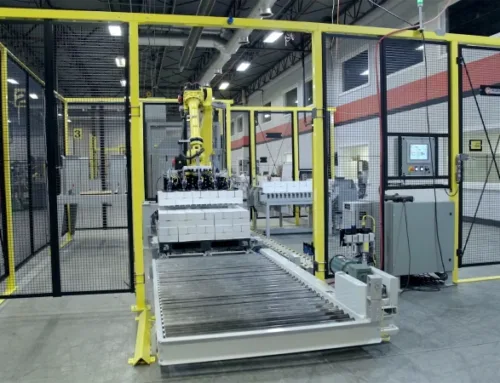
- Retrofit projects where the fence must fit around existing conveyors, transfer equipment, and service routes.
- Multi-site operators that want one compact guarding standard across many plants.
- Facilities that want to turn safety separation into usable production and material handling area.
For a global operator with many sites, the value compounds fast: a smaller guarding footprint at each plant means more room for stock staging, sorting movement, and safer circulation. That is why Mdfence is not just a fence panel choice. It is a layout decision.
What to specify before you order
Map the machine envelope, the aisle width, the access points, and the current clearance gap. Then compare the old fence line against the compact Machine Guarding Systems target. If your site needs to protect a dense indoor sorting center, Mdfence gives you a structure that keeps the barrier close, the route open, and the compliance target clear.
Need a tighter guarding layout?
Send us the layout, the machine footprint, and the required separation distance. We will help you specify a Machine Guarding Systems solution that protects the process without stealing the floor area it depends on.