EN
EN  DE
DE  RU
RU  PT
PT  JA
JA  ES
ES  IT
IT Machine guarding fence panels
Machine guarding fence panels for dense metal recycling sites
Machine guarding fence panels help indoor sorting centers protect operators without wasting expensive floor area, so tight equipment layouts stay compliant while aisles remain usable.
Why this layout works in space-critical recycling plants
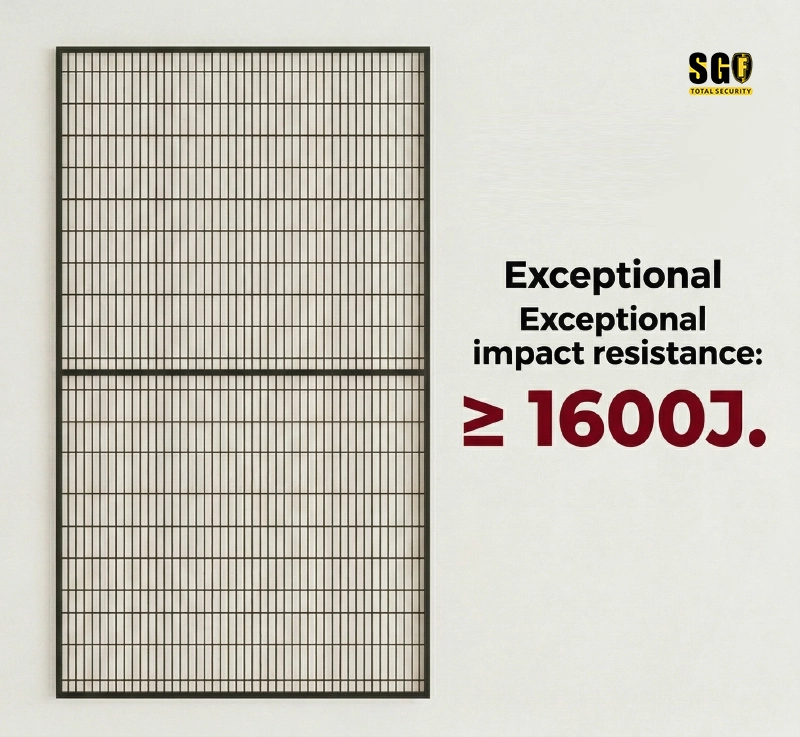
When scrap streams move fast and storage space is expensive, the old approach is to leave a large safety buffer around every machine. That buffer protects people, but it also steals working area. Mdfence is built for the opposite problem: a dense plant that still has to stay compliant. The 20x100mm precision mesh and the tight 120mm legal isolation distance let the fence follow the machine line instead of forcing the machine line to retreat.
| Requirement | Mdfence support detail |
|---|---|
| Space recovery | Compact perimeter installation reduces wasted setback around dense machine and sorting zones. |
| Compliance margin | The legal safety isolation distance can be compressed to 120mm when the layout and installation rules are met. |
| Panel structure | 20x100mm precision mesh supports visibility, airflow, and controlled access without bulky framing. |
| Multi-site rollout | Repeatable modular fencing makes it easier to standardize layouts across a 135-site network and reclaim floor area site by site. |
What the fence is doing, and why the photos matter
1. Compact perimeter around crowded aisles
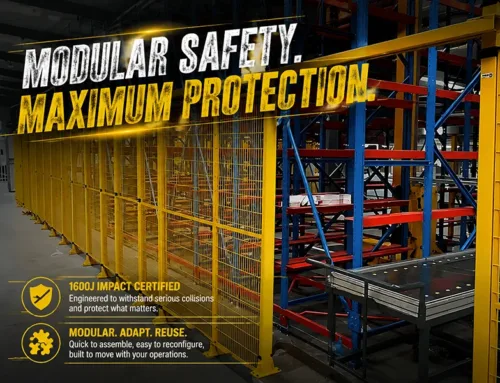
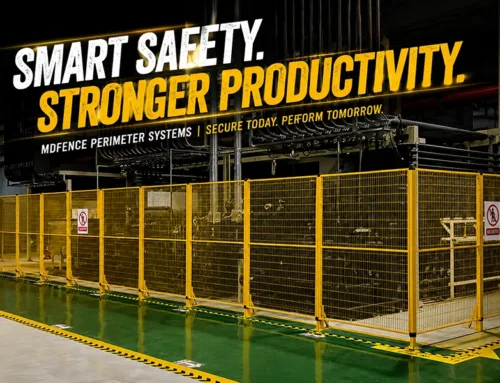
The first image shows the fence running along a tight factory aisle, which is exactly the use case here: expensive indoor space, dense equipment placement, and no room for oversized stand-off distances. The fence keeps the walk path and machine boundary clean while preserving usable storage and transfer space.
2. Structure proof, not just a claim
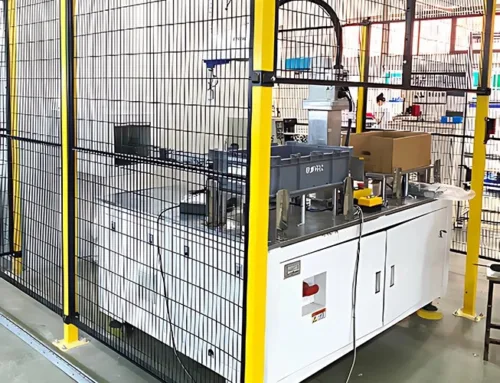
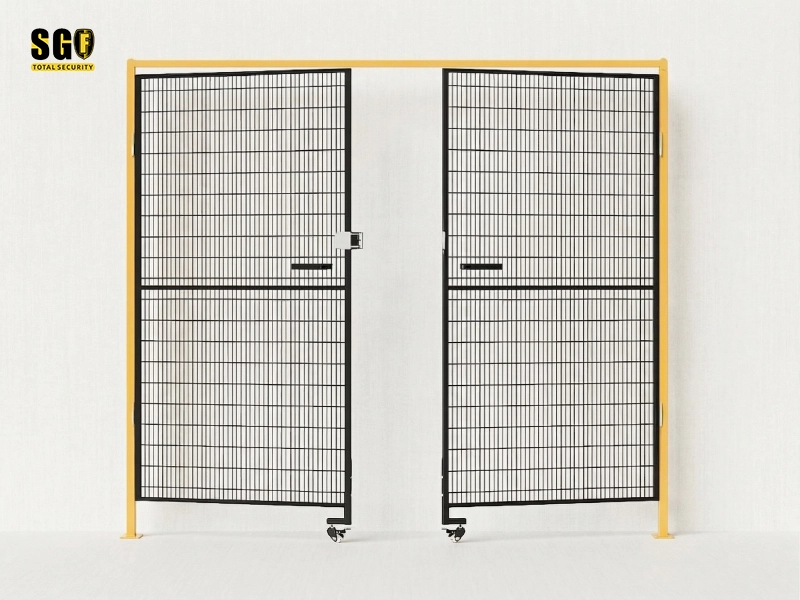
The close-up proves the build behind the promise: caliper measurement, welded joints, coating quality, and a solid base plate. That matters because the reduction in safety distance only helps if the fence is rigid, repeatable, and suitable for real industrial duty rather than a temporary barrier.
3. Clean corner closure for machine cells
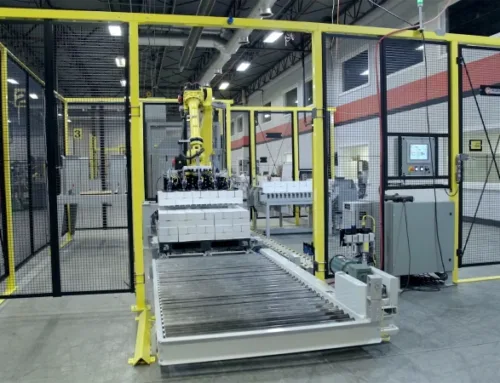
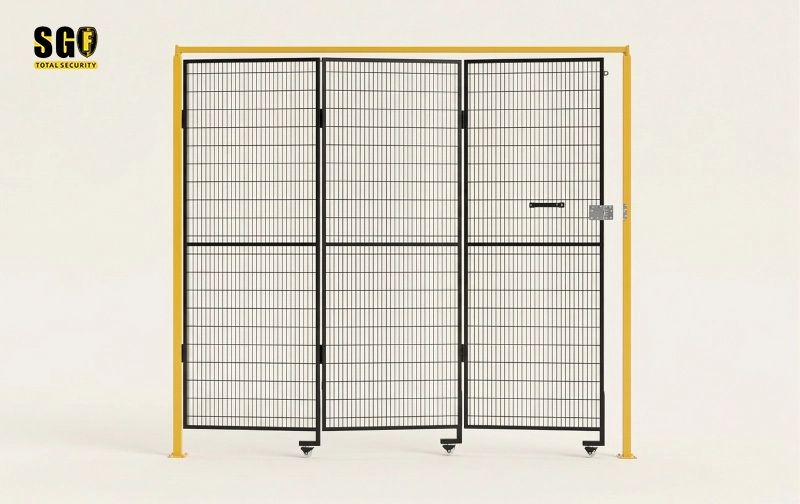
The corner image shows how the fence closes off a machine cell without wasting space at the edge. For recycling plants, that means you can wrap the perimeter tightly around sorters, separators, and transfer points, then keep the access path exactly where it belongs.
Where machine guarding fence panels fit best
- Indoor metal recycling sorting centers where every square meter has a cost.
- Dense machine rows that need a smaller legal safety gap without losing compliance.
- Multi-site operators standardizing the same compact fence layout across many plants.
- Transfer and conveyor zones where visibility, access control, and edge protection must coexist.
In these settings, the real result is not just safety compliance. It is more usable floor space, cleaner traffic flow, and a layout that supports higher throughput without forcing the plant to expand.
What to specify before you order
Provide the aisle width, the machine envelope, the maintenance access points, and the required safety boundary. Mdfence is suited to that brief because the 20x100mm mesh format and the 120mm isolation target are built for tight industrial footprints, not oversized open buffer zones.
Plan the fence around the layout, not the other way around
If your plant is crowded, expensive to expand, and under pressure to keep equipment separated without wasting usable area, machine guarding fence panels are the practical answer. Start with the line, the gap, and the access points, then let the fencing follow the process.