EN
EN  DE
DE  RU
RU  PT
PT  JA
JA  ES
ES  IT
IT Machine Perimeter Guarding
Machine Perimeter Guarding for scrap impact zones in recycling lines
When heavy scrap starts flying and forklifts keep working inside the same zone, the fence has to do more than mark a boundary. Mdfence is built for machine perimeter guarding where impact, debris, and repeated contact are part of the daily load, not an exception.

Why this fence fits heavy scrap and collision risk
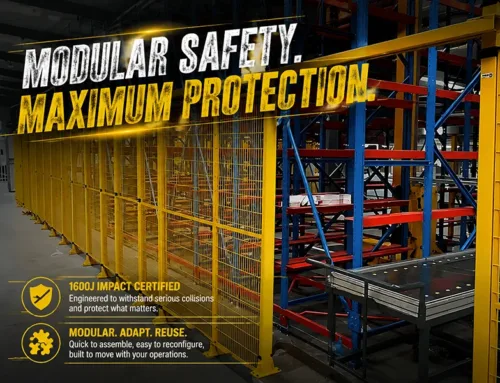
In scrap processing, car dismantling, and dense recycling lines, the failure mode is predictable: lightweight fencing bends, panels open up, and flying metal fragments escape the boundary. Mdfence is specified for that exact environment with a high-strength Q235 carbon steel frame, 60×60 mm posts, TUV safety certification, and impact resistance rated up to 1600 joules. That makes it a guarding system, not a visual partition.
| Requirement | Mdfence proof |
|---|---|
| Heavy scrap flyout control | 20×100 mm anti-intrusion micro mesh helps block sharp fragments before they leave the machine perimeter. |
| Forklift and handling equipment contact | Q235 carbon structural steel frame with 60×60 mm posts is designed to absorb repeated impacts instead of deforming quickly. |
| Impact performance | Tested to resist up to 1600 joules, which is roughly comparable to a 100 kg object striking at 20 km/h. |
| Safety confidence | TUV safety certification supports the specification claims for industrial guarding use in harsh recycling zones. |
Three structural reasons the system holds up on site
1. Steel frame that stays aligned after repeated knocks
The first failure point in many ordinary fences is the post line. Once the posts twist, the whole boundary opens. Mdfence uses 60×60 mm columns in Q235 carbon steel, so the load path is structural rather than cosmetic. That matters when a forklift brushes the line or when scrap bins are moved close to the edge of the guarded area.

2. Mesh geometry that stops fragments without turning the line into a trap
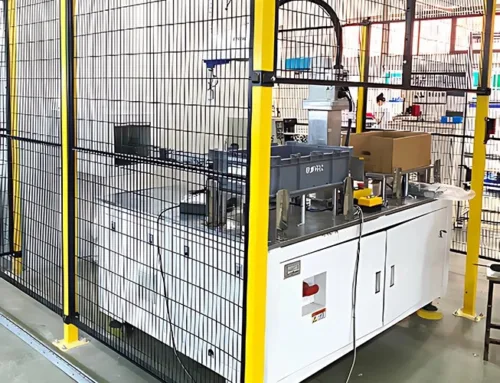
The 20×100 mm micro mesh keeps the opening tight enough to reduce flying-debris escape while still preserving visibility for operators and supervisors. In mixed-use scrap and dismantling environments, that balance is critical: you need a guarded perimeter that lets people see the process, but does not give metal shards a path out of the cell.

3. Corner closure and enclosure detail that prevent weak spots
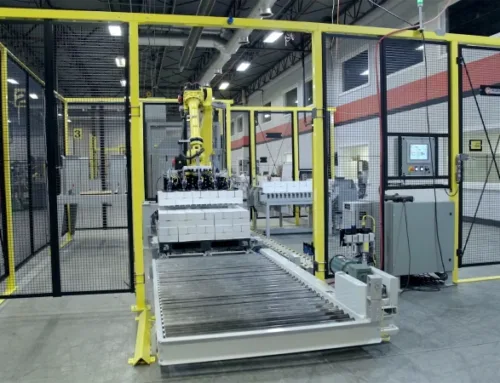
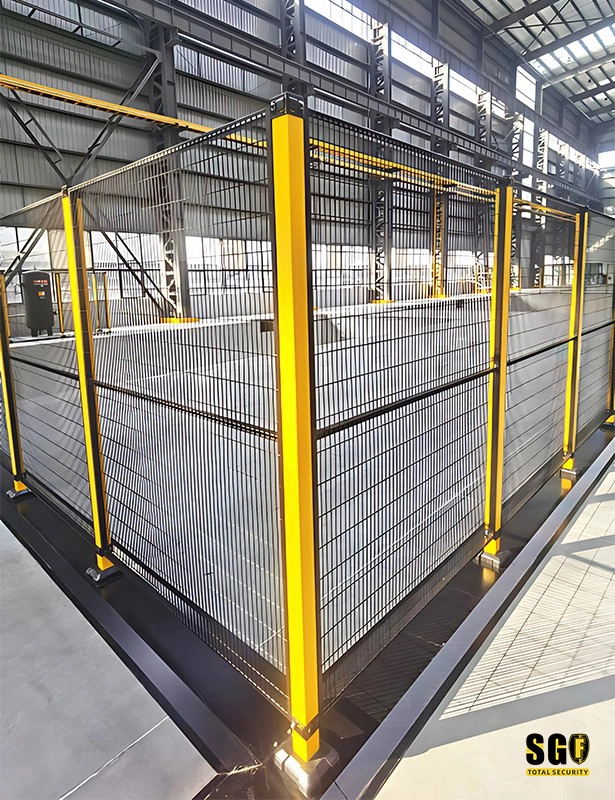
Impact events rarely hit the center of a panel. They hit corners, terminations, and transfer points. That is why the system detail matters as much as the main frame. The corner photo shows how the mesh, top beam, and post work together to keep the enclosure closed around the work area, which is exactly where lower-grade fencing usually starts to fail first.
Typical applications for this guarding setup
- Scrap shredding and pre-processing lines where heavy fragments can rebound outward.
- Car dismantling areas where moving parts, tools, and recovered metal are handled in the same aisle.
- Forklift-accessible recycling yards that need a barrier strong enough for accidental contact.
- Dense indoor sorting zones where visibility, access control, and fragment containment must work together.
For these sites, the goal is not just separation. The goal is to keep people, equipment, and process flow inside a boundary that survives the real operating load. That is why Mdfence is positioned as machine perimeter guarding: it combines impact resistance, anti-intrusion mesh, and structural steel framing so the guarded zone remains intact after routine site abuse.
What to specify before ordering
Start with the actual risk at the line: fragment size, vehicle traffic, aisle width, and the likely contact points around the machine cell. Then specify the post size, mesh opening, and impact target against the site conditions. With Mdfence, the relevant proof points are already clear: Q235 steel construction, 60×60 mm posts, 20×100 mm micro mesh, TUV certification, and 1600 joule impact resistance. That makes the technical decision easier for project teams who need guarding that can be justified on paper and trusted on the floor.
Build the perimeter before the impact becomes a report
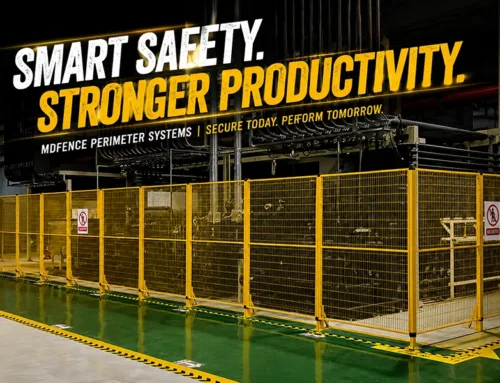
If your recycling or dismantling line already sees debris flyout and close-range equipment movement, the fence should be sized for that reality from day one. Mdfence gives you a machine perimeter guarding system that is built for collision risk, not only for visual separation.