EN
EN  DE
DE  RU
RU  PT
PT  JA
JA  ES
ES  IT
IT Machine fencing for recycling and dismantling lines
Safety guarding systems for heavy scrap flyout and forklift impact risk
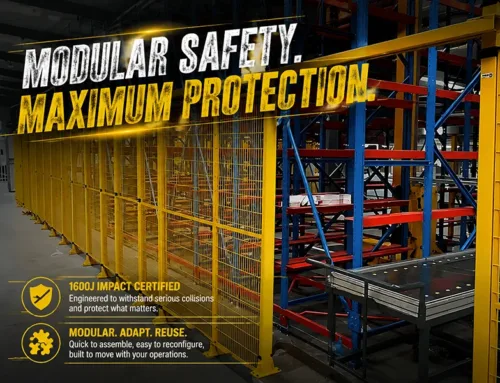
Safety guarding systems matter when heavy scrap can fly, machines can eject debris, and forklifts can clip the perimeter. Mdfence is built with Q235 carbon structural steel, 60×60 mm posts, a TÜV-certified 1600 J impact rating, and 20×100 mm anti-pinch mesh to hold the line when light fencing bends.
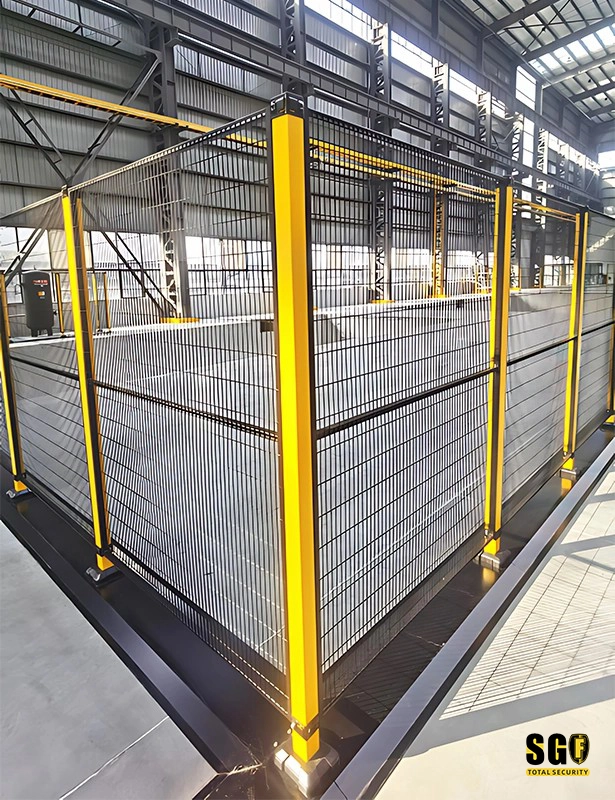
Why Mdfence fits scrap shredding and auto dismantling zones
In scrap breaking and vehicle dismantling lines, the hazard is not only a normal touch contact. It is repeated impact: metal chunks can bounce out, handling equipment can drift off line, and a weak fence can deform, split, or leave a gap. Mdfence is designed for that duty cycle, so the perimeter stays functional instead of becoming another failure point.
| Requirement | Mdfence response |
|---|---|
| Impact resistance | Up to 1600 J impact energy, with TÜV safety certification |
| Main frame material | Q235 carbon structural steel |
| Post size | 60×60 mm heavy-duty upright posts |
| Anti-flyout opening | 20×100 mm micro mesh to block flying fragments and reduce pinch points |
| Collision scenario | Built to tolerate accidental forklift knocks and repeated contact in recycling yards |
Structural proof behind the safety guarding systems
Impact resistance that does not rely on light-gauge framing
The first reason Mdfence suits high-risk recycling lines is simple: it is built to resist impact, not only to define an area. The specification target of 1600 J gives the system a real safety margin for accidental hits from heavy objects or moving equipment. The product advantage board shows the weld seam, coating, and base plate details together, which matters because impact performance starts at the joints and the anchoring point, not just at the mesh face.
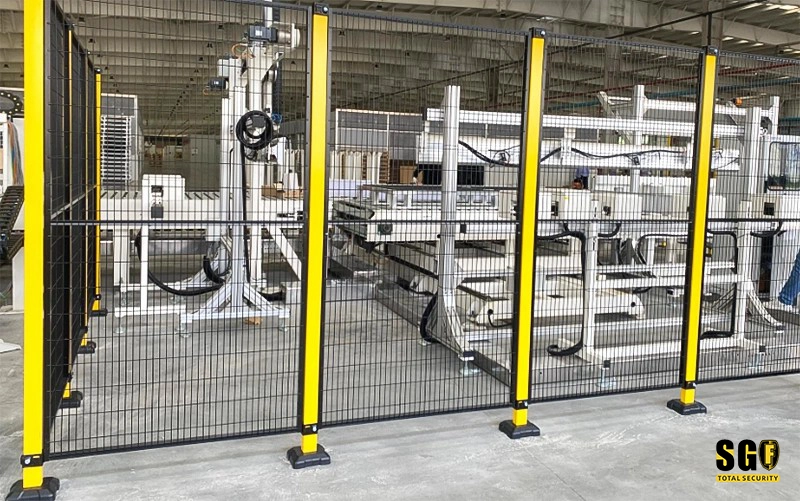
Mesh geometry that blocks flyout without creating pinch-heavy gaps
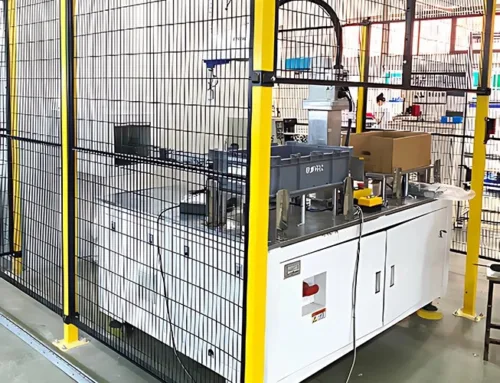
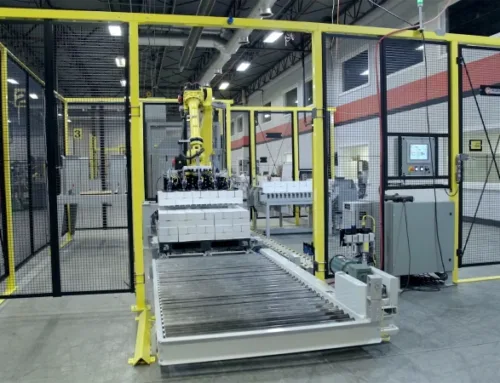
The 20×100 mm micro mesh is a practical answer to two problems at once. It helps stop smaller metal fragments from escaping the work zone, and it keeps the opening tight enough to improve guarding behavior near machine edges. The technical front view shows how the posts, mesh panels, and fixing clamps work as a full assembly. That matters in field use, because the system should stay aligned after vibration, cleaning, and routine line changes.
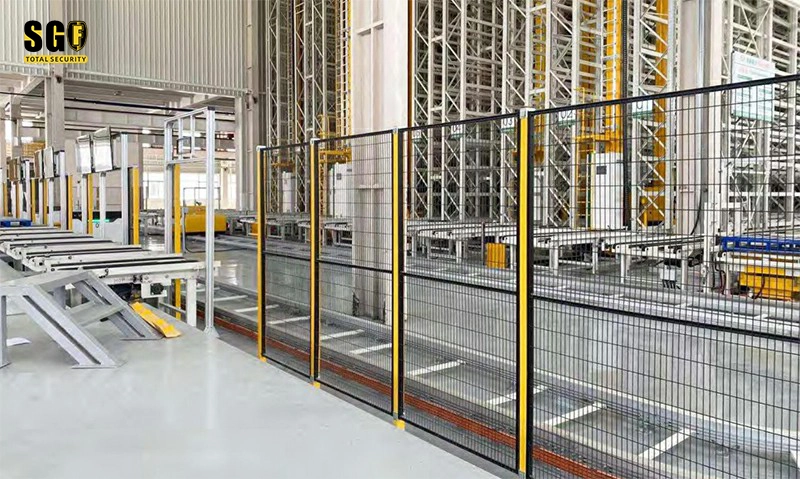
Anchoring and installation that keep the guard in place
Heavy-duty guarding only works if the base stays fixed. The installation diagram shows base plate drilling, expansion bolts, and retaining rings, which is the right method for concrete slabs and perimeter runs in recycling plants. When forklifts pass close to the edge, a stable anchoring system prevents the common problem of drift, loosened posts, and rework after the first incident. That is the difference between a fence that looks complete and a fence that stays complete.
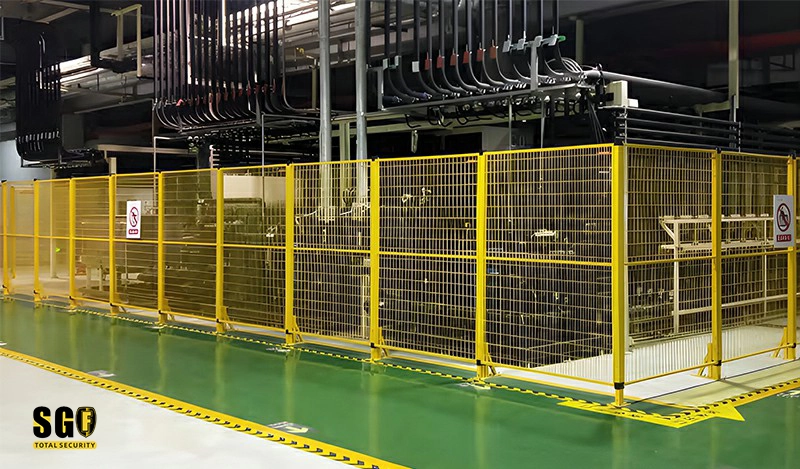
Where this system is used
- Scrap shredding and breaking lines where metal chunks can rebound toward walkways or service lanes
- Car dismantling zones where forklifts, carts, and loose parts share the same narrow operating space
- Indoor recycling aisles that need perimeter isolation without blocking visibility across the line
- Transfer and conveyor areas where accidental contact can damage a light barrier and interrupt workflow
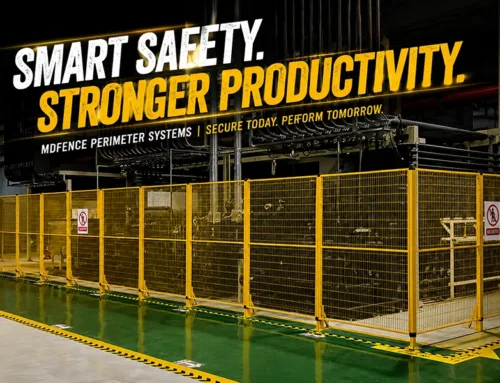
For these conditions, safety guarding systems must do more than mark a boundary. They must hold shape, reduce fragment escape, and stay anchored after repeated knocks. Mdfence is sized for that kind of industrial use, so the guard line supports the process instead of becoming a maintenance burden.
What to specify before you order
Before final sizing, confirm the impact direction, aisle width, gate access points, slab condition, and the type of moving equipment that may contact the fence. Then match the layout to the required energy level and mesh opening. That is how safety guarding systems become a real control measure instead of a generic perimeter line.
Build safer safety guarding systems for your line
If your site faces heavy scrap flyout, forklift contact, or repeated edge impacts, Mdfence gives you a stronger perimeter with certified impact resistance, heavy posts, and anti-flyout mesh. Send the line layout and we will help match the guarding to the real hazard.