EN
 DE
 RU
 PT
 JA
 ES
 IT
Mefence frameless 3D industrial safety fencing · multi-variety, short-lifecycle plants
Short Product Life Cycles, Constant Re-Zoning: A Perimeter That Moves Instead of Getting Cut Apart
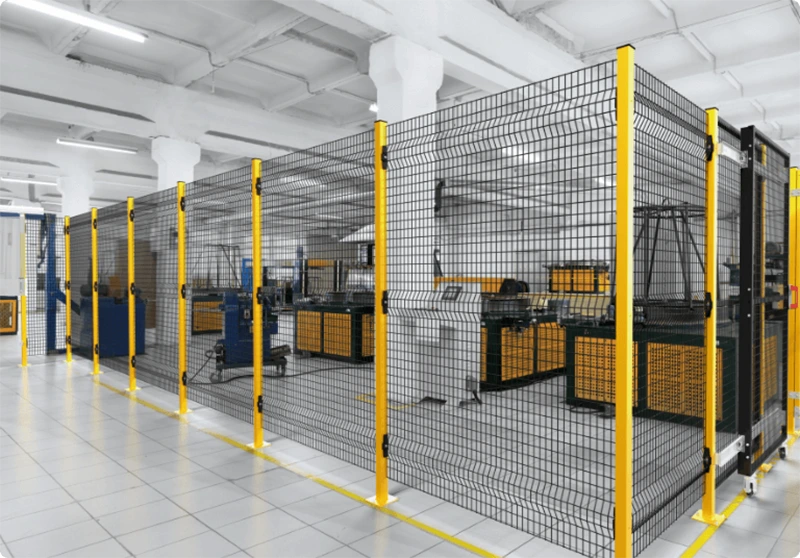
In an EMS or multi-variety plant the drawing changes faster than the equipment does: a new product introduction lands, three stations shift 4 m left, and the perimeter fence that was welded to the slab last quarter is now in the way. Cutting a welded square-tube fence out of the floor means a hot-work permit, a welder, and a shutdown window the schedule does not have. Mefence frameless 3D industrial safety fencing is built the other way round — Q235 welded mesh panels without a frame border, fixed to yellow powder-coated posts with plastic clips and self-tapping screws, trimmable on site, and unbolted from their base plates when the next layout lands. One person, three steps, and a documented 50%+ reduction in install time against conventional framed fence. It is a demarcation and traffic-control fence, not a crash-rated containment barrier; direct robot or conveyor strike points belong on SGF’s Machine Fence line.
What the Re-Zoning Decision Actually Rides On
Buyers comparing framed vs frameless machine guard fence usually get a price per panel and nothing else. The numbers that decide whether the second and third re-layout are cheap or painful are the panel geometry, the post section, and how the panel meets the post and the floor. Those are fixed at specification time and cannot be retrofitted later.
| Specification item | Mefence frameless 3D safety fence |
|---|---|
| Material | Q235 carbon steel, welded wire mesh panel |
| Surface treatment | Electrostatic powder coating (powder coated steel) |
| Wire diameter | 3 mm / 4 mm |
| Mesh opening | 20 × 100 mm / 50 × 50 mm (3D welded mesh) |
| Panel width | 200 – 1400 mm |
| Panel height | 200 – 3000 mm |
| Ground clearance | 140 mm |
| Post size | 40 × 60 mm / 60 × 60 mm |
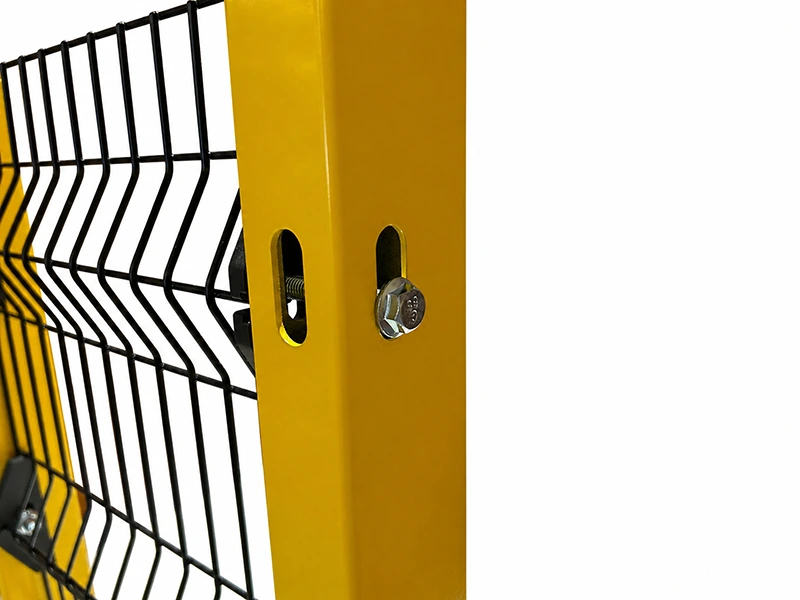
| Panel-to-post connection | Plastic clip + self-tapping screw — no site welding |
| Post-to-floor fix | Base plate post + expansion bolt, slotted mounting holes for alignment |
| Panel structure | Frameless welded mesh with horizontal T-shaped ridges — cable routing trough and wood-slat slot |
| Standard colour | Yellow + black; custom colours available, including orange |
| Positioning boundary | Area demarcation and traffic control; not a certified anti-collision guard |
Why the Frameless Panel Wins on a Line That Keeps Moving
Three-Step Clip Assembly: No Welder, No Permit, One Person
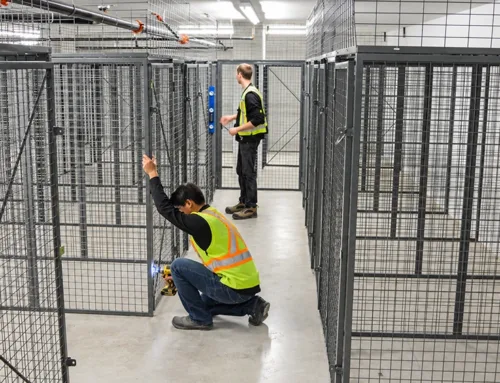
A welded square-tube fence ties the perimeter to a welding crew: hot-work permit, fire watch, coating repair, and a window when the cell is down. Mefence replaces that with a plastic clip and a self-tapping screw driven into a 40 × 60 mm or 60 × 60 mm powder-coated post. The post carries slotted mounting holes, so a column line that is 15 mm out of square, or a floor that is not level, is absorbed by the slot instead of by grinding the panel. The base plate post lands on an expansion bolt, which is why the whole run can be taken up again. This is the mechanical reason the quick install safety fence claim holds up: one person, three steps, 50%+ less installation time than conventional framed fencing.
The Bay That Was Never on the Drawing: Cut the Panel, Not the Schedule
Framed guards fail at the edges of a re-zone: the 1,500 mm module will not fit between a conveyor leg and a chiller, and the answer is a fabricated special that arrives in three weeks. Because the Mefence panel has no frame border — just 3 mm or 4 mm welded wire in a 20 × 100 mm or 50 × 50 mm mesh with pressed T-ridges — it can be trimmed on site to the bay that actually exists, inside a panel range of 200 – 1400 mm wide and 200 – 3000 mm high. That is the difference between an on-site cutting fence and a layout that waits for a drawing revision, and it is why the same module set survives an NPI change without new tooling.
Unbolt, Re-Bolt: Treating the Perimeter as a Reusable Asset
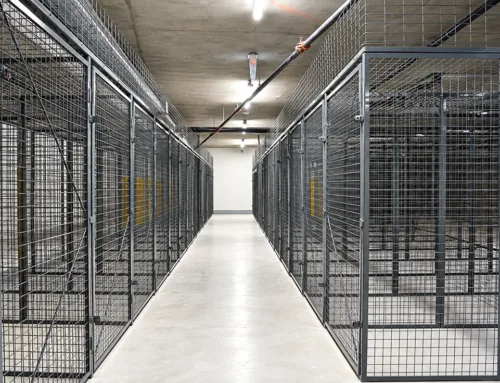
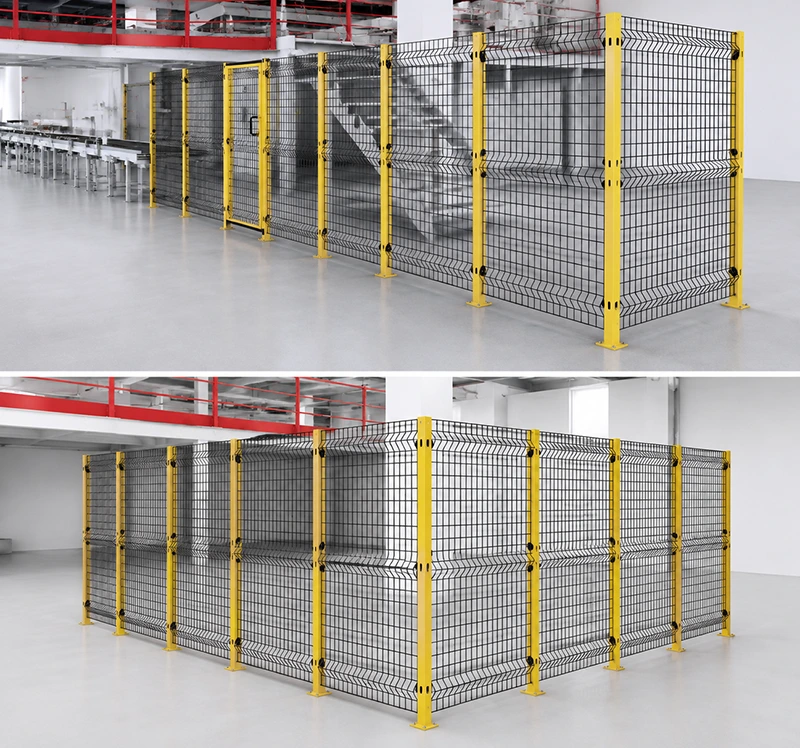
Where a welded perimeter becomes a sunk cost on the first re-layout, a modular reconfigurable system keeps its residual value. The base plates come out of the slab, the panels and the gated section go back up on the next island, and the yellow-black run stays continuous enough to keep pedestrian vehicle separation readable to operators and auditors. The same T-shaped ridge that stiffens the panel also works as a cable management fence trough for camera, interlock and access-control drops, and accepts wood slat inserts where a zone needs visual shielding instead of an open wire mesh machine guard. Elevating the panel 140 mm off the floor keeps washdown and housekeeping possible underneath. For the impact zones at the robot cell itself, the split-scope answer is unchanged: Mefence does the zoning, SGF’s Machine Fence does the containment.
Where This Perimeter Pays Back Fastest
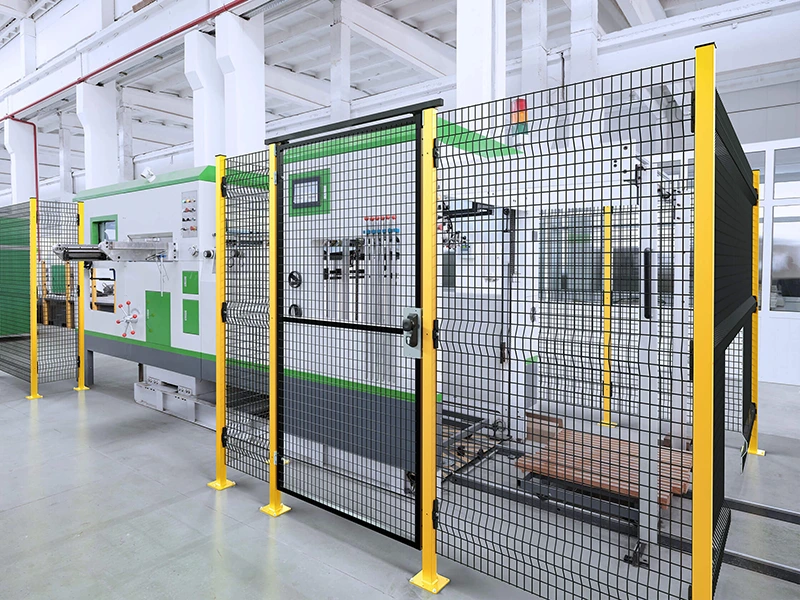
- Robot workstation enclosure and robot safety fence perimeters that move with the cell
- CNC machine guarding and automated equipment guarding demarcation on short-lifecycle lines
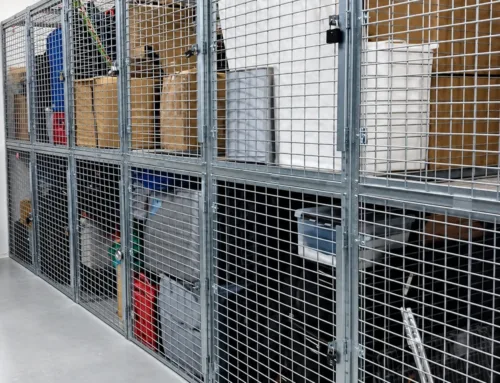
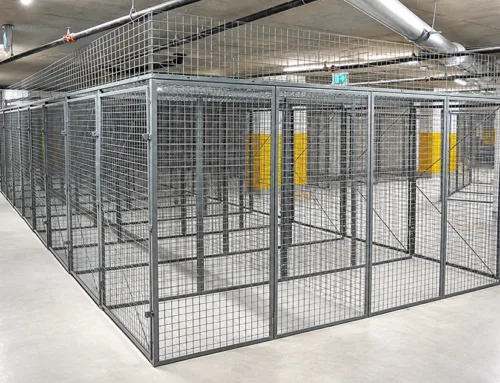
- Warehouse zoning, storage area separation and tool crib enclosure
- AGV / AMR lane control and forklift path barrier lines that are redrawn between builds
- Pedestrian vehicle separation on mixed-traffic floors
- Retrofit partitions and temporary construction fence use during weekend line rebuilds
- Stair, mezzanine and elevated platform edge demarcation
- Wood-slat visual shielding and cable routing along existing cable trays
On most multi-variety floors the first two re-zones pay for the difference. A welded industrial safety fence is bought once and then written down twice — once in capex, once in the labour and downtime it costs to remove. A clip-fixed frameless fence is bought once and moved, which is the whole point of treating the boundary as equipment rather than as a building element. Buyers who need documentation for the audit pack can reference OSHA 29 CFR 1910.212, ANSI B11.19 and ISO 14120 as the frameworks their own risk assessment is written against; the fence is the visible hardware layer those documents describe.
Layout Changed Again? Send the New Bay Dimensions
Send the re-zoned bay plan, the irregular widths, the column and pipe positions, and any gate positions. We will come back with a panel-by-panel breakdown in 200 – 1400 mm widths, the post schedule, and the base-plate count, so the next changeover is a clip job and not a fabrication order.
Quote the Next Re-Zone, Not the Next Fabrication
Mefence frameless 3D industrial safety fencing is supplied as modules you can trim, clip, unbolt and re-use — with the honest split that impact-rated strike points stay on the Machine Fence line.