EN
 DE
 RU
 PT
 JA
 ES
 IT
Wire mesh storage cage · inspection and cycle-count visibility
Count the Floor From the Aisle: How a Wire Mesh Storage Cage Takes Door-by-Door Inspection Out of the Shift
A basement, tool room or server hall laid out in closed compartments costs the same walk-round twice a day, and every bay on that round is a door: unlocked, opened, looked into, closed, locked again. A wire mesh storage cage keeps the lock and gives up the door. Welded galvanised steel mesh panels are bolted to steel posts, each bay carries one hinged mesh door with its lock position scribed on the door bar, and the open mesh face means a supervisor, a camera or an auditor with a tablet reads inventory levels, tool presence and process compliance straight from the aisle — no key ring, no door event, no bay left ajar because someone was interrupted mid-count.
What the Hardware Has to Do Before the Walk-Round Gets Shorter
Efficiency in a storage area is not decided by the lock. It is decided by how much of the inventory a person can read without touching a door. That is a hardware question, and it comes down to a small set of build details: how the mesh panels are fixed, how the door hardware is positioned, and how the run is finished at the slab and at the ceiling. Every item below is what ships in this bolt together storage cage.
| Build detail | What it changes on the floor |
|---|---|
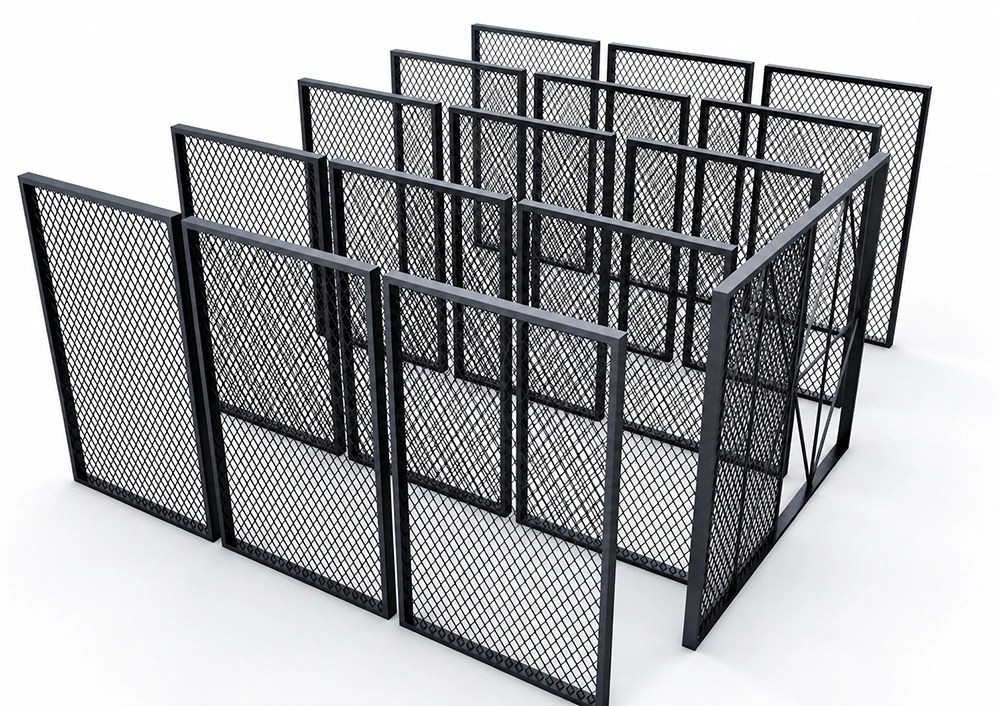
| Galvanised welded mesh panels fixed to steel posts with 90-degree angle screws, then tightened | The enclosure is rigid enough to be a boundary and still comes apart when the layout moves — a modular storage cage, not a wall. |
| Adjacent flat panels drawn back to back with straight bolts and nuts, tightened with a wrench | Panels between two bays close up tight, so nothing projects into the bay and the aisle side stays flush and readable. |
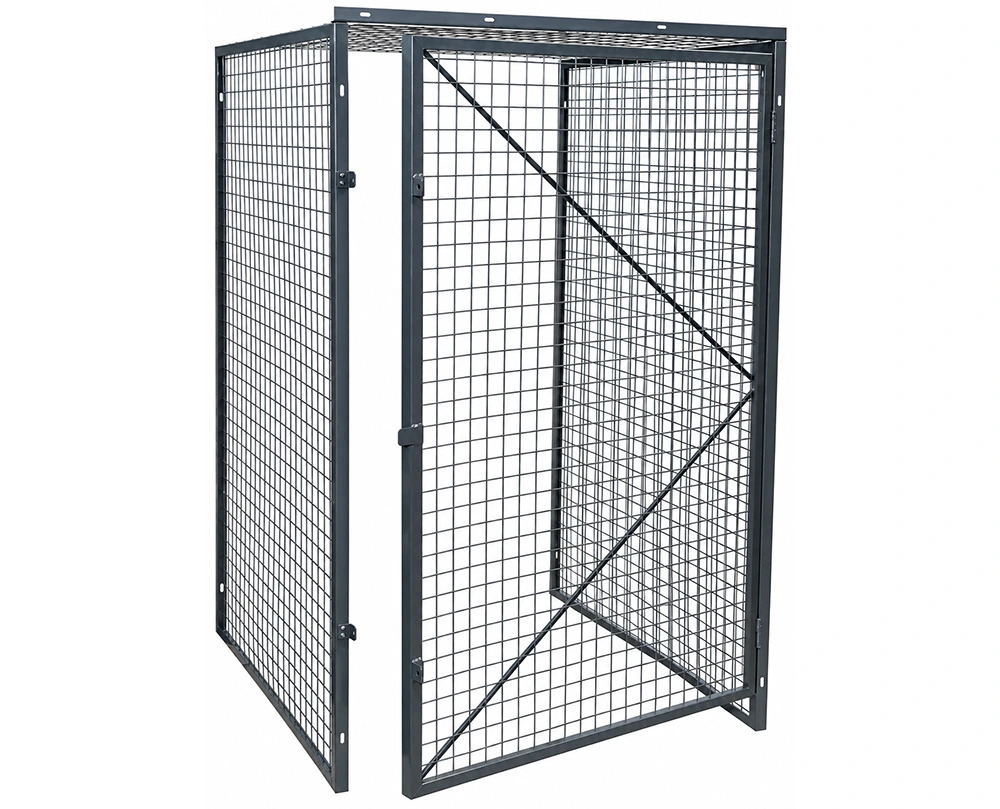
| Long-strip hinge on the mesh door; lock position scribed so the bolt lands on the door bar before the handle and hasp are fixed | One standard lock position repeats down the whole run — a padlock now, a keyed lock or a reader later, without re-hanging the door. |
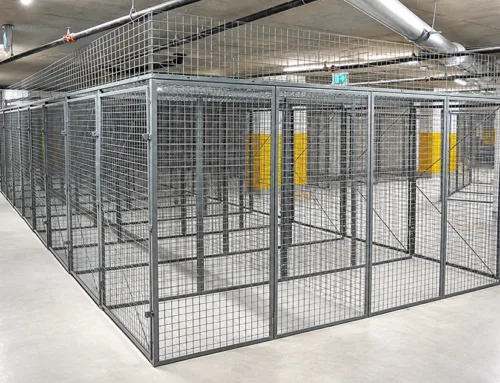
| Top mesh panel on a top rail only where the run stops below the slab; no top mesh and no rail where the cage reaches the ceiling | A storage cage with ceiling panel closes the top of a free standing storage cage; a ceiling-height run keeps its full open mesh face. |
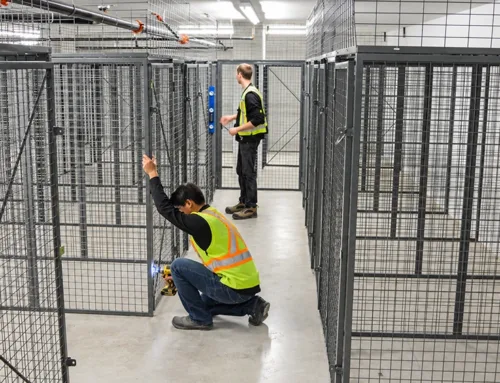
| Expansion bolts driven into the slab after the run is squared, corners cleaned out first | The row stays where it was drawn, so bay numbering, aisle widths and camera sightlines hold. |
| Two people, one hand drill, one wrench, a step ladder, a tape measure | No welding, no hot-work permit, no shutdown of the floor being enclosed. |
| Roughly 1 m² or slightly more per unit, arranged in rows | Walk in storage cage runs and single lockable storage cage bays can be mixed along the same aisle line. |
| Heights, widened and deepened bays, base plinths, shelves and mesh/fill options specified per project | A custom size storage cage fits the room that exists, rather than a room being rebuilt around a standard box. |
Three Details That Turn a Walk-Round Back Into a Walk
A Count You Can Read Without a Key Ring
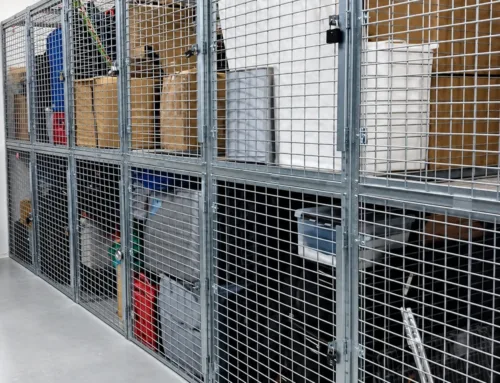
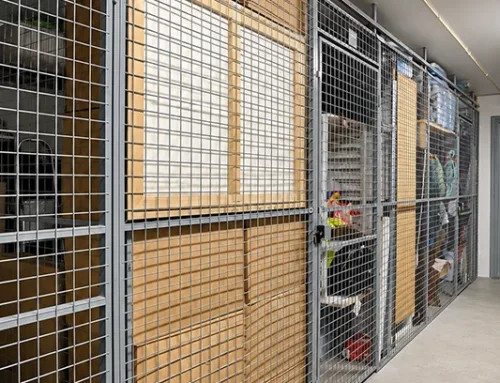
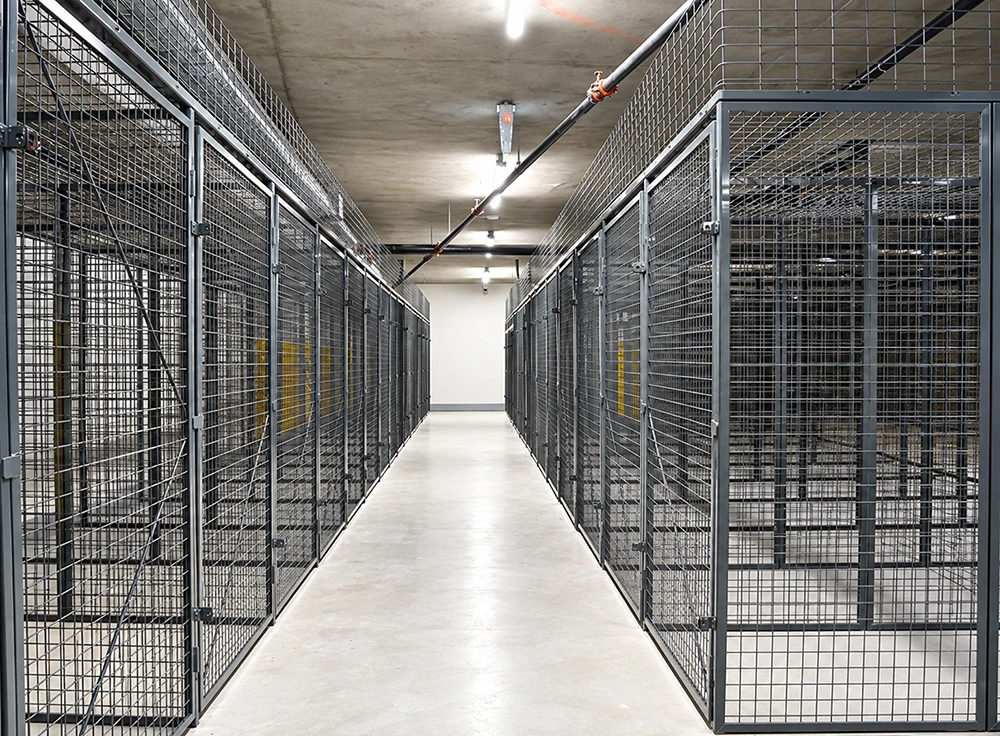
A closed compartment gives the person on the round exactly one bit of information per bay: locked or unlocked. Inventory levels, whether a tool is back on its hook, whether a spill kit has been restocked — all of it is behind a steel face. The open mesh storage locker reverses that. Industry practice is blunt about the difference: MH-USA describes open wire mesh as letting a supervisor or a camera see stock levels without opening the doors. That is the whole efficiency argument in one line, and it is the reason a warehouse storage cage row can be counted in a single pass while an aisle of solid metal lockers cannot.

One Line, Not a Row of Doors
The second cost of door-by-door inspection is that it never runs in a straight line. A supervisor stops, finds the right key or the right badge, opens, looks, closes, and walks on. A modular storage cage is built so the run reads as a single line instead: panels fixed to posts with 90-degree angle screws, panel joints drawn back to back with straight bolts, and the same scribed lock position repeating bay after bay. When the tenant mix or the rack count changes, the run is unbolted and re-laid rather than demolished, and the aisle — the thing the walk-round actually follows — keeps its width and its sightline.
The Door Still Closes — What Changes Is What Stays Visible
None of this trades away security. Each bay still has a real hinged door on long-strip hinges, still carries a hasp or a keyed lock or an electronic reader, and still closes. The mesh simply refuses to hide the contents while it does its job. The door bar carries diagonal bracing against racking, the hinge line is fixed, and the lock position is scribed before the handle goes on, so the bolt lands on the bar the first time. That combination — a genuine lockable storage cage with an open face — is also why the same enclosure suits a ventilated storage locker role in a damp basement: air moves through the mesh, and moisture does not sit in a sealed box.
Where the Read-From-the-Aisle Layout Pays for Itself
- Apartment and condo basements. A tenant storage cage row along a basement wall turns the manager’s evening round into one pass with no key handling, and a dispute call about a missing item can be answered from the aisle with the tenant standing there.
- Garage and basement storage cage runs. Bay numbering, aisle width and camera coverage stay fixed because the run is squared and anchored rather than re-drawn.
- Warehouse and tool crib. An industrial tool storage cage in a tool crib cage layout lets the tool-room lead check that every tool is on its hook at shift change without walking a sign-out sheet back to the bench.
- Data center and server halls. A data center server cage keeps equipment and cabling visible for a presence check while the access door stays locked and the electronic reader keeps its own log.
- Employee and member storage. An employee storage locker wall or a club locker run is checked by one supervisor instead of a key board.
- Fire-sprinklered rooms. Open mesh does not block sprinkler spray or lighting the way a solid steel cabinet does, which is what a fire code compliant storage locker layout in a storage room usually turns on.
In each of these, the saving is not a piece of equipment — it is the difference between a round measured in doors and a round measured in aisles.
What to Settle Before the First Bay Is Bolted Down
Bring the room, not a wish list. The points that decide whether the run reads cleanly from the aisle are the height of the run against the slab above (top mesh panel on a rail, or no top mesh at all at ceiling height), the bay width and depth you actually need, whether a base plinth or shelves go in, which lock hardware each door takes now and later, and the mesh or fill option for the application. All of it is specified per project, so the enclosure matches the walk-round you run today rather than a catalogue dimension. Send us the floor plan, the aisle you patrol and a photo of the space; we will come back with the bay schedule and the fixing detail, and your own two people can install it with a hand drill and a wrench.
One Pass Down the Aisle Instead of One Round of Doors
Tell us how many bays you inspect per shift and what has to stay visible inside them. We will map the wire mesh storage cage run, the door and lock positions and the top-panel arrangement to suit the room you already have.