EN
 DE
 RU
 PT
 JA
 ES
 IT
Industrial tool storage cage · plant asset control
A Tool Crib with One Door: How a Wire Mesh Storage Cage Stops Tools Walking Off the Floor
Expensive power tools, diagnostic instruments and copper fittings rarely leave a plant from a locked room. They leave from twelve unlocked places — a bench drawer, a shelf under a conveyor, the back of a maintenance cart. A wire mesh storage cage collects that inventory into one walk-in tool crib cage with a single hinge line and a single lock position, so one key, one issue register and one camera view cover what used to be scattered across the whole floor.
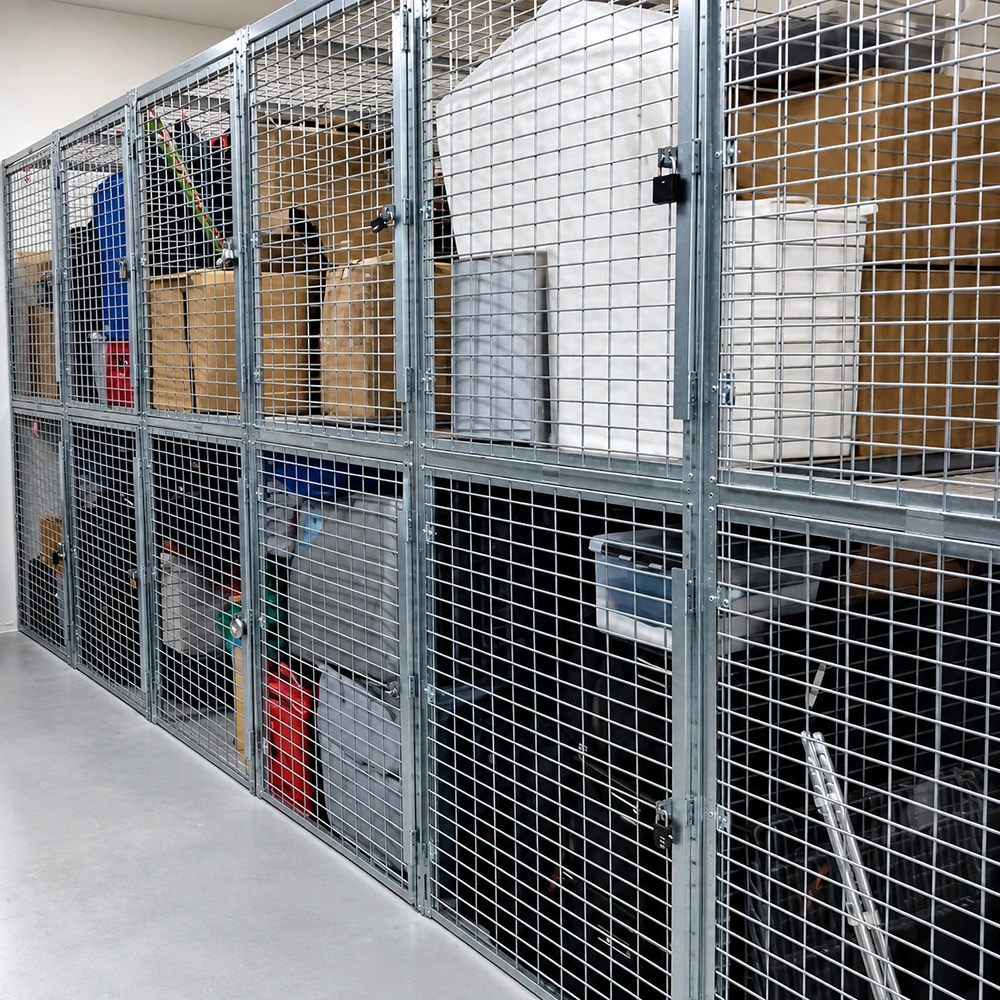
Where the Loss Actually Happens: Open Storage vs. a Lockable Storage Cage
Most maintenance departments already tried to fix tool loss with rules. Sign-out sheets, painted shadow boards, a locked cabinet for the two most expensive items. The physical layout never changed: tools and spares are still spread over dozens of unlocked locations, so every one of those locations is a separate opportunity to remove something without a record. The table below is the gap a security storage cage closes, point by point.
| What the plant runs today | What the wire mesh storage cage changes |
|---|---|
| Tools and spares stored in bench drawers, on open shelving without lock, and in the maintenance office. | One free standing storage cage holds the category behind one hinged mesh door, so nothing high-value stays in an unlocked location. |
| A dozen padlocks, a dozen keys, and no register of who holds what. | One lockable storage cage per zone. The lock position is marked on the door bar before the staple and handle are fixed, so a padlock, a keyed lock or a card reader all land in the same place. |
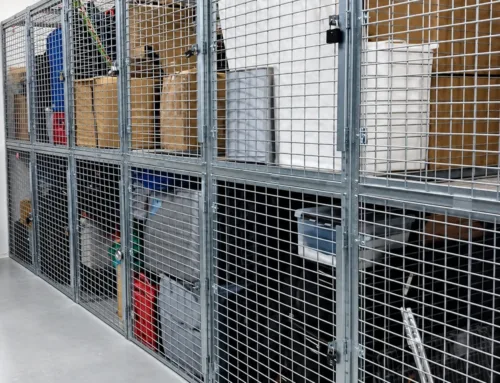
| Nobody can tell what is inside without opening every door, so counts happen quarterly at best. | Welded galvanized steel mesh panels keep contents readable from the aisle. A cycle count or a patrol walk needs eyes, not keys. |
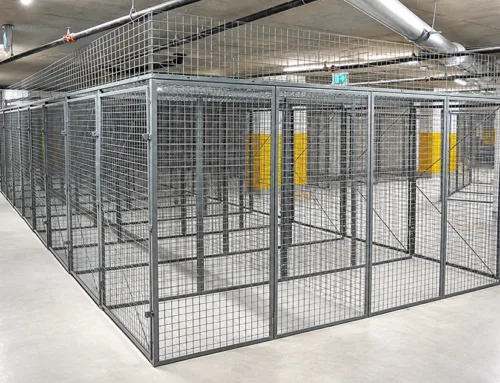
| Solid metal lockers and studded store rooms block sprinkler water, daylight and the camera line. | An open mesh storage locker lets water and light through; where the run stops below the structure, a storage cage with ceiling panel closes the top. |
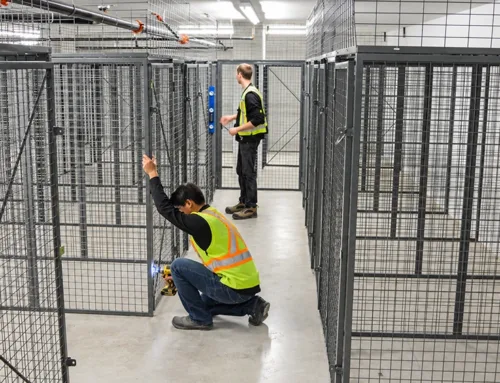
| A welded enclosure means a hot work permit, a fire watch and a production stop. | The bolt together storage cage is fixed with 90-degree angle screws to the posts, straight bolts and nuts drawn back to back between adjacent panels, and expansion bolts into the slab after the run is squared. Two people, a hand drill, a wrench, a hammer and a step ladder. |
| The crib has to move when the line is re-laid or the bay width changes. | A modular storage cage is a count of posts and panels. Heights, widened and deepened bays, base plinths, shelves and fill options are specified per project, so a custom size storage cage fits the column spacing that actually exists. |
Three Details That Decide Whether the Crib Works
The door carries the whole security argument
A tool crib cage is only as good as its weakest bay. Each bay gets its own hinged mesh door on long-strip hinges, and the lock position is drawn on the door bar so the bolt of the lock lands squarely on the staple before the handle is fastened. That single detail is what allows the same enclosure to run keyed-alike cylinders today and a reader on the same door later, without redrilling the frame. The panels stay welded galvanised steel, and where a bay is capped below the ceiling a top mesh panel closes the last opening.
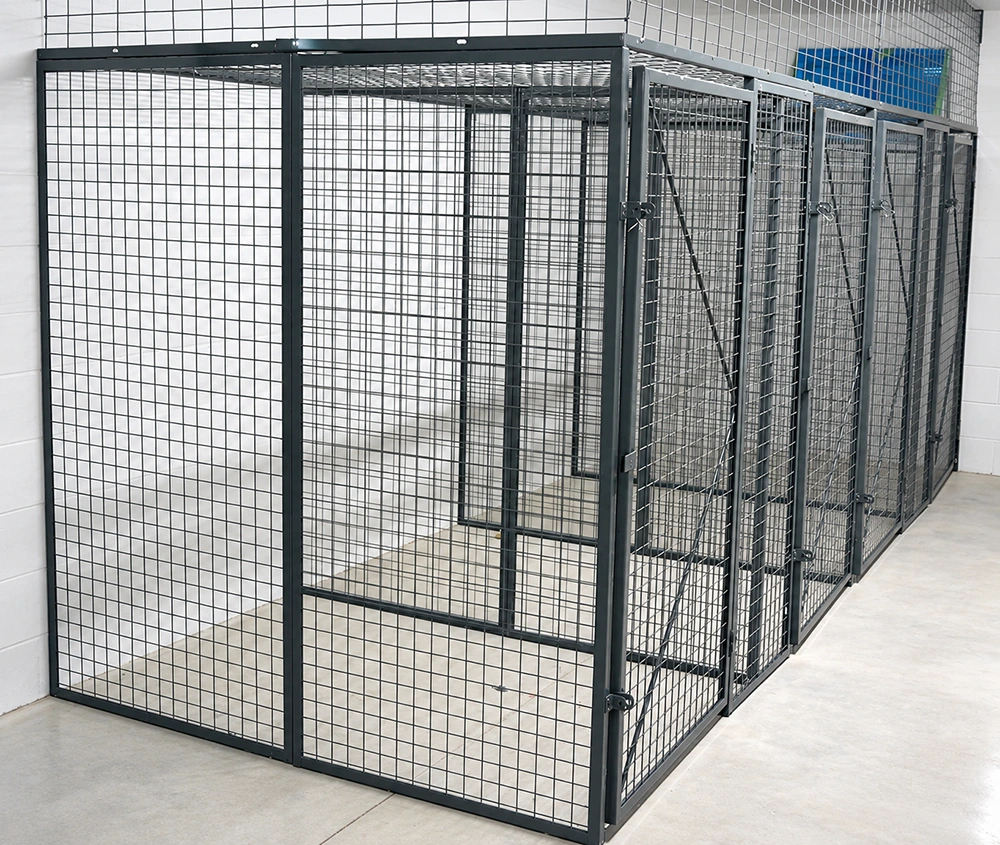
A crib the supervisor can audit from the aisle
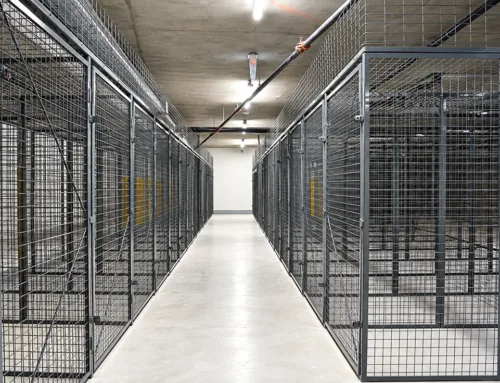
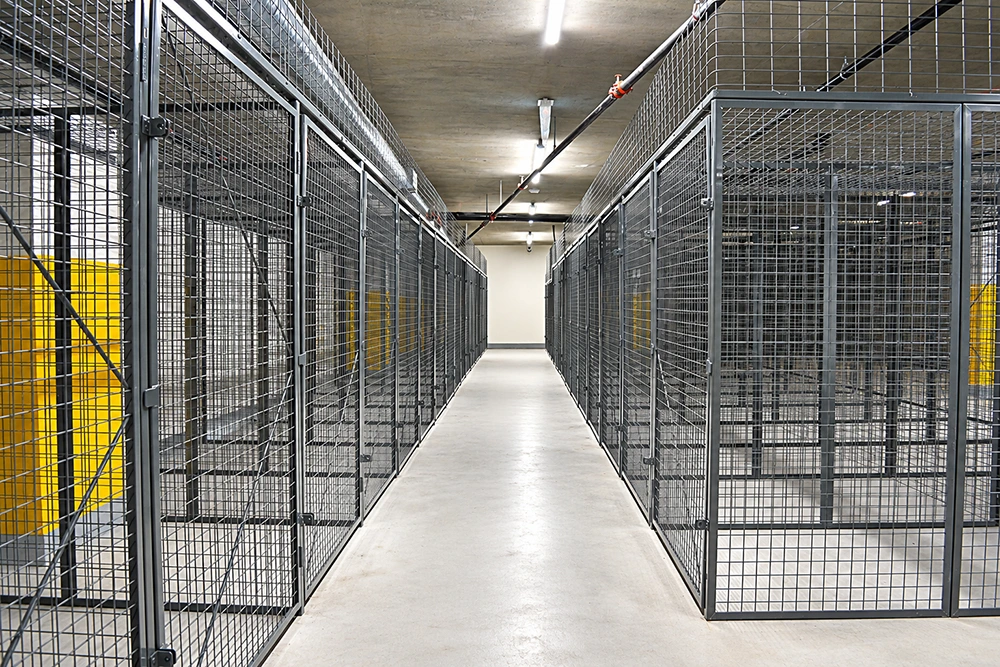
Tool theft inside a plant survives on the assumption that nobody counts. Mesh changes that economics. In a two-row layout the aisle becomes the audit line: cabinets, crates and part bins stay visible through the grid, so a missing item is spotted on the day it goes, not at the next annual stocktake, and the camera above the corridor sees the contents instead of a closed steel face. The same aisle discipline that makes a warehouse storage cage manageable makes a tool cage manageable.
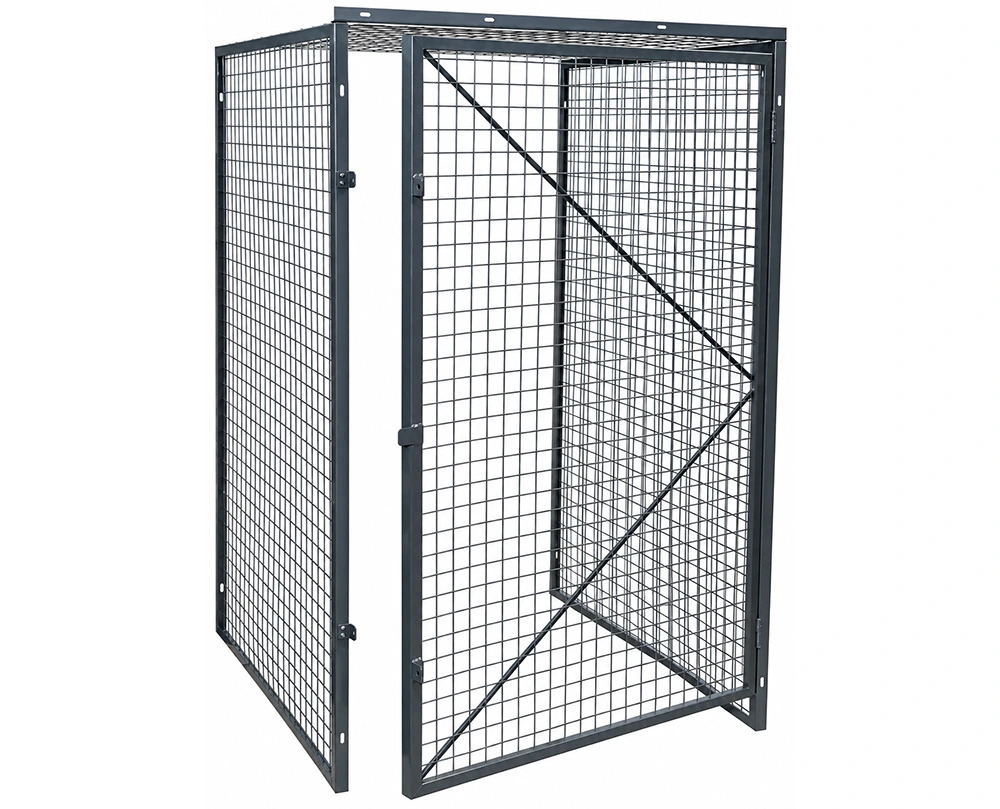
Bolted assembly around equipment that cannot be switched off
A crib usually goes into a live area. The enclosure arrives as posts, welded mesh panels, hinged doors and a top rail, and is assembled by two people with hand tools: 90-degree angle screws pull the panels square to the posts, adjacent panels are drawn back to back with straight bolts through the frame, and the expansion bolts go into the slab only after the run is level. No welder, no arc, no wet trades, no fire watch — which is why an equipment storage cage can be raised in a maintenance window and loaded the same shift.
Where a Tool Crib Cage Pays for Itself
- Maintenance tool crib cage: power tools, torque equipment and rigging gear behind one controlled door with a key register.
- Spare parts and consumables: bearings, seals and stocked components grouped by asset, not by whoever last used them.
- Calibration and diagnostic instruments: meters, gauges and analysers that are small, expensive and easy to pocket.
- Non-ferrous and copper stock: offcuts and fittings worth more per kilogram than the machine they came off.
- Employee storage locker banks: personal tool bags and PPE issued to the shift, in the same perimeter as the crib.
- Contractor and equipment storage cage: hired plant and site equipment held under one lock instead of across the floor.
One planning note: this product is a fixed, bolted enclosure. It is not a handling cage and it does not travel with material between stations, so it belongs on the storage and control side of the plant, not inside the material flow.
What to Send Before You Specify a Crib
Send the floor plan, the tool and spares inventory by category, the widest item that has to pass through a door, the clear height, and whether the run stops below the ceiling or reaches it. We return a bay-by-bay layout with panel and post counts, door and lock positions, and the fixing list — enough to compare against a welded enclosure or a stud wall on the same footprint.
Close the Open Storage Points First
Replacement cost is not a one-off hit; it recurs every time a tool leaves the floor without a record. One locked perimeter around the crib converts a dozen uncontrolled locations into a single accountable one.