EN
 DE
 RU
 PT
 JA
 ES
 IT
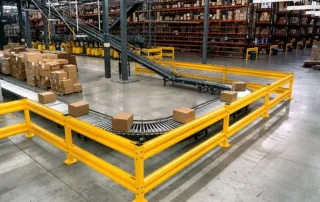
The Visible Hardware Layer: Building an OSHA Hierarchy-of-Controls Audit Pack from One Q235 Steel Warehouse Guard Rail Spec for Multi-Site EHS Rollouts
For multi-site distribution and e-commerce networks, the Q235 steel warehouse guard rail is the visible hardware layer that anchors the OSHA Hierarchy-of-Controls audit pack. Custom colors, project lengths, and bolted base plates deliver one network-ready specification across plants under PAS 13, OSHA NEP and UNI TS 11886 — with an honest disclosure on the independent PAS 13 / EN 1317 impact test workstream that must close before tier-1 e-commerce procurement sign-off.
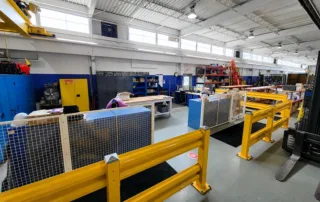
PAS 13, OSHA NEP and UNI TS 11886: The Compliance Threshold That Forces a Q235 Warehouse Guard Rail into an Honest Third-Party Impact Test Workstream
A 2026 safety auditor no longer accepts a yellow barrier as evidence. PAS 13 in the UK, the OSHA NEP on powered industrial trucks, and UNI TS 11886 push the passive isolation layer up the hierarchy of controls. This guide maps where a bolted, modular Q235 corrugated steel warehouse guard rail already fits in that audit pack — the visible double-rail barrier, modular replacement cycle and project-cut special panels — and the honest workstream that an independent PAS 13 or EN 1317 third-party strike test still demands before HQ procurement signs off a multi-plant rollout.
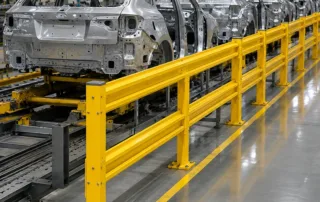
Four Workshop Zones, 58 m of Guard Rail, Zero Site Welding — Modular Corrugated Steel Panels That Re-Track With Every Re-Zone
When four workshop zones re-zone on different business cycles, modular corrugated steel warehouse guard rails with 1,500 mm standard panels and 680–1,140 mm custom fillers re-deploy intact — no site welding, no hot-work permit, no slab re-pour.
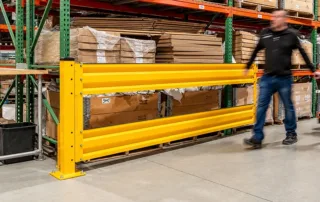
Peak-Season Aisle Re-Layouts: Lift-Out Warehouse Guard Rails That Move With the Forklift Route
When a 3PL or e-commerce DC reshuffles pick aisles every two weeks to chase a new peak, welded perimeter steel becomes scrap on the next re-layout. Bolted, lift-out warehouse guard rails absorb the same 3-ton forklift impact as fixed barriers, then unbolt in minutes when the next route redraw lands on the floor.
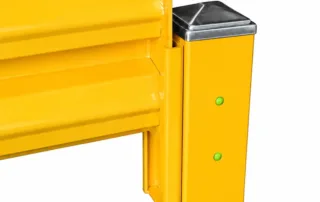
Painted Guard Rails Rust Through at the Quay in Two Years — Coastal Docks Need Hot-Dip Galvanized Corrugated Steel
At berth edges and container yards, salt spray and sea water splash eat through painted steel guard rails within two to three years. Hsafety hot-dip galvanized corrugated steel warehouse guard rails put the protection on the steel substrate itself, with bolted base plates, M16 anchor bolts and optional reflective tape for night-shift and fog visibility.
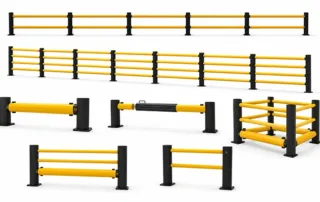
A Bent Stand Post Closes a Wide-Body Gate for Hours: Why a 28,950 J Self-Rebounding Polymer Crash Barrier Keeps the Next-Bank Slot on the Board
A bent stand post from a missed hold-line closes a wide-body gate for stand re-certification. FCBarrier DR190 / TR190+ / CTR190+ ARMORFLEX polymer column protectors and dual-rail guards absorb up to 28,950 J of GSE strike energy, self-rebound, and keep the next pushback moving.
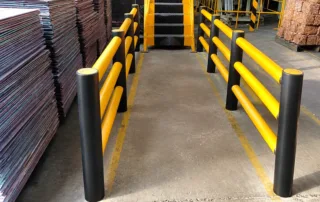
Airbridge Legs, GPU Cabinets and Stand-Equipment Posts: Why a 28,950 J Polymer Crash Barrier Replaces Deformed Steel at Cannot-Stop Airside Assets
An active wide-body stand puts an airbridge leg, a 400 Hz GPU cabinet and a stand-equipment post inside the same GSE convergence lane as a multi-car baggage tug. FCBarrier ARMORFLEX polymer CTR column protectors and DR190 dual-rail barriers absorb up to 28,950 J (8 t @ 9.6 km/h) of strike energy and rebound — so a cannot-stop airside post never becomes the bent-steel corner that causes secondary injuries on the apron.
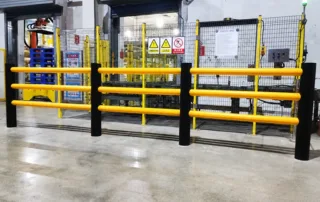
Stand-Number Walk-Out Paths: Why FCBarrier ARMORFLEX Polymer Crash Barriers Replace Faded Apron Hold-Lines Beside the Jet Bridge
Faded apron paint and a single rotating marshaller cannot keep baggage tugs, fuel trucks and walk-out crews apart at every stand number around the clock. FCBarrier ARMORFLEX polymer flexible safety barriers install a permanent, self-rebounding hold-line beside the jet bridge that absorbs up to 28,950 J of strike energy and recovers its profile — with a slim cross-section that does not crowd the GSE convergence lane or the stand-equipment corridor.
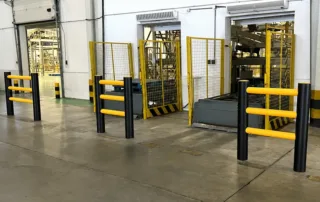
Airport Apron and Baggage Hall: A 28,950 J Self-Rebounding Polymer Crash Barrier Replaces Painted Lines and Marshallers on 7×24 Airside Operations
On a 7×24 airside ramp, painted lines and marshallers cannot keep baggage tugs, fuel trucks and walk-out crews apart on their own. FCBarrier ARMORFLEX polymer flexible crash barrier installs a permanent physical boundary that absorbs up to 28,950 J of strike energy and rebounds, with a slim cross-section that does not crowd the apron or the jet bridge corridor.
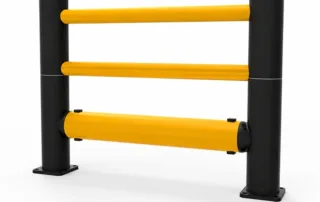
Steel Crash Barriers Pull Cracks Through the Floor: How FCBarrier ARMORFLEX Polymer Guards Re-Route Anchor-Bolt Repair Cycles
Steel crash barriers transmit strike energy through base plates into the concrete slab, driving anchor-bolt loosening, repaint cycles and slab patches. FCBarrier ARMORFLEX polymer absorbs up to 80% of strike energy and rebounds, so the energy stops at the post and never reaches the anchor pocket.