EN
EN  DE
DE  RU
RU  PT
PT  JA
JA  ES
ES  IT
IT Brand Insurance · Multi-Site EHS
Safety Capex as Brand Insurance: A Q235 Corrugated Steel Passive Layer as the Network-Wide ESG Baseline
A 1,000 mm tall, twin-rail Q235 corrugated steel warehouse guard rail is the visible, fixed-cost asset that converts a multi-site EHS line item into an auditable brand-insurance hedge — absorbing the strike that forklift telematics, operator training and PPE still let through, with a single bolt-down spec that an EHS director can amortise across every plant in the network.
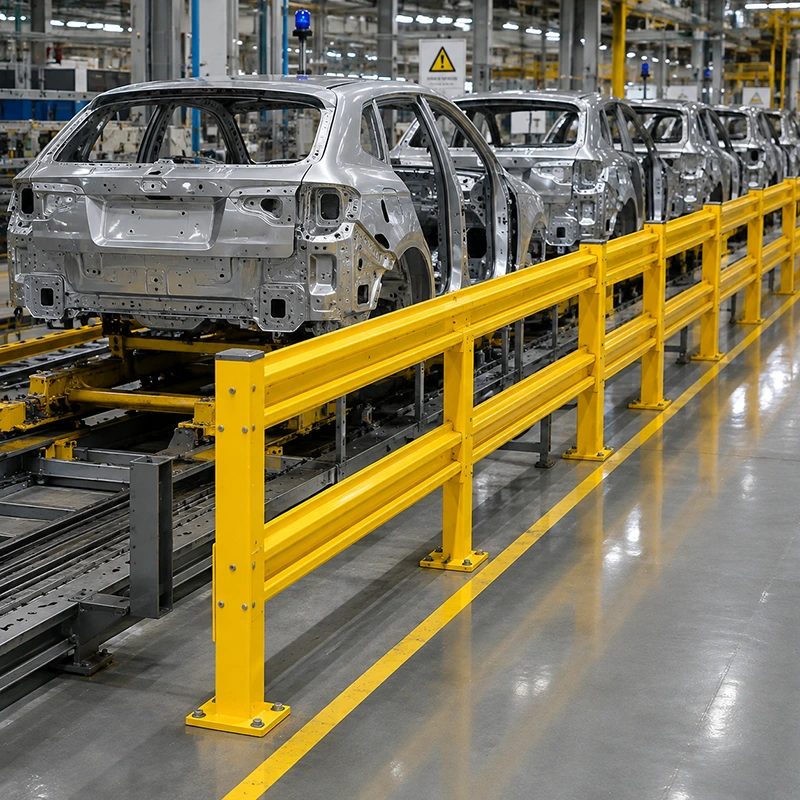
What sits inside an ESG-grade Q235 passive layer
Most boards sign off EHS budgets against a serious-injury-or-fatality exposure curve, not a procurement log. A 12 kg corrugated steel rail sits at the curve bottom in a single bolt-down footprint — and asks for zero post-strike rebound validation, zero polymer replacement cycle and zero on-site hot-work permit.
| Component | What it does for your EHS line item |
|---|---|
| Q235 carbon steel, mill-certified | Fixed unit cost across every plant; predictable board-room depreciation curve on a network-wide capex line. |
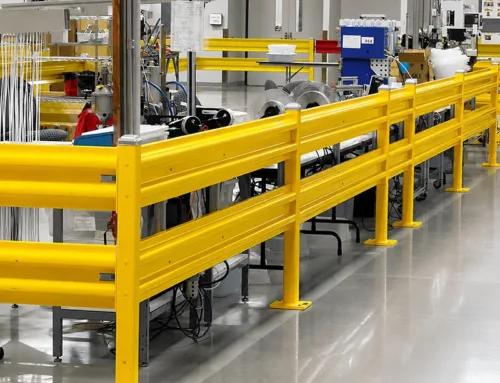
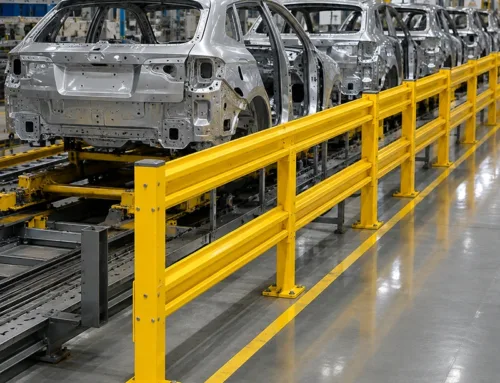
| 2-rib W-beam or 3-rib thrie-beam corrugated panel, ~300 mm wide, 85 mm wave height | Corrugated profile dissipates forklift strike energy through the bolted anchor into the concrete slab instead of into the asset behind. |
| 80 × 80 × 6 mm square post + 160 × 160 × 16 mm base plate + 4 × M16 anchor bolts | One bolt-down cycle into ≥150 mm concrete, no slab re-pour; the same install drawing in every plant on the site. |
| 1,000 mm rail height, 1,500 mm standard panel + 680–1,140 mm custom fillers | Covers four-zone 17,000 / 17,100 / 12,000 / 11,900 mm layouts without welding on site. |
| Hot-dip galvanized or yellow polyester powder coat (RAL 1023); reflective tape optional | High-visibility floor line for night-shift and fog operations; salt-spray safe at dock edges. |
| Visual bolt-torque check at 12-month intervals | No rebound verification cycle; passive hardware stays on the asset register between audits. |
Why a corrugated steel passive layer translates into boardroom-level brand insurance
The passive layer catches the strike training and telematics miss
A 3-ton truck at 10 km/h delivers roughly 16,680 N on impact — that is the demand one of our customers wrote into a four-zone brief, and the figure most polymer and rope-line designs cannot absorb without a return-to-base replacement cycle. A Q235 corrugated steel warehouse guard rail with twin W-beam rails, 1,500 mm standard panels plus 680 / 780 / 1,040 / 1,140 mm custom fillers, 80 × 80 × 6 mm square posts and a 160 × 160 × 16 mm base plate dissipates that load through the bolted anchor into the slab — and stays on the floor through every shift. Operator training, PPE and forklift telematics sit higher up the hierarchy of controls; this bolted-down corrugated steel barrier is the bottom line that catches the strike they let through, and that is the line a network-wide ESG committee can point to.
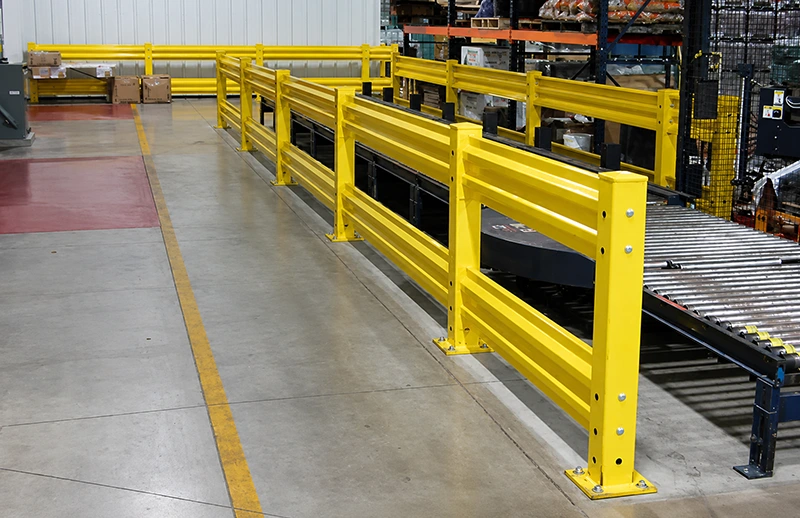
An asset-level enclosure, not just an aisle line
When the CFO asks what an EHS dollar bought last quarter, the answer has to be a specific, named asset: that racking column, that 22 kV switchgear room, that PLC cabinet, that cylinder store. A double-rail Q235 barrier with optional yellow bollard end-caps converts a paint line into a per-asset enclosure that survives the strike and stays on the asset register. The capital line is fixed, the rate of depreciation is fixed, and the brand-insurance hedge is named against a single asset tag — the format an auditor, a regulator or a board ESG committee can read in one minute and sign off the same afternoon.
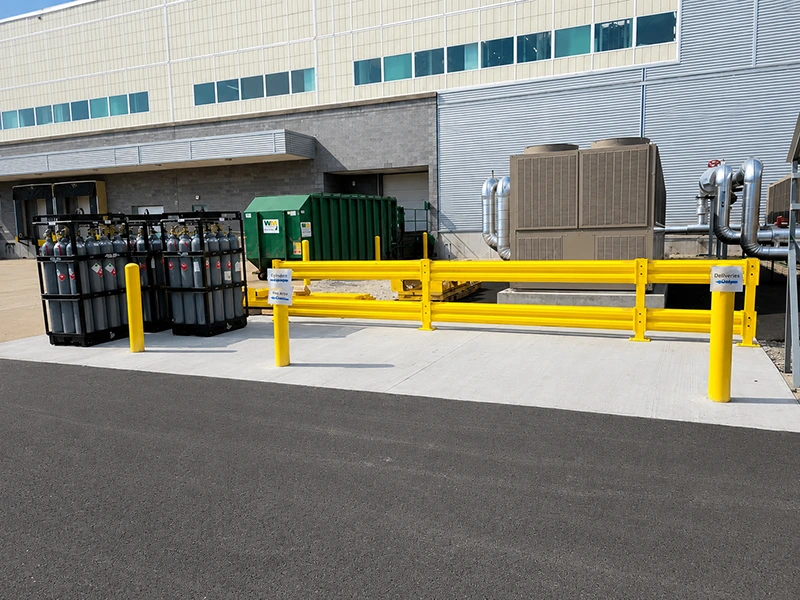
One bolt-down spec, one documentation pack, every plant
A 25-country EHS director cannot let local welder skill decide whether the corporate floor-protection standard survives the audit. The bolted base plate, M16 anchor bolt and 1,500 mm standard panel is the same product in every plant, the same install lead-time, the same replacement part code. China-direct factory supply keeps the per-foot cost low enough that a network-wide rollout does not break capex — and the audit pack (drawing, bolt torque table, panel schedule, custom-filler schedule) is short enough that the local EHS officer signs it in an afternoon. Where a tier-1 e-commerce operator already runs forklift active-monitoring and telematics, this Q235 passive layer complements the active stack; it does not compete with it.
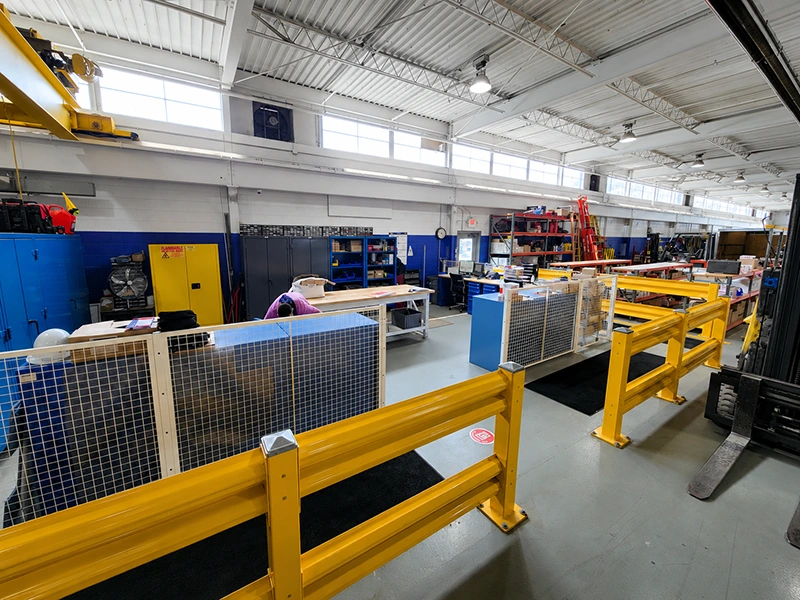
Where the Q235 passive layer carries the brand-insurance line item
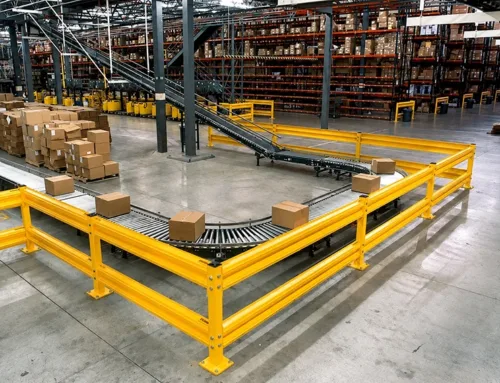
- Multi-site distribution-centre and e-commerce rack-end protection across 17,000 / 17,100 / 12,000 / 11,900 mm zone layouts
- Roller conveyor edges and corner protection at order picking and sortation lanes
- Electrical-room and switchgear corners — Q235 160 × 160 base plate bolted to a ≥150 mm concrete slab
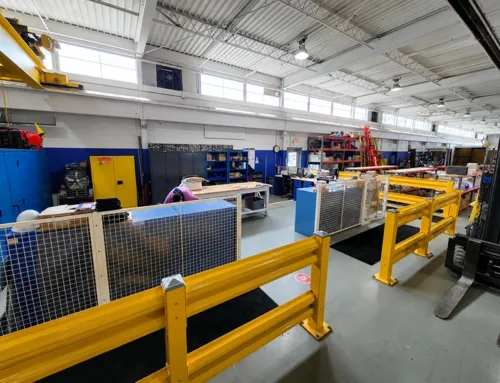
- Robot cells and PLC cabinets — yellow double-rail barrier around the cell perimeter
- Cylinder store and gas-pack zones — barrier plus optional bollard end-caps on both sides
- Building wall edges at loading dock and forklift approach lanes
Every application above is one Q235 spec — twin W-beam or thrie-beam panels, 1,000 mm height, 1,500 mm standard panel plus custom fillers, yellow polyester powder coat or hot-dip galvanized finish. No on-site welding, no hot-work permit, no polymer rebound validation cycle on the EHS audit pack.
What to send us to convert a zone layout into a board-ready line item
Send your site plan with the zone lengths you need to protect (for example 17,000 / 12,000 / 17,100 / 11,900 mm), the working height and any asset tags you want the barrier to name. We send back a panel schedule (1,500 mm standard + custom fillers), a post count, a base-plate bolt torque table and a per-zone Q235 unit cost — costed against your brand-exposure curve, not a generic price list.
Get a per-site Q235 passive-layer line item costed against your brand-exposure curve
Send your multi-site zone layouts and we return one bolt-down spec, one documentation pack, one factory-direct per-foot price — the brand-insurance baseline a network-wide EHS director can sign off.