EN
 DE
 RU
 PT
 JA
 ES
 IT
Application of warehouse module safety barriers

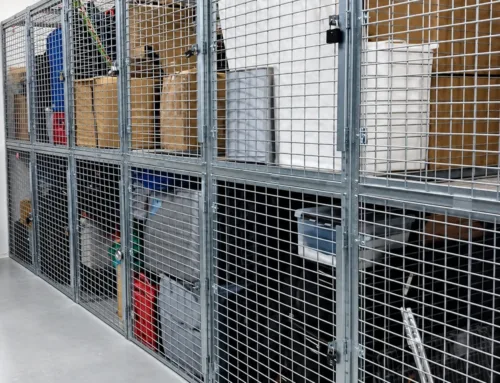
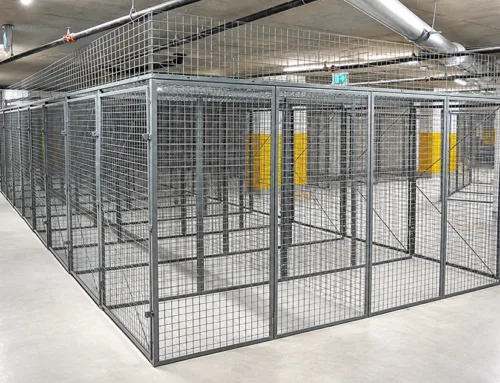
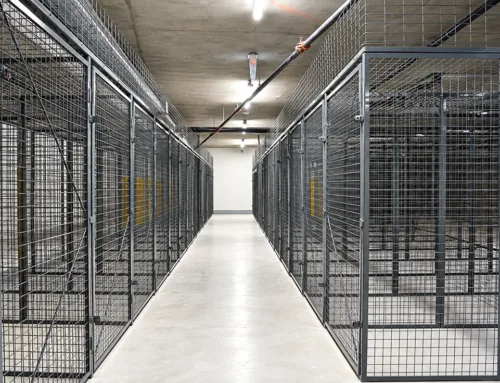
Warehouse module security fences are an essential tool for protecting a company’s assets and ensuring the safety of its employees. The fence is a physical barrier that encloses the warehouse module and restricts access to authorized personnel only. There are several scenarios where a security fence can be applied in a warehouse module to ensure optimal security.
-
-
- Perimeter security: A security fence around the perimeter of the warehouse module can restrict unauthorized access and deter intruders. The fence can be made of durable materials like steel, concrete, or high-density polyethylene (HDPE) and can be fitted with anti-climb devices like barbed wires or electric fencing.
- Access control: A security fence can be used to control access to the warehouse module by incorporating electronic access control systems like card readers, biometric readers, or keypads. This ensures that only authorized personnel have access to the warehouse module, preventing theft or unauthorized entry.
- Asset protection: A security fence can also be used to protect high-value assets within the warehouse module. These can include expensive equipment, sensitive data, or hazardous materials. A fence with an alarm system can alert security personnel in the event of any unauthorized access to the protected assets.
- Employee safety: A security fence can be used to protect employees within the warehouse module from accidents or injury. This can be achieved by setting up barriers around hazardous areas or enclosing loading docks with a fence to prevent accidents involving vehicles.
- Theft prevention: A security fence can also prevent theft within the warehouse module by restricting access to the facility. A fence with video surveillance can also help identify any criminal activity that may occur within the warehouse.
- Regulatory compliance: Security fences can also help meet regulatory compliance requirements. For example, some industries require secure storage of hazardous materials, and a security fence can help meet the regulatory requirements for such storage.
-
In conclusion, a security fence is an essential tool for ensuring the safety of employees and protecting a company’s assets. The fence can be applied in various scenarios, including perimeter security, access control, asset protection, employee safety, theft prevention, and regulatory compliance. When considering a security fence, it is important to take into account the unique needs and requirements of your warehouse module to ensure optimal protection.
A Tool Crib Is Not a Standard Shape: Custom Wire Mesh Storage Cages Drawn to the Floor You Actually Have
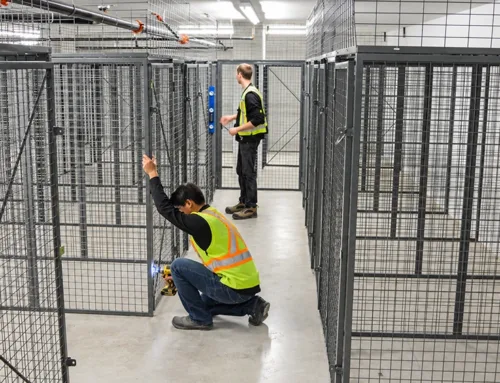
A catalogue tool crib assumes a rectangular room and a forklift arriving through the long side. Real spare parts stores have a column mid-bay, a rack depth set by the pallet that actually arrives and a two-and-a-half-metre wall beside a running machine. A custom wire mesh storage cage is specified from those numbers — bay height, widened and deepened bays, base plinths, shelves and mesh fill drawn per bay, one long-strip hinged mesh door per bay with its lock position scribed on the door bar, galvanised welded panels drawn back to back with straight bolts and through-nuts on 90-degree angle screws, expansion bolts after squaring. Two people, a hand drill and a wrench, no welder, no wet trades.
Top Mesh or Open Top: Sizing a Wire Mesh Storage Cage Around Sprinkler Deflectors and Air Paths
Solid partitions close two paths a storage room depends on: the air path that keeps a basement dry, and the spray path from the sprinkler deflector above the goods. A wire mesh storage cage keeps the lock and gives up the surface — galvanised welded mesh panels bolted to steel posts with 90-degree angle screws, one hinged mesh door per bay with its lock position scribed on the door bar, and a top mesh panel on a top rail only where the run stops below the sprinkler piping. Two people, a hand drill and a wrench, no welding under a live line.
A Tool Room That Dismantles: Bolt-Together Wire Mesh Storage Cages for Temporary Site Tool Lockup
A temporary project needs a lockable tool room for the length of the programme and not a day longer. A bolt-together wire mesh storage cage goes up from parts — galvanised welded mesh panels bolted to steel posts with 90-degree angle screws, panels drawn back to back with straight bolts and through-nuts, one long-strip hinged mesh door per bay with its lock position scribed on the door bar, and expansion bolts driven after the run is squared. Two people, a hand drill and a wrench, no welding and no wet trades, and the same parts leave on the truck to the next site.