EN
 DE
 RU
 PT
 JA
 ES
 IT

Is there a safety hazard in using Steel Portable Barricade Gate?

Proper Handling and Installation
Steel portable barricade gates serve as valuable tools in crowd management and access control, but their weight and stability can present potential safety hazards. To ensure a safe environment during their usage, it is vital to adhere to proper handling techniques and installation procedures.
Handling and Lifting Techniques: Due to their substantial weight, it is crucial to avoid manual lifting of these gates. Instead, implement the use of equipment such as dollies or carts to move and position the barricades. Furthermore, it is advisable to assign a team of individuals to handle the task, reducing the risk of accidents and injuries associated with lifting heavy objects alone.
Secure Installation: The stability of steel portable barricade gates is paramount in ensuring the safety of both attendees and organizers. Careful attention must be paid to following the manufacturer’s instructions for proper installation. Utilize the appropriate anchors and fasteners to firmly secure the gate in place, preventing potential toppling hazards, especially during inclement weather or high winds. Regular inspections should also be carried out to ensure the gates remain stable and secure.
Minimizing Risks and Hazards
Apart from weight and stability concerns, other potential risks are associated with steel portable barricade gates. Addressing these hazards proactively can further enhance the safety of the environment in which the gates are utilized.
Preventing Entrapment and Crushing: The design and construction of steel portable barricade gates should prioritize safety to prevent entrapment or crushing incidents. Manufacturers must adhere to safety standards and guidelines, ensuring that no moving parts pose risks to individuals operating the gates. Additionally, personnel handling the gates should receive proper training to minimize the risk of accidents related to gate operation. Employ warning signs to alert attendees to potential hazards and remind them to exercise caution.
Electrical Wiring and Grounding: For gates equipped with electric motors for automated operation, electrical wiring safety is of utmost importance. Faulty or improperly installed electrical systems can lead to severe injuries or even electrical hazards. Routine inspections of the wiring and electrical components are crucial to identifying and rectifying potential issues promptly. Ensuring proper grounding and circuit protection will further mitigate electrical risks.
Reducing Tripping and Falling Hazards: Positioning the gates with care can help reduce tripping and falling hazards. Ensure gates are placed on level ground and appropriately spaced to avoid obstructing pathways. Adequate lighting around the gates will further enhance visibility, reducing the likelihood of accidents during low-light conditions or nighttime events.
Steel portable barricade gates are indispensable tools for crowd control and access management, but their safety must be a priority. By adhering to proper handling and installation procedures, along with addressing potential risks, organizers can provide a safe and secure environment for attendees and staff alike. With vigilant attention to safety measures and precautions, steel portable barricade gates will continue to be valuable assets in various events and situations.
A Tool Crib Is Not a Standard Shape: Custom Wire Mesh Storage Cages Drawn to the Floor You Actually Have
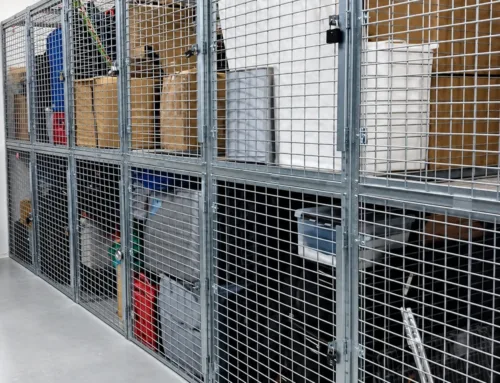
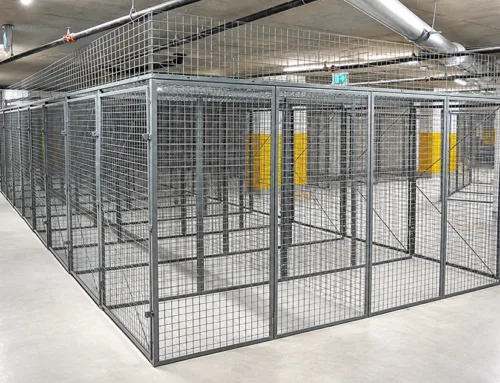
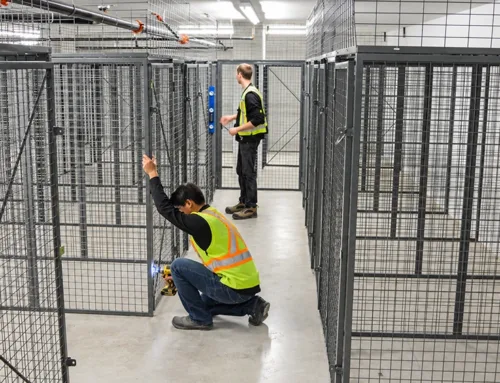
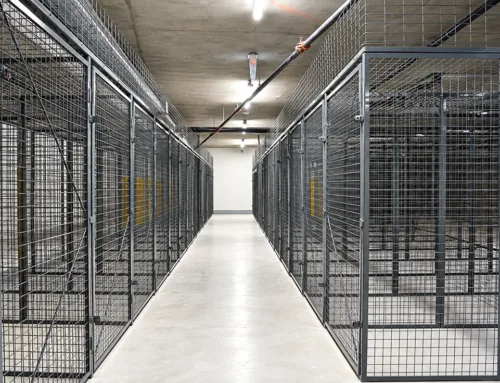
A catalogue tool crib assumes a rectangular room and a forklift arriving through the long side. Real spare parts stores have a column mid-bay, a rack depth set by the pallet that actually arrives and a two-and-a-half-metre wall beside a running machine. A custom wire mesh storage cage is specified from those numbers — bay height, widened and deepened bays, base plinths, shelves and mesh fill drawn per bay, one long-strip hinged mesh door per bay with its lock position scribed on the door bar, galvanised welded panels drawn back to back with straight bolts and through-nuts on 90-degree angle screws, expansion bolts after squaring. Two people, a hand drill and a wrench, no welder, no wet trades.
Top Mesh or Open Top: Sizing a Wire Mesh Storage Cage Around Sprinkler Deflectors and Air Paths
Solid partitions close two paths a storage room depends on: the air path that keeps a basement dry, and the spray path from the sprinkler deflector above the goods. A wire mesh storage cage keeps the lock and gives up the surface — galvanised welded mesh panels bolted to steel posts with 90-degree angle screws, one hinged mesh door per bay with its lock position scribed on the door bar, and a top mesh panel on a top rail only where the run stops below the sprinkler piping. Two people, a hand drill and a wrench, no welding under a live line.
A Tool Room That Dismantles: Bolt-Together Wire Mesh Storage Cages for Temporary Site Tool Lockup
A temporary project needs a lockable tool room for the length of the programme and not a day longer. A bolt-together wire mesh storage cage goes up from parts — galvanised welded mesh panels bolted to steel posts with 90-degree angle screws, panels drawn back to back with straight bolts and through-nuts, one long-strip hinged mesh door per bay with its lock position scribed on the door bar, and expansion bolts driven after the run is squared. Two people, a hand drill and a wrench, no welding and no wet trades, and the same parts leave on the truck to the next site.